Designer is a broad title, so the first line of your resume has to say what you design, and for many designer openings that means software products and the features you helped ship.
The seven examples differ by level and setting: associate, mid-level, senior and lead product designers, plus a B2B specialist, a freelancer and a front-end developer changing careers.
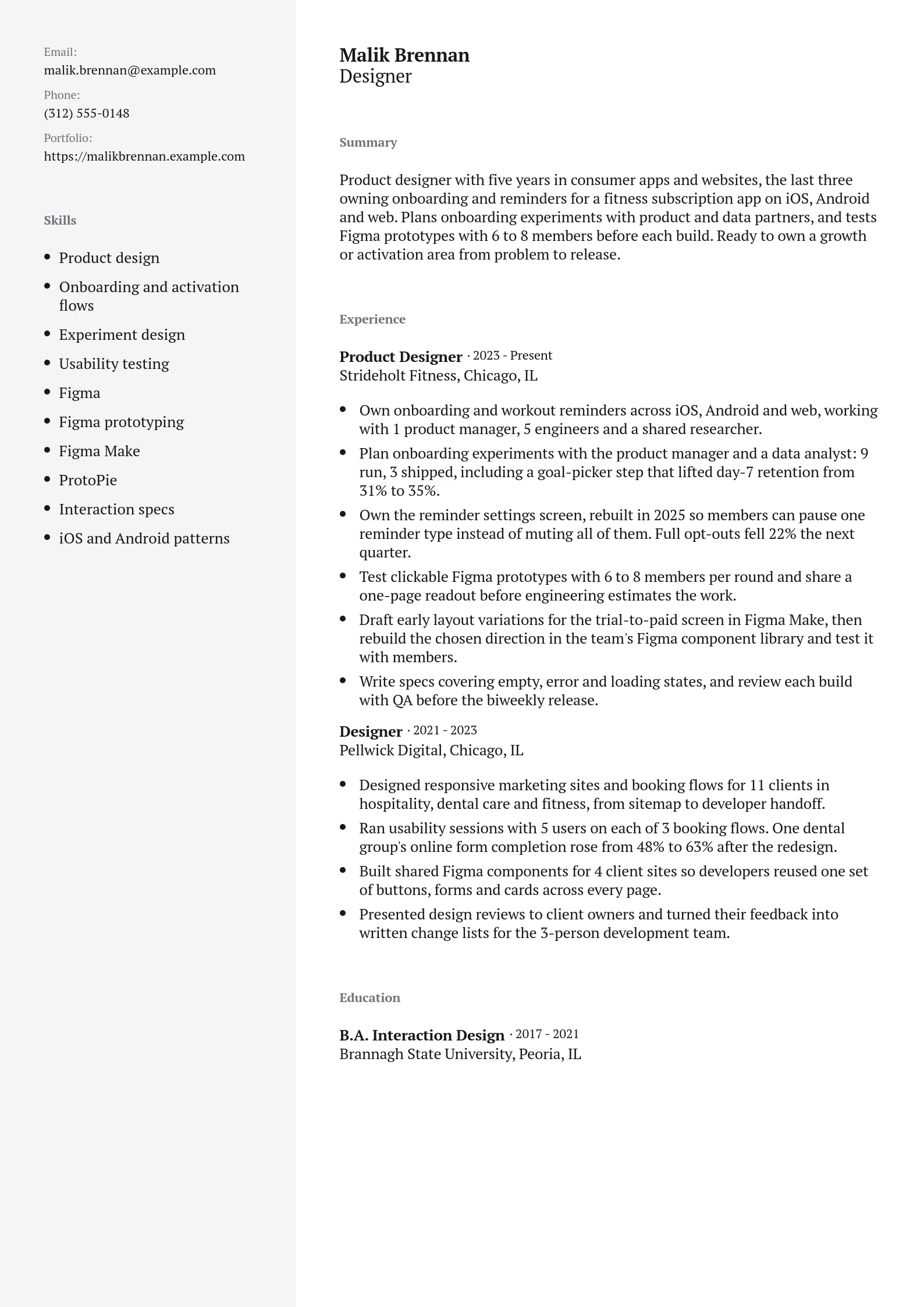
Malik has five years in design: two at a web agency and three owning onboarding and reminders for a fitness subscription app. His title line says Designer, and his summary names product design in its first two words, so a recruiter knows the discipline before reading a single bullet.
Copy the way each bullet names the partners and the result. The experiment bullet gives how many tests ran, how many shipped and which retention number moved. The Figma Make bullet says what the AI tool drafted and where the final design came from, which some product design ads now ask about.
Six more designer resumes by level and setting
Pick the example closest to the job you're applying for, not the one you hold now. The senior and lead versions show how scope grows. The B2B, freelance, entry-level and career-change versions show what to put first when your path into product design is less direct.
Senior product designer leading a checkout redesign
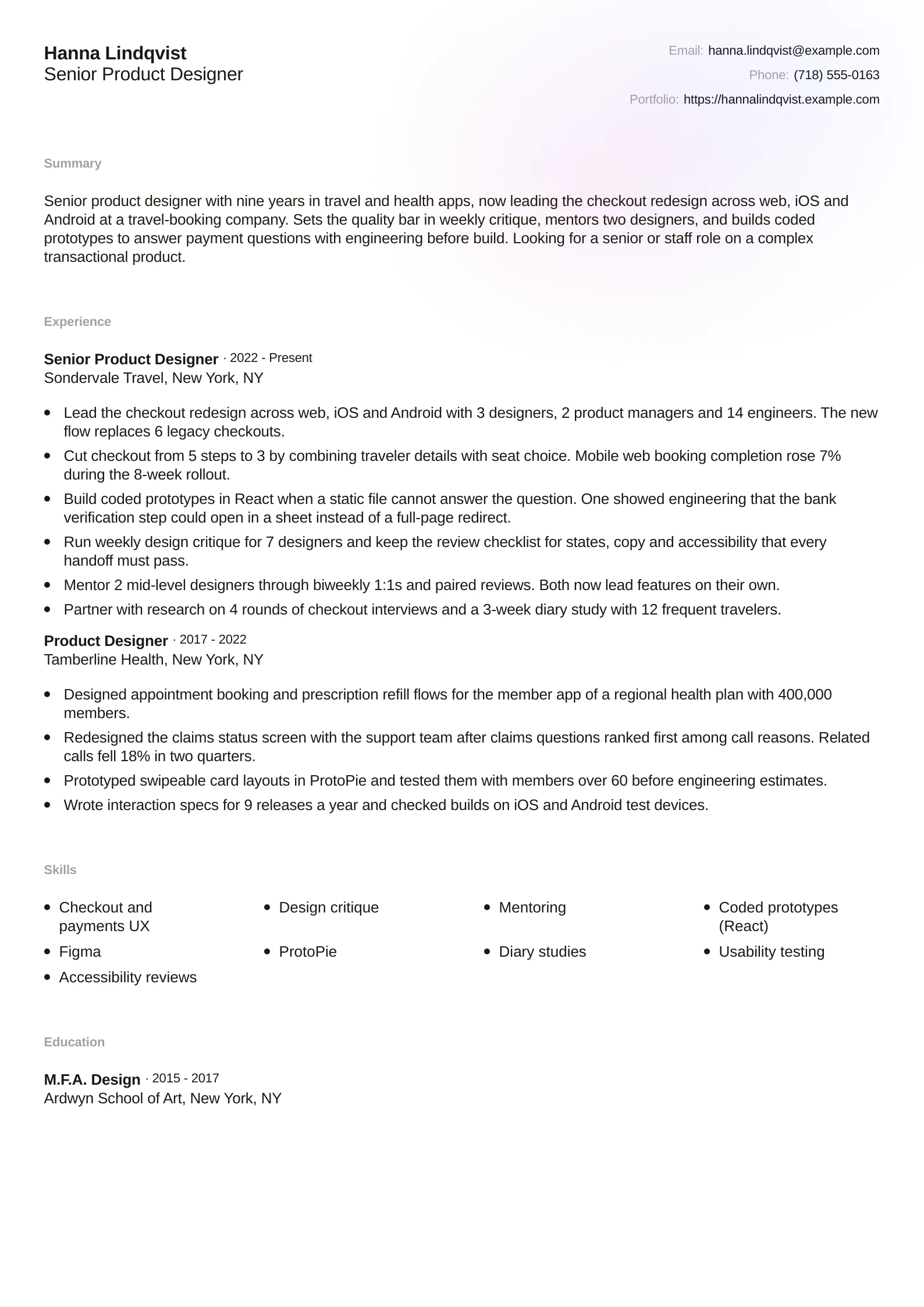
Hanna's resume opens with the size of the team on her main initiative: 3 designers, 2 product managers and 14 engineers. Critique and mentoring get their own bullets with numbers, and one bullet names the coded prototype that settled a payment question before build. Use it if you already lead cross-team work and want a senior or staff role on a transactional product such as checkout, payments or booking.
Team size named for the checkout redesign
Coded React prototype tied to one engineering question
Mentoring shown through two designers who now lead features
Design lead managing a team of five
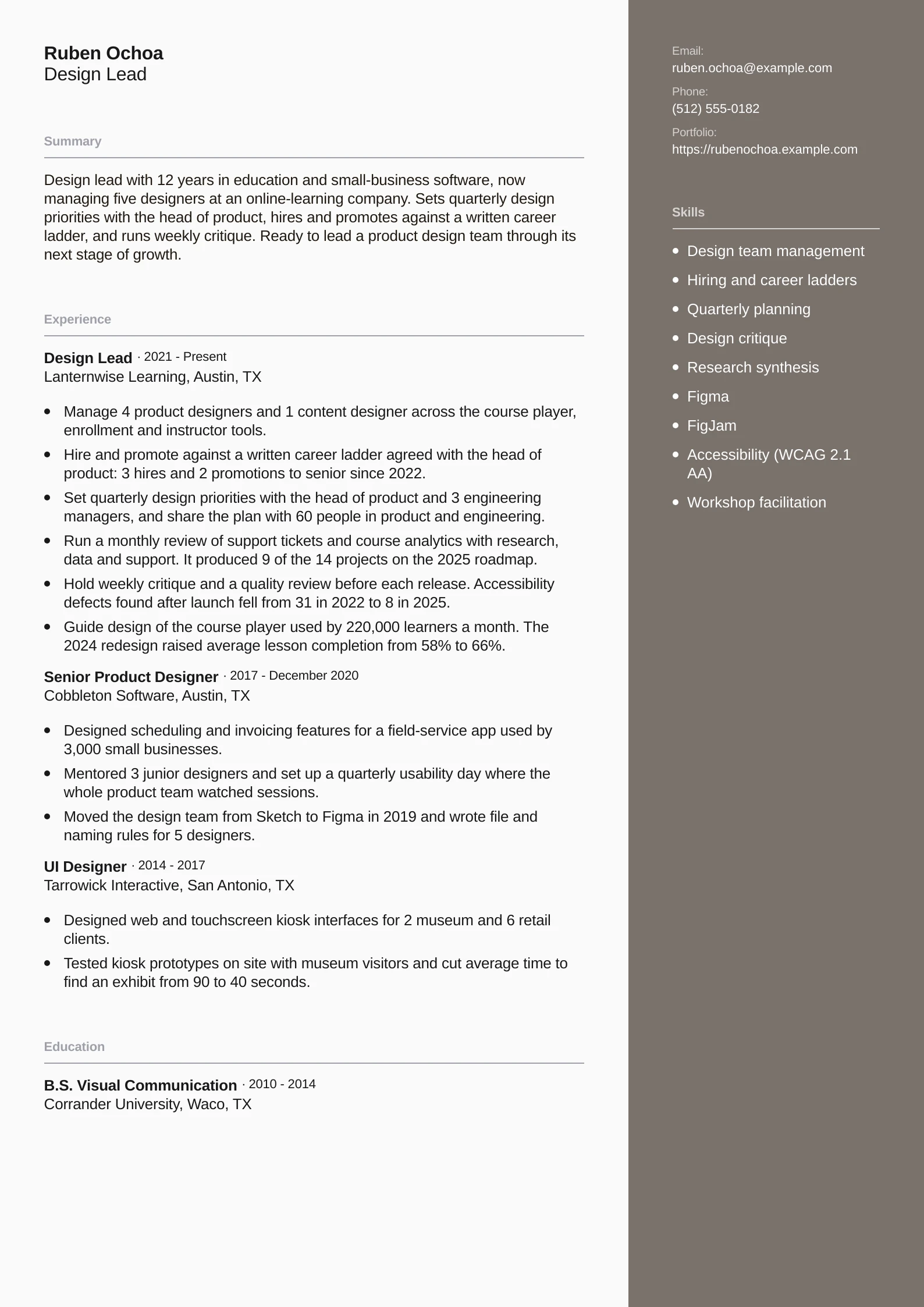
Ruben's bullets are about the team and the plan: who he manages, how many he hired and promoted, and how quarterly priorities are set with the head of product. One bullet ties a monthly review with research, data and support to roadmap projects, and the course player result shows he still guides design work. Use it for design lead or design manager roles where hiring and planning matter as much as screens.
Hires and promotions counted against a career ladder
Quarterly planning with product and engineering managers
Accessibility defects tracked from 2022 to 2025
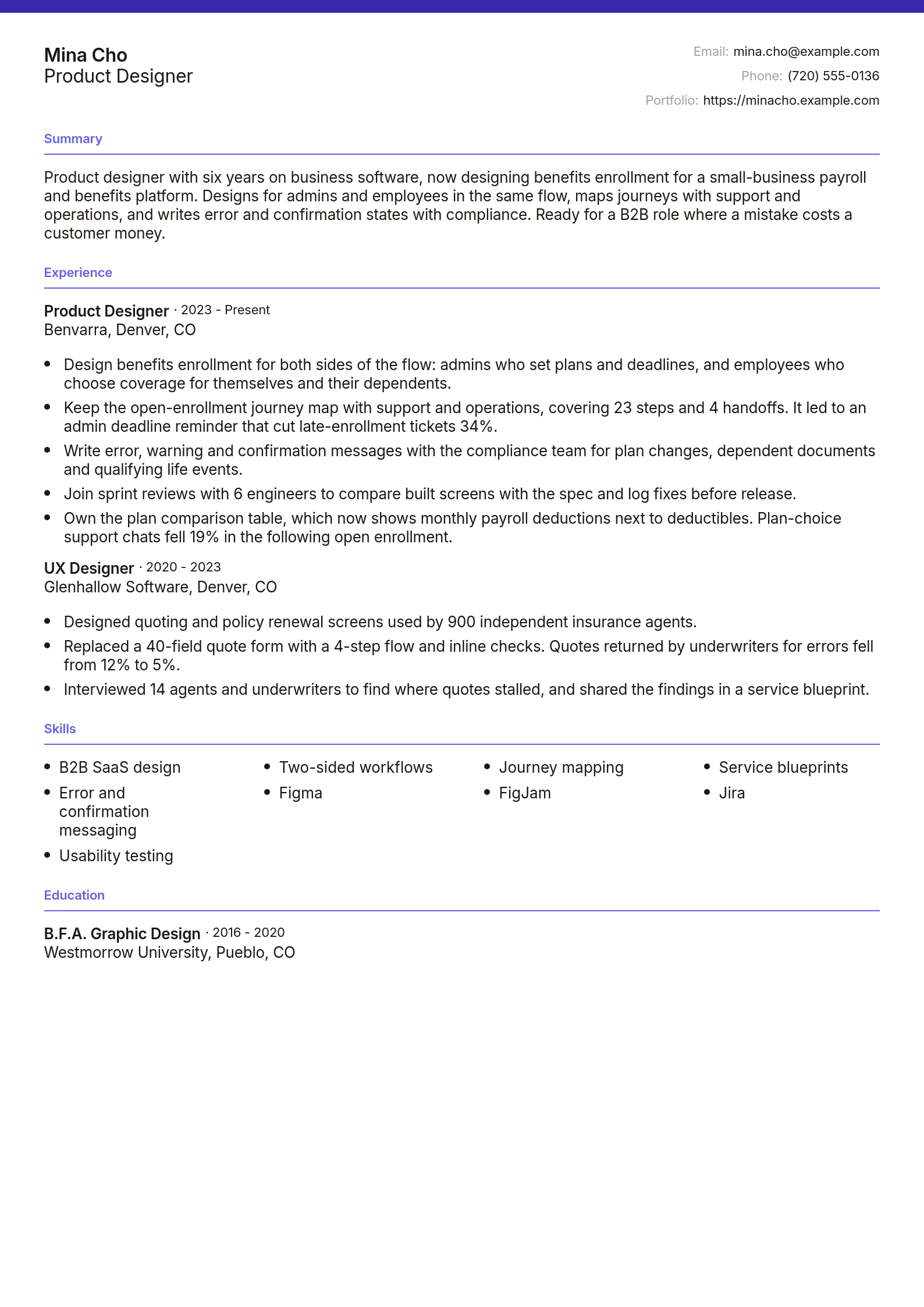
B2B product designer for payroll and benefits
Mina designs one flow for two users, the admin who sets up benefit plans and the employee who picks coverage, and her first bullet says so. Later bullets name the journey map kept with support and operations, the error and confirmation messages written with compliance, and two support-volume results. Use it for B2B SaaS roles in payroll, HR, insurance or finance, where a wrong click can cost a customer money.
Admin and employee sides named in the first bullet
Journey map linked to a drop in late-enrollment tickets
Error and confirmation messages written with compliance
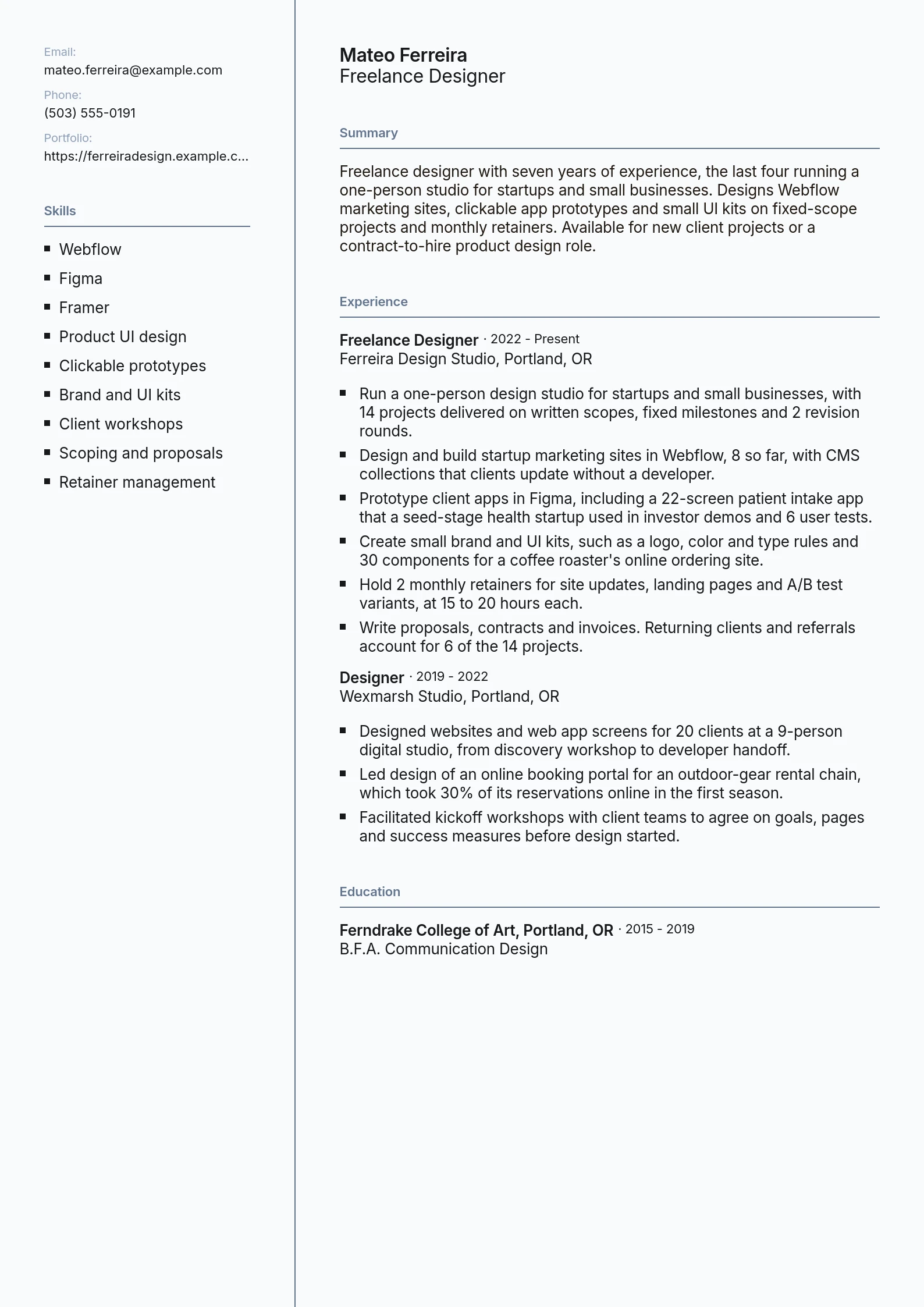
Freelance designer for startups and small businesses
Mateo lists his studio as the employer and counts the work under it: 14 projects, 8 Webflow sites, a 22-screen app prototype and two monthly retainers with their hours. Clients are described by stage and industry instead of by name, and one bullet shows repeat business. Use it if you freelance in web and product UI and want more clients, or if you want a contract-to-hire product role.
Studio name used as the employer
Project count, retainers and weekly hours in numbers
Returning clients and referrals counted
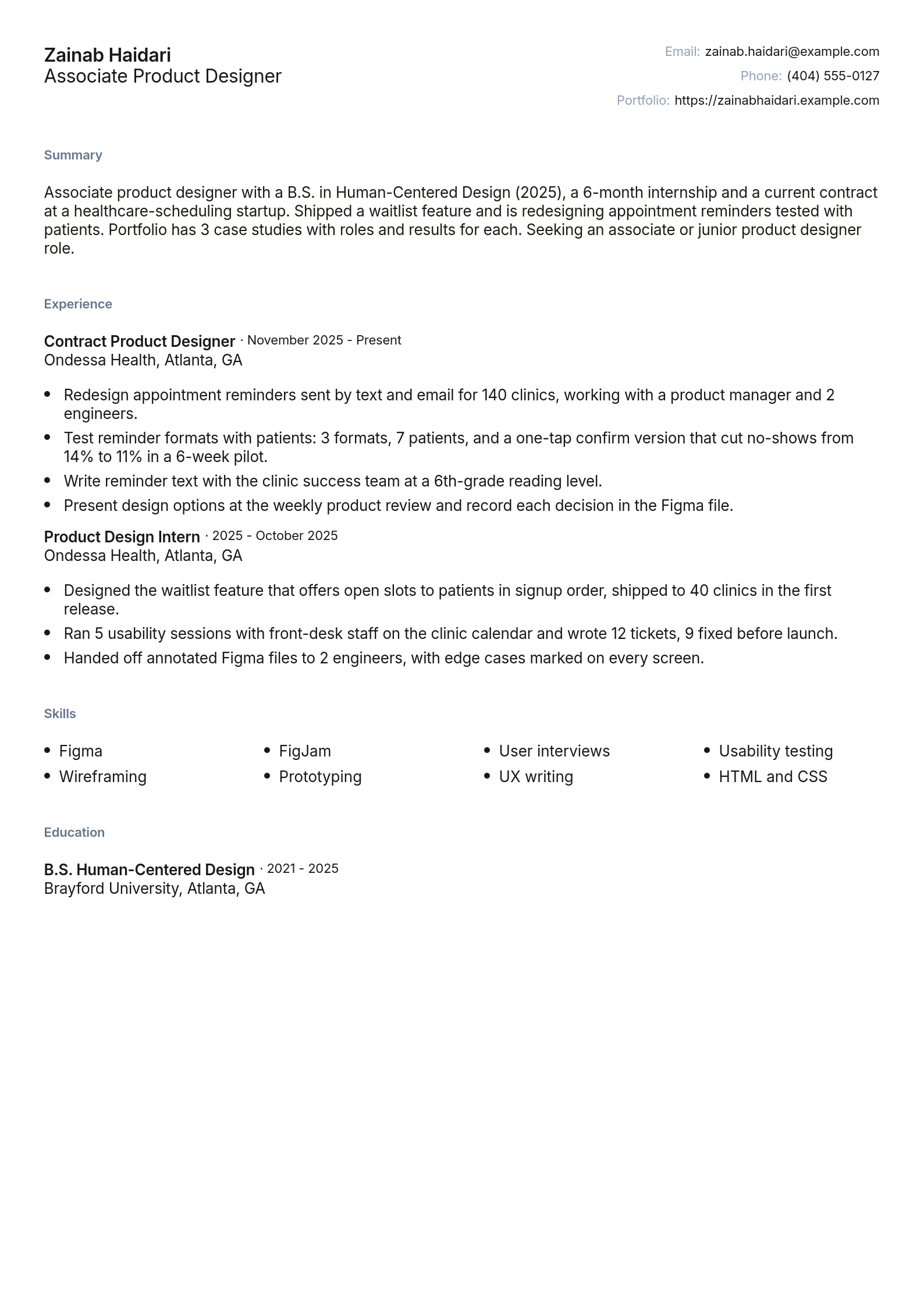
Entry-level product designer with an internship
Zainab has an internship and a contract at the same healthcare-scheduling startup, and she lists them as two roles with different work. The internship covers a shipped waitlist feature and usability sessions with front-desk staff. The contract covers reminder tests with patients and a no-show result. Her portfolio link sits in the header. Use it for associate or junior product designer roles in your first year or two after graduating.
Internship and contract listed as separate roles
Shipped feature and pilot result with real numbers
Portfolio link in the header
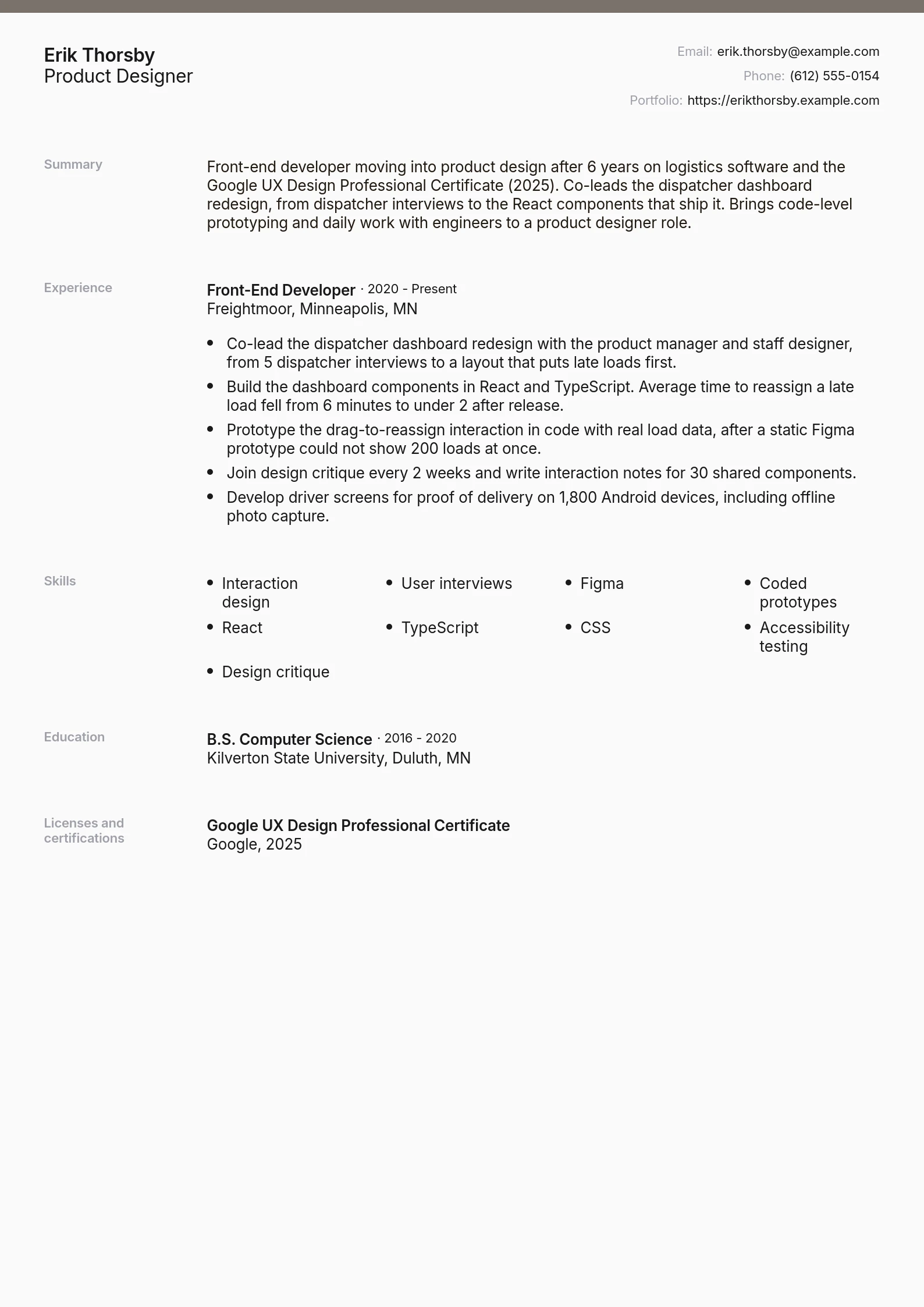
Front-end developer moving into product design
Erik's header names the job he wants, but his work entry keeps his real title, Front-End Developer. His summary says where he is heading, and the Google UX Design Professional Certificate he finished in 2025 sits under credentials. His bullets lead with design work: dispatcher interviews, the dashboard redesign and a coded prototype of a drag interaction. Code shows up as a design tool. Use it if you are moving into product design from engineering, QA or another technical role.
Developer title kept, with the design goal in the summary
Interviews and redesign listed before code bullets
Coded prototype used to test 200 live loads
Name the discipline in your title line
Ads with the same Designer title ask for different proof, so name your discipline in the title line or the first words of your summary, then lead with the proof the ad asks for.
If an ad just says Designer, read its requirements. An ad that mentions prototypes, engineers and experiments is a product design job. One that asks for social media creative and fast turnaround is graphic design under a broader title.
Discipline
Title line to use
Lead with
Keep short
Product design
Designer or Product Designer, plus the product type, such as consumer mobile or B2B SaaS
A feature you owned from problem to release, the partners, and the metric or decision that followed
Lists of screens, wireframes and tools
UX and interaction design
UX Designer or Interaction Designer
Research rounds, flows you changed and usability results
Brand and marketing visuals
Graphic design
Graphic Designer
Brand, print, packaging and campaign work with formats and deadlines
App flows and research methods
Visual design
Visual Designer
Interface visuals, design systems and brand consistency across screens
User research and wireframing
Fashion, interior, industrial or game design
The field's own title, such as Interior Designer
The field's own projects, software and credentials
Software product terms, since these fields hire on different evidence
Write who you worked with and what changed
Names the partners, the test and the result
Plan onboarding experiments with the product manager and a data analyst: 9 run, 3 shipped, including a goal-picker step that lifted day-7 retention from 31% to 35%.
Lists deliverables
Created wireframes, mockups and prototypes for the new onboarding flow using Figma.
Say which tool answered which question
Design teams now ask how you prototype, so name each tool next to the question it answered. A clickable Figma prototype tests whether people can finish a flow. A coded prototype answers what a static file can't, such as how a list of 200 live records scrolls or how a bank's verification step behaves inside an app.
Write the question, the tool and what happened next. 'Built a coded prototype in React so engineering could test whether the bank check could open in a sheet' tells a hiring manager more than 'proficient in prototyping'. If you test with people, give the round size, such as 6 to 8 users per round.
For AI tools, name the feature, the part of the work it did and what you did with its output. Figma Make, launched in May 2025 and out of beta since July 2025, turns a prompt or an existing design into a working prototype, so 'drafted layout variations in Figma Make, then rebuilt the chosen direction in the team's component library' shows both speed and judgment. List a tool only under jobs where you used it, and only from the date it existed.
Keep the skills list specific to product work: Figma, a prototyping tool such as ProtoPie or Framer, FigJam for workshops, and code at the level you use it, such as HTML and CSS or React. Some product design ads ask for prototypes built in code, so if you build them, say so in a bullet as well as the skills list.
Link one portfolio and match its case studies to your bullets
Put one portfolio link in the header, next to your email, and check that it opens on a phone without a login. Product design ads often ask for an online portfolio, and one early-career posting even links applicants to guides on what it should contain.
Match the resume to the case studies. If your portfolio has a case study called 'Reminder redesign', the bullet for that work should use the same name and the same result, so a reviewer can find it in seconds. Two or three case studies of shipped work are enough for most roles.
When a team did the work, say your part in the case study and in the bullet, such as 'led interviews and interaction design with a senior designer on visual design'. Early-career designers need this most, because school and internship projects are often group work.
If your best work is under a nondisclosure agreement, describe the product type and give results as percentages, such as 'cut no-shows from 14% to 11%'. Show a rebuilt or blurred version in the portfolio with a note that it was changed to protect the client.
Group freelance clients under one studio entry
List freelance work as one entry, with your studio name or 'Freelance Designer' as the employer, then give the number of projects and the kinds of clients. Fourteen separate client entries read like job-hopping and push your best work down the page.
Use bullets for the work types that match the job you want, with counts: '8 startup marketing sites in Webflow', 'a 22-screen app prototype for a health startup', 'a 30-component UI kit for an ordering site'. Name clients only when you have permission and the name helps. Otherwise describe them by stage and industry, such as 'seed-stage health startup'.
Retainers show that clients keep paying you, so list them with scope and hours: '2 monthly retainers for site updates and landing pages, 15 to 20 hours each'. Add a repeat-business count if you have one, such as 6 of 14 projects from returning clients or referrals.
If you want a staff role, say so in the summary and put product work first, such as app prototypes and UI kits, ahead of one-off landing pages.
Senior and lead resumes shift from features to people and plans
A senior designer resume still centers on design work you led, while a lead or manager resume centers on the team, hiring and planning. Choose the column that matches the job ad, not your current title.
Resume part
Mid-level product designer
Senior product designer
Design lead or manager
Scope to name
One feature area, such as onboarding or notifications
A cross-team initiative, with counts of designers, PMs and engineers
A product area and the team you manage, with headcount
People bullets
Partners you work with every sprint
Critiques you run and designers you mentor
Hires, promotions and the career ladder you use
Planning bullets
Experiments or releases you designed
How you sequenced a redesign across platforms
Quarterly priorities set with product and engineering leaders
Results to show
A metric your feature moved
A metric across platforms, plus a quality standard you set
Team results, such as fewer accessibility defects, and one product result