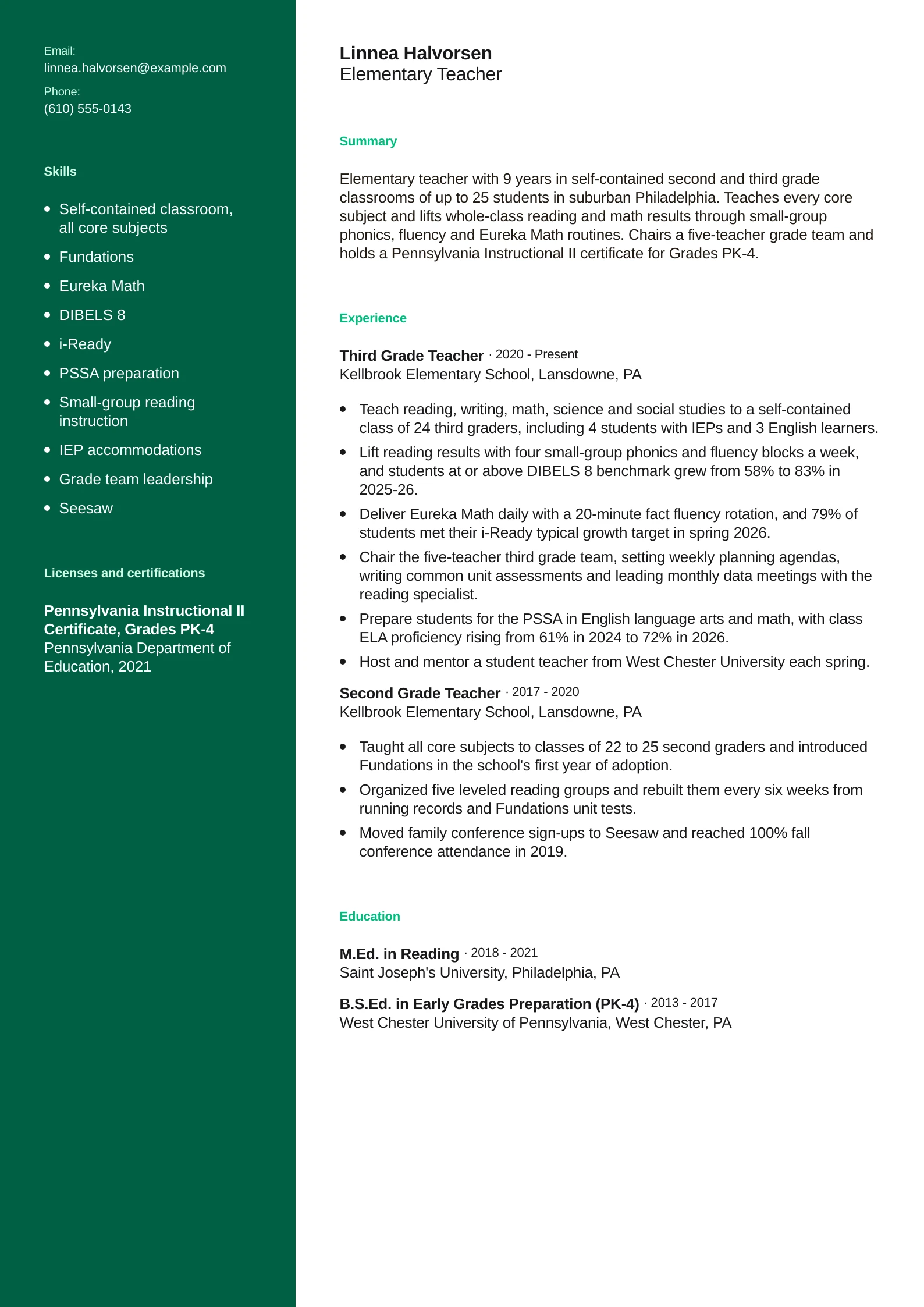
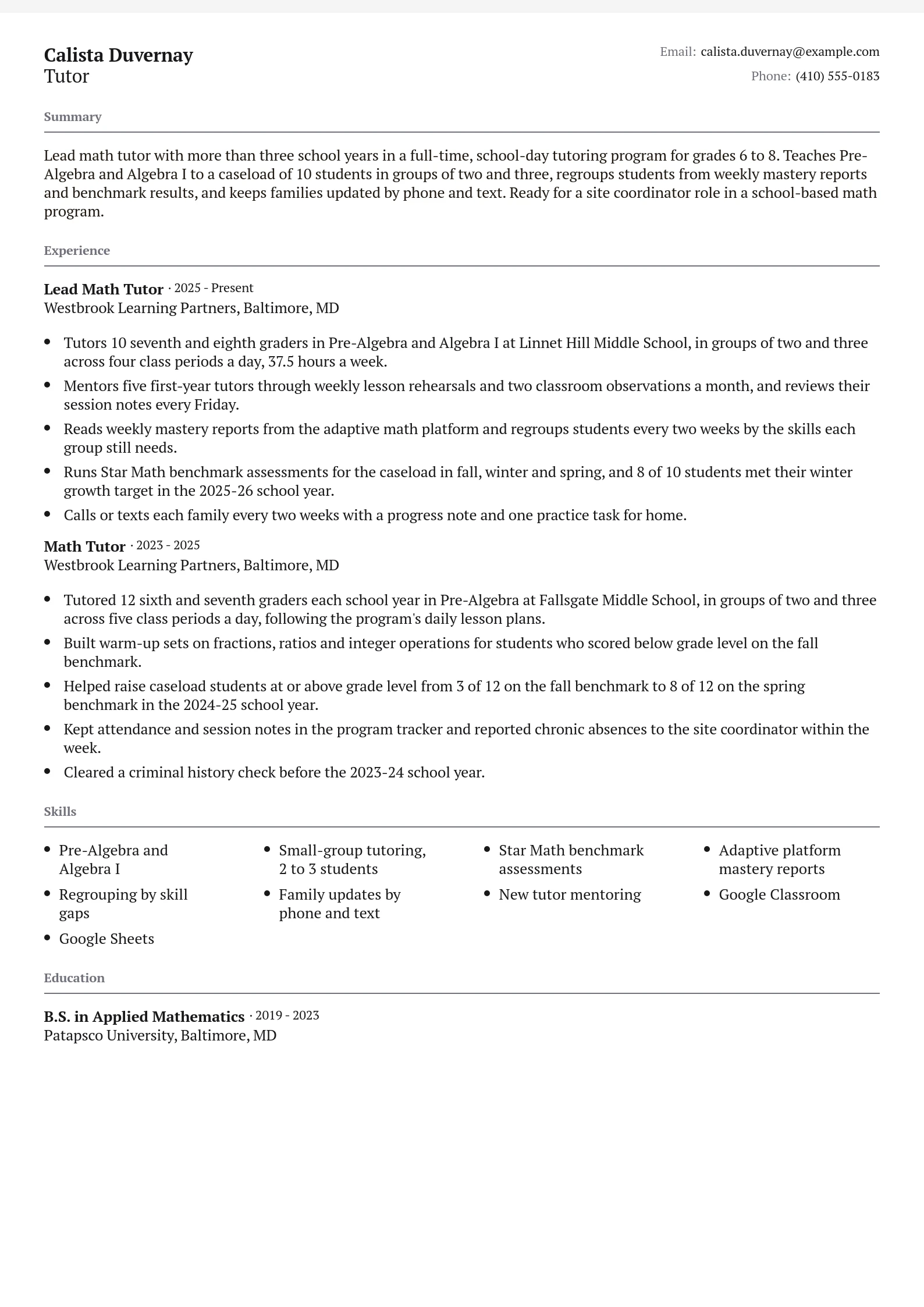
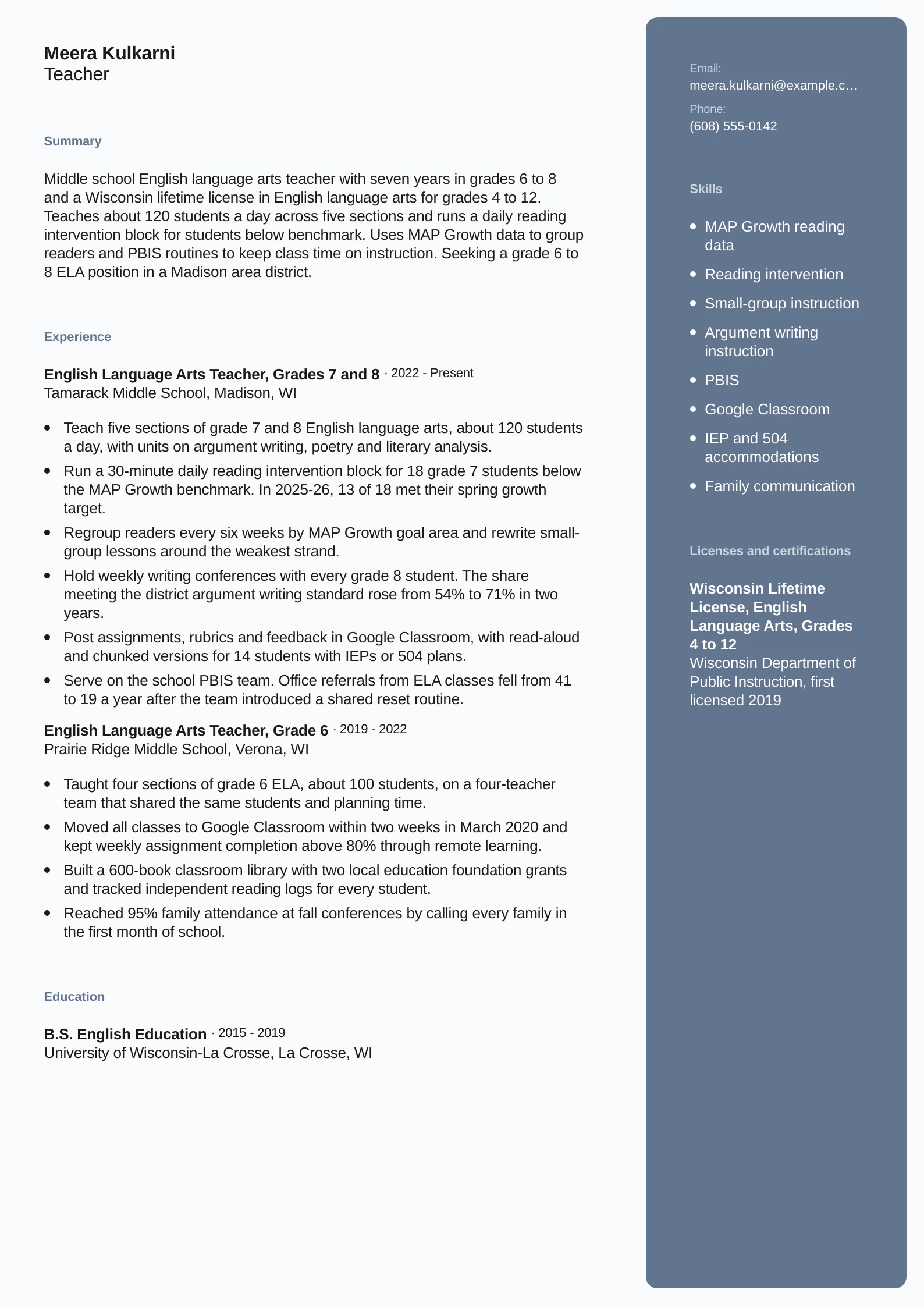
A preschool director reads your credential line first, because it decides whether you can lead a room under that state's licensing rules and that program's own standard.
Each example names the credential its setting asks for, such as a CDA for a year-round center or a Nebraska teaching certificate for public pre-K, and counts the children and adults in every room.
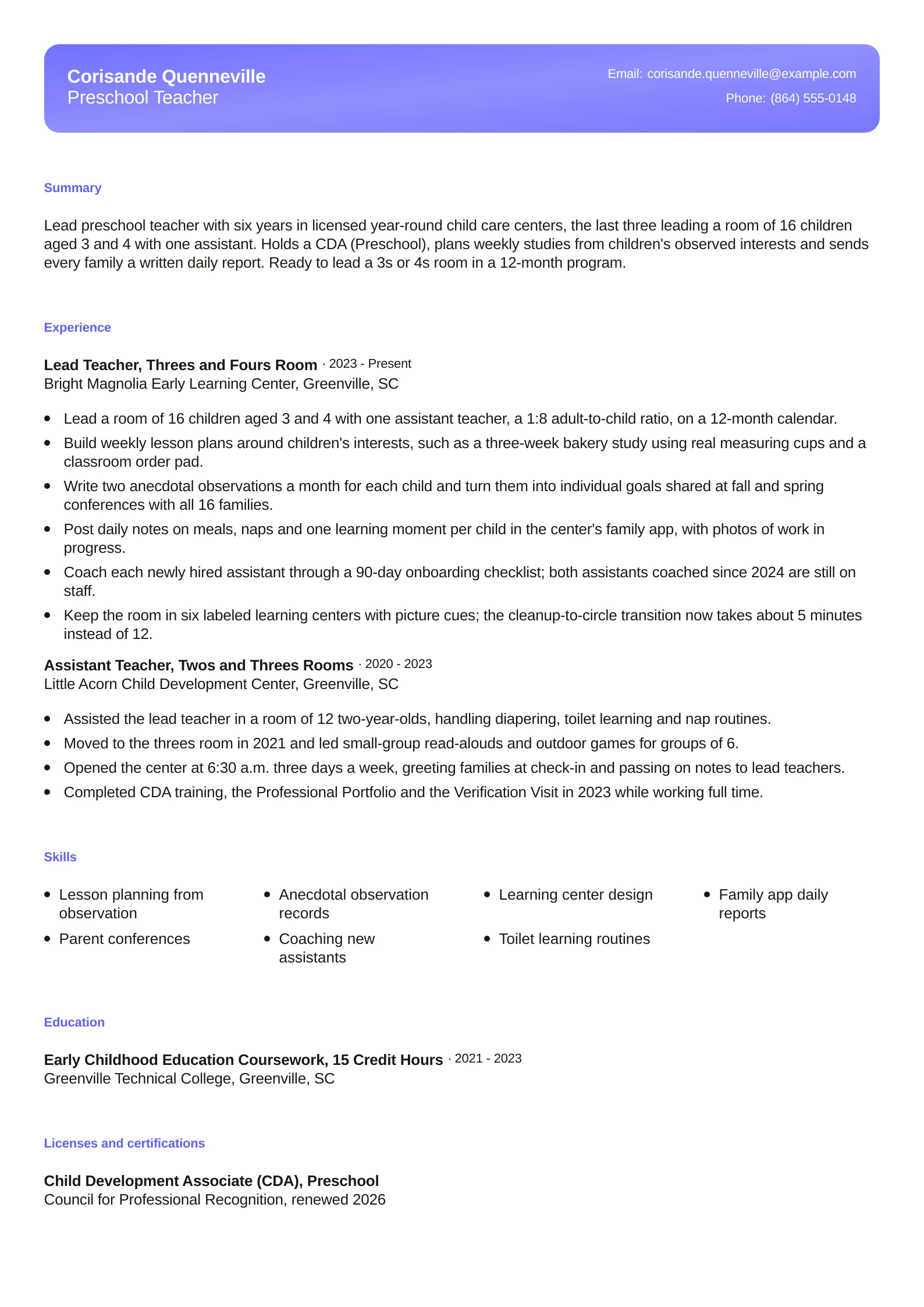
Corisande Quenneville leads 16 three- and four-year-olds with one assistant in a licensed 12-month center. Her first bullet gives the age band, the group size and the adult-to-child ratio, and her CDA appears with its renewal year so a director can see it's current.
Use this layout if you're moving from assistant to lead or changing centers. Swap in your own room size, the app or paper report you use for daily family notes, and the number of conferences you held.
Pick the setting and credential closest to yours
Head Start, public pre-K and Montessori schools each ask for a different credential, so open the example whose setting matches the job post, then borrow bullets from the others.
Assistant teacher still earning a CDA
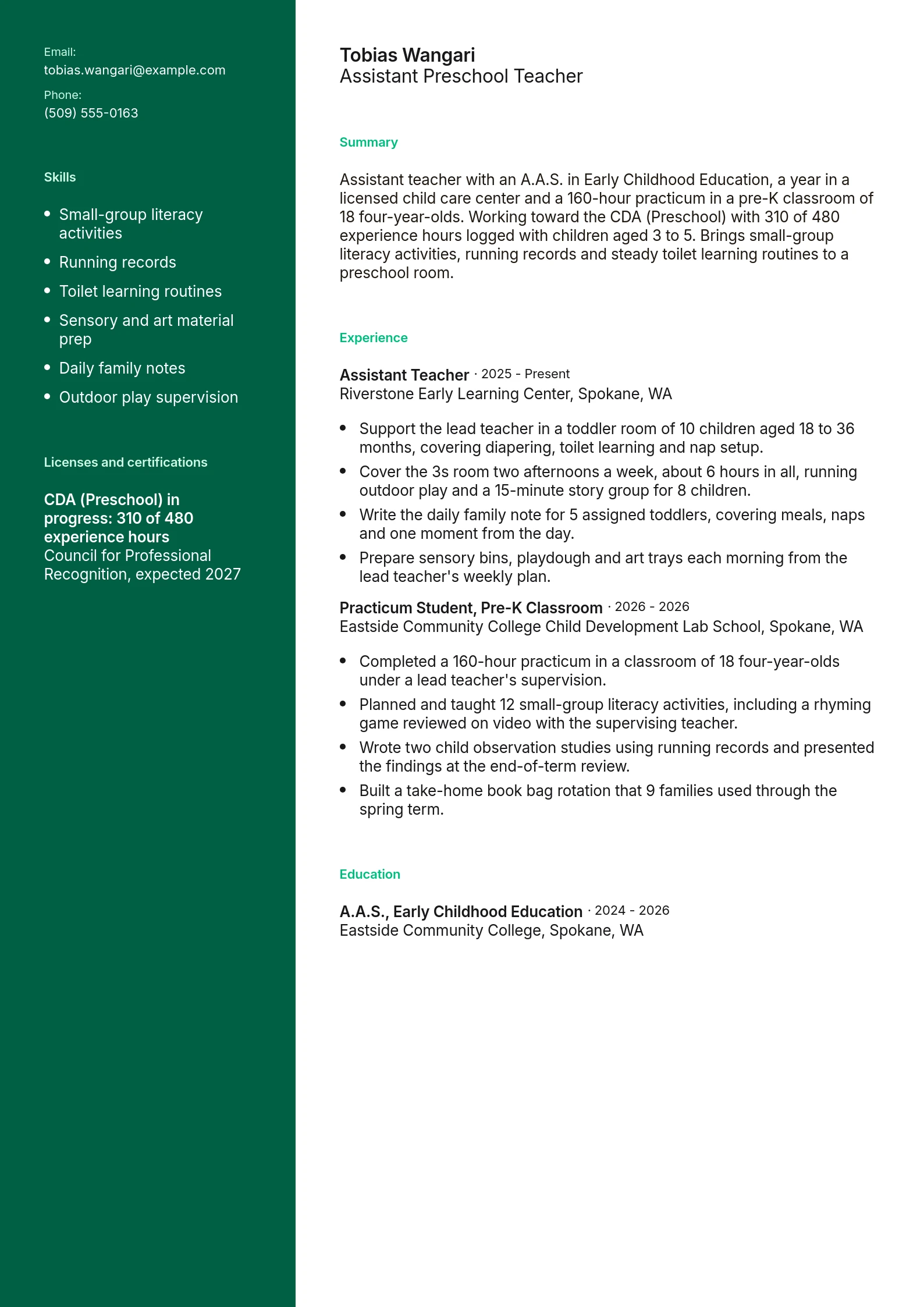
Tobias lists his CDA as in progress with an exact count, 310 of 480 experience hours with children aged 3 to 5, and the year he expects to finish. His 160-hour practicum is its own entry, with the class size and the activities he taught. Use it if you've just finished an associate degree, work as an assistant, or have toddler-room hours to keep apart from preschool hours.
CDA in progress with hours logged and an expected year
Practicum listed like a job, with class size and hours
Toddler room and 3s room work shown separately
Head Start teacher with screenings and home visits
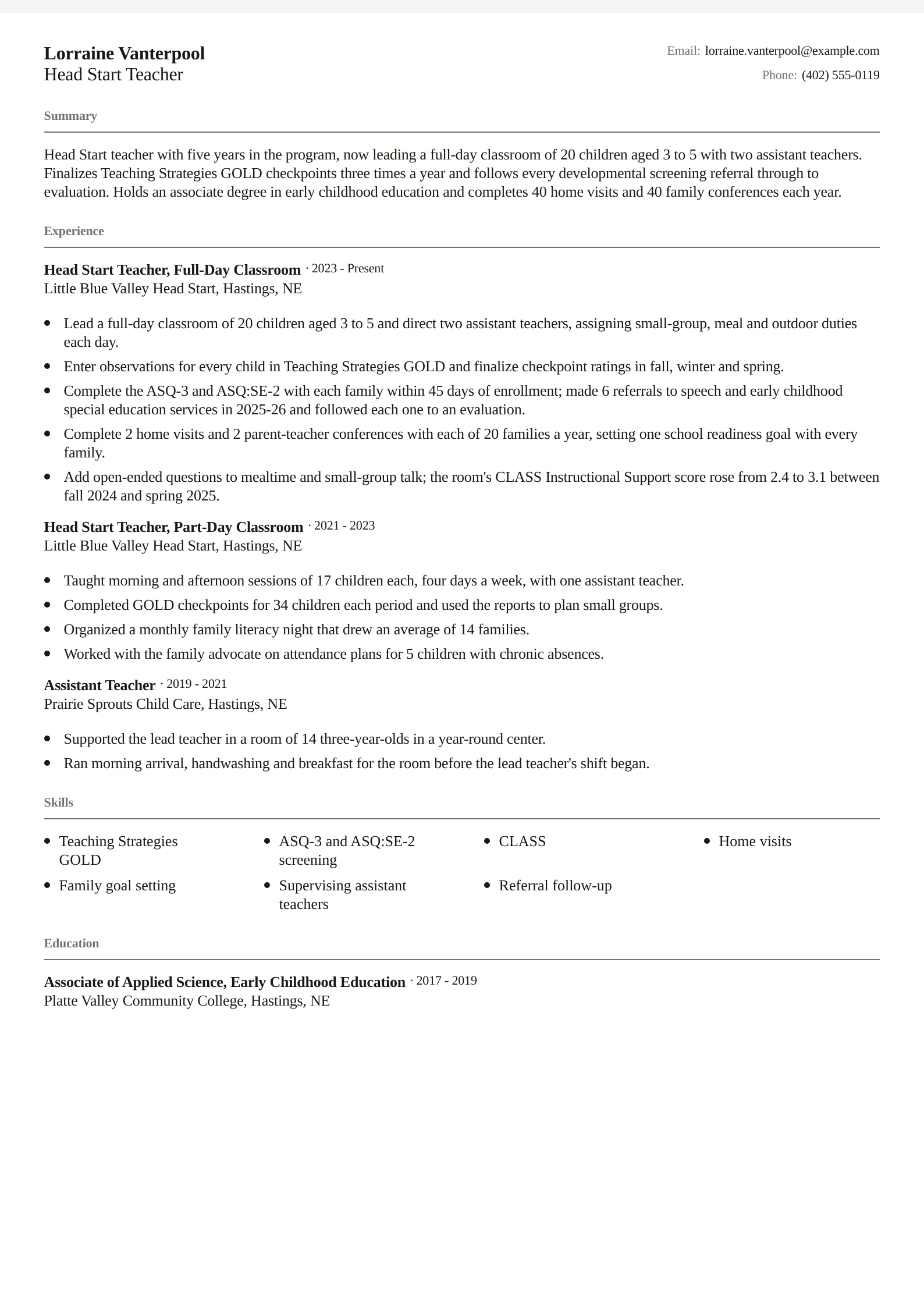
Lorraine's bullets give the counts a Head Start education manager checks: 20 children aged 3 to 5, two assistants, GOLD checkpoints in fall, winter and spring, ASQ-3 screenings and the referrals that followed. Home visits and conferences are counted per family per year. Her associate degree is her only credential, which is the minimum Head Start programs ask for. Use it if you've taught in Head Start or a program with checkpoints and home visits.
Teaching Strategies GOLD checkpoints three times a year
Referrals counted and followed to evaluation
Two home visits and two conferences per family
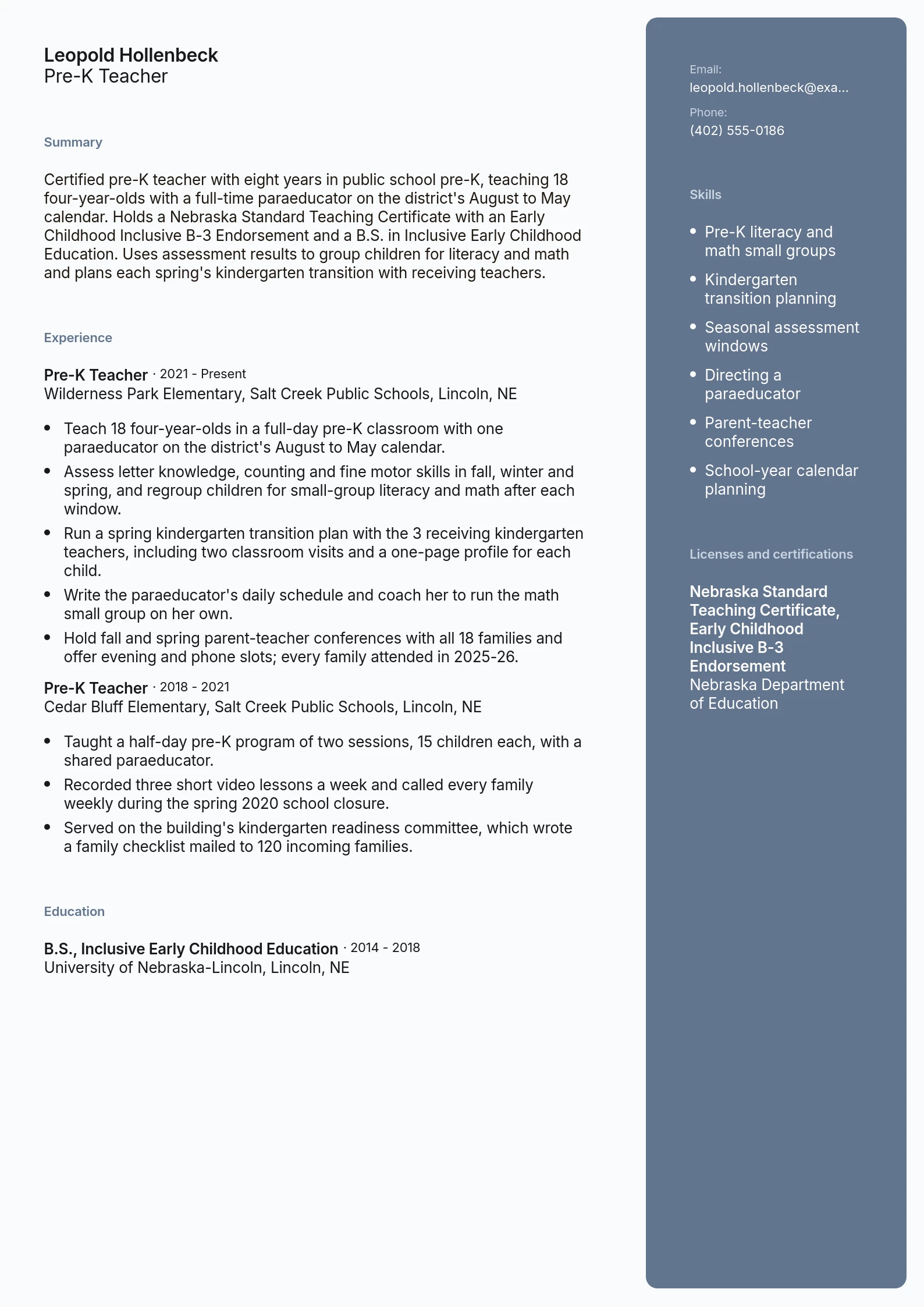
Certified pre-K teacher in a school district
Leopold's Nebraska Standard Teaching Certificate appears with its endorsement written the way the state lists it, Early Childhood Inclusive B-3, because a district screens for it first. His bullets follow the August to May calendar: three assessment windows, fall and spring conferences, and a spring kindergarten transition plan built with the receiving teachers. Use it if you hold a state teaching certificate and want to teach pre-K in a public school.
Endorsement written the way the state lists it
Kindergarten transition plan with receiving teachers
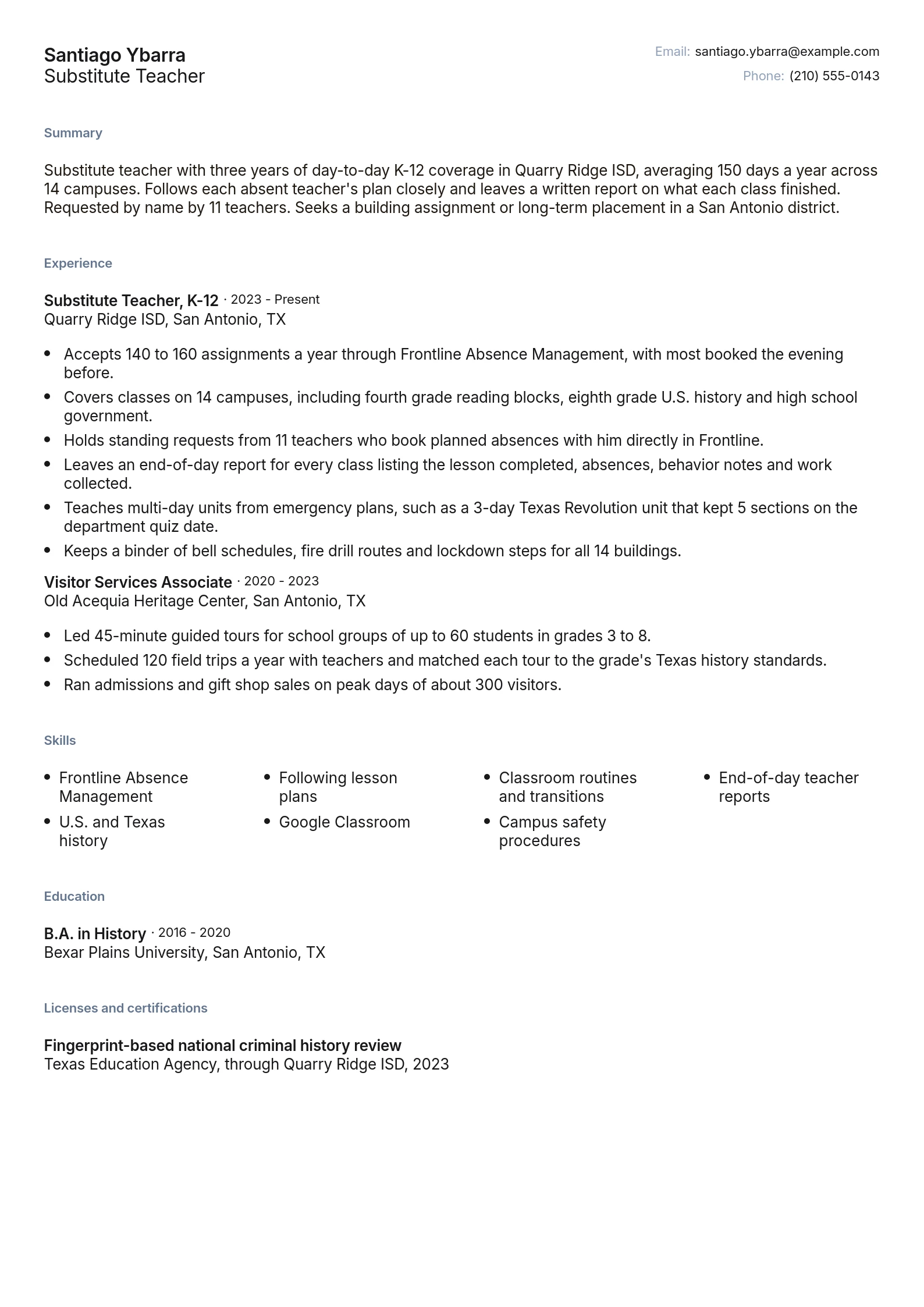
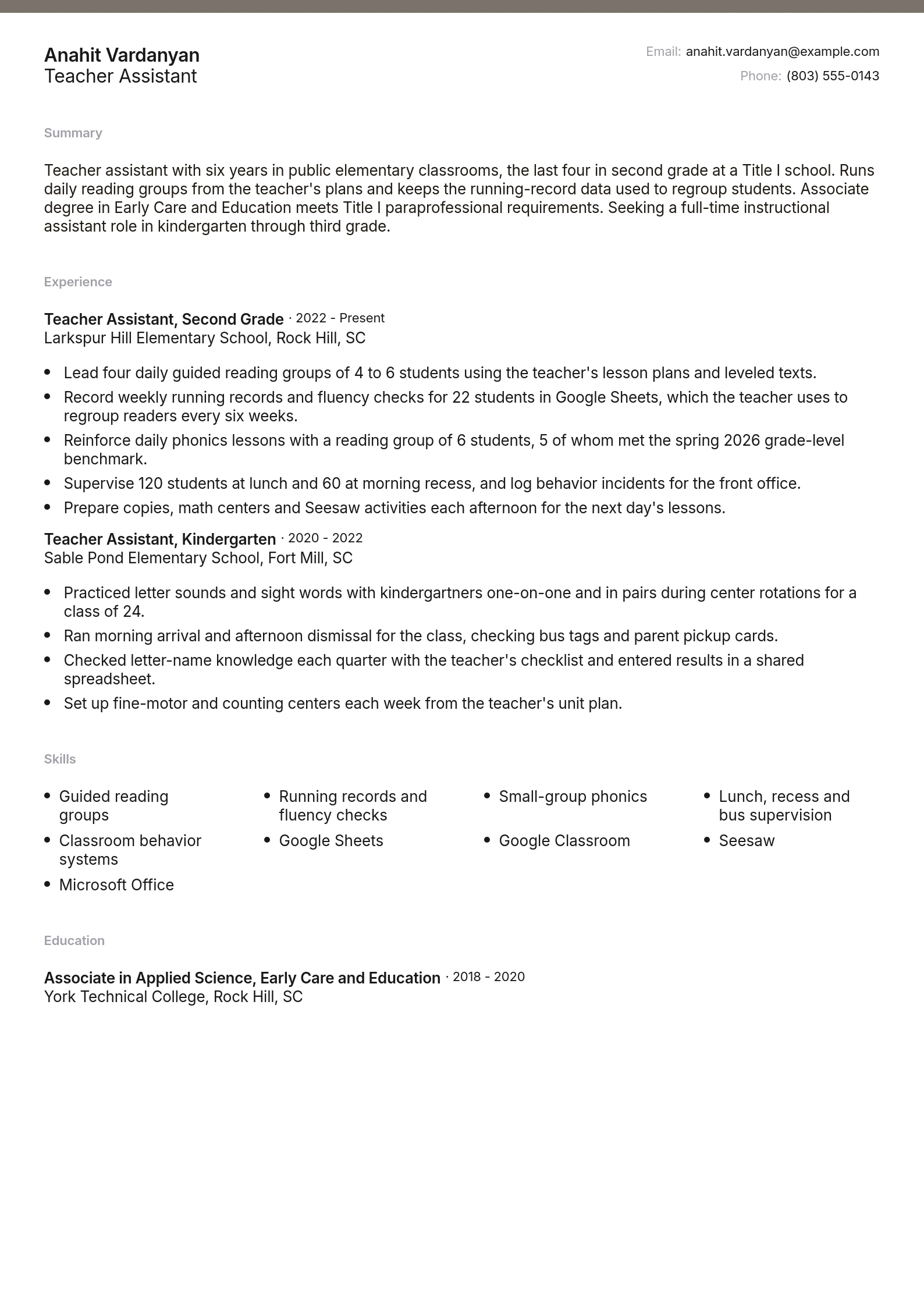
Paraeducator schedule and coaching
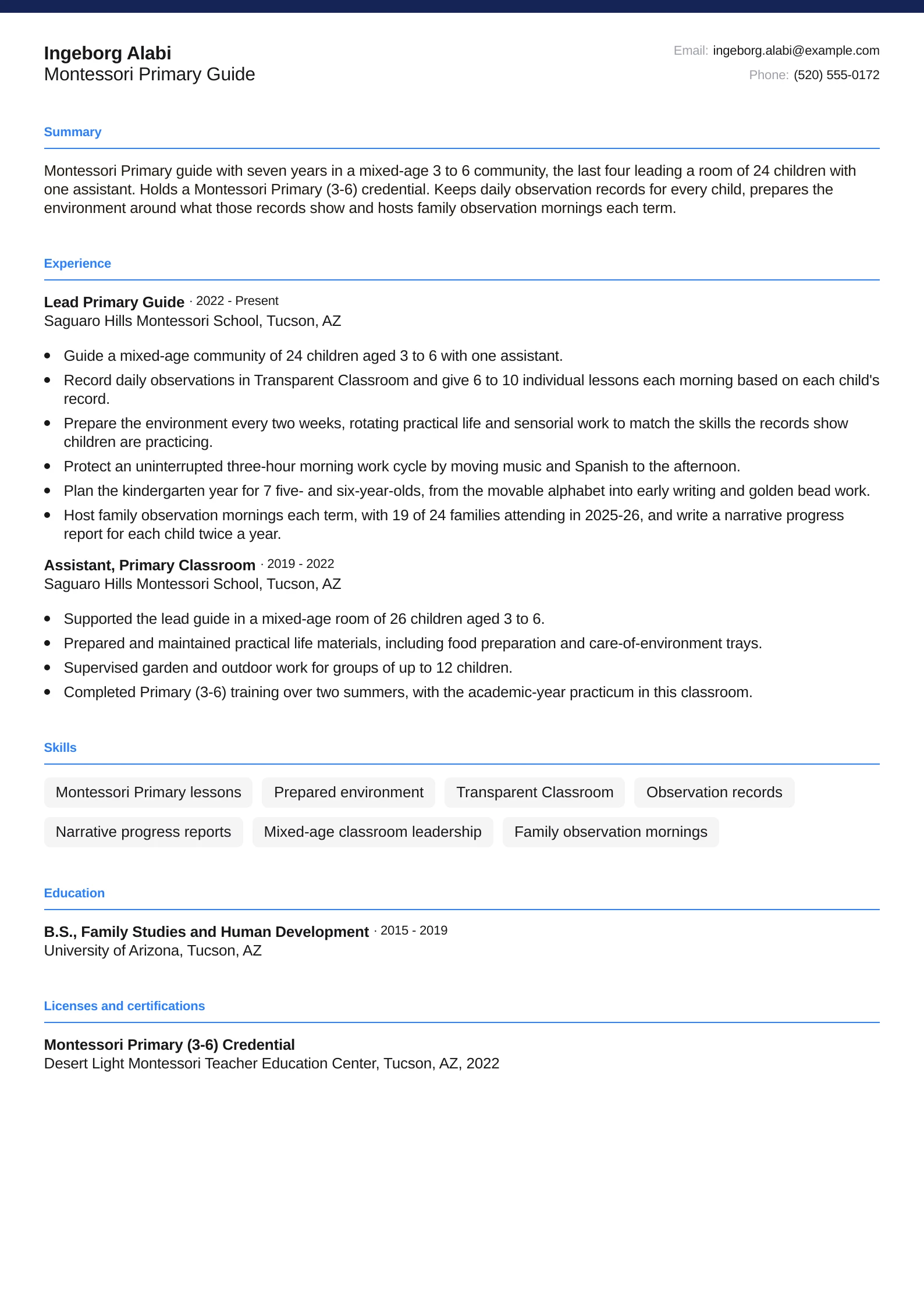
Montessori Primary guide in a mixed-age 3 to 6 room
Ingeborg uses the terms a Montessori head of school looks for: prepared environment, three-hour work cycle, individual lessons and daily observation records. Her Primary (3-6) credential names the training center and year, and her assistant years show where she did her practicum. Use it if you're a trained guide or an assistant finishing Primary training, and replace lesson-plan language with what you observe and present.
Primary (3-6) credential with training center and year
Daily observation records drive individual lessons
Family observation mornings with attendance counts
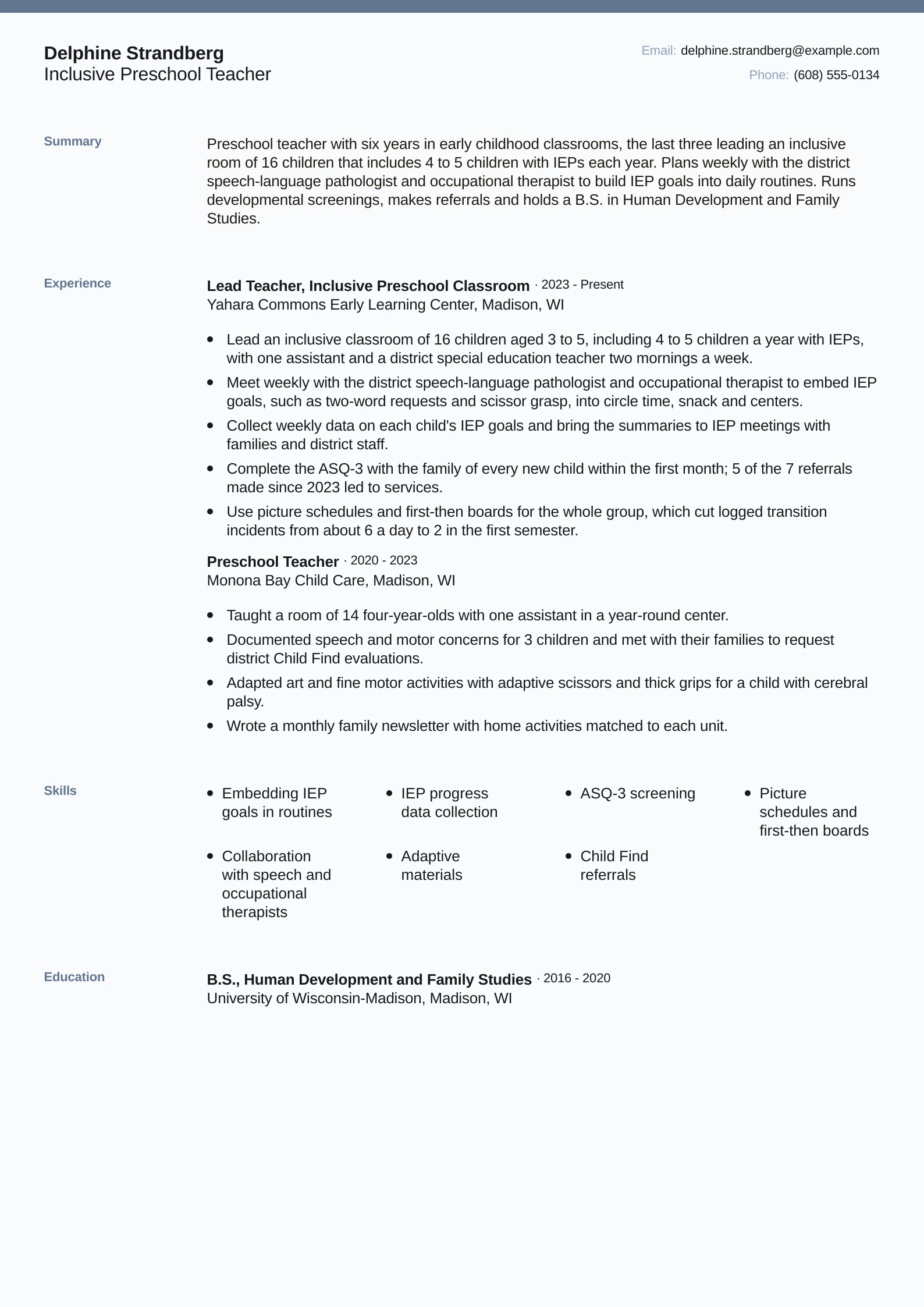
Inclusive preschool teacher working with IEP goals
Delphine's bullets give the number of children with IEPs in each class, name the speech-language pathologist and occupational therapist she plans with, and show the goals she builds into snack and circle time. Screenings and referrals are counted, including how many led to services. Use it if you teach in a blended or inclusive room, or if you've helped families request Child Find evaluations and want that work to show.
4 to 5 children with IEPs per class
Weekly planning with speech and occupational therapists
Screenings and referrals with outcomes
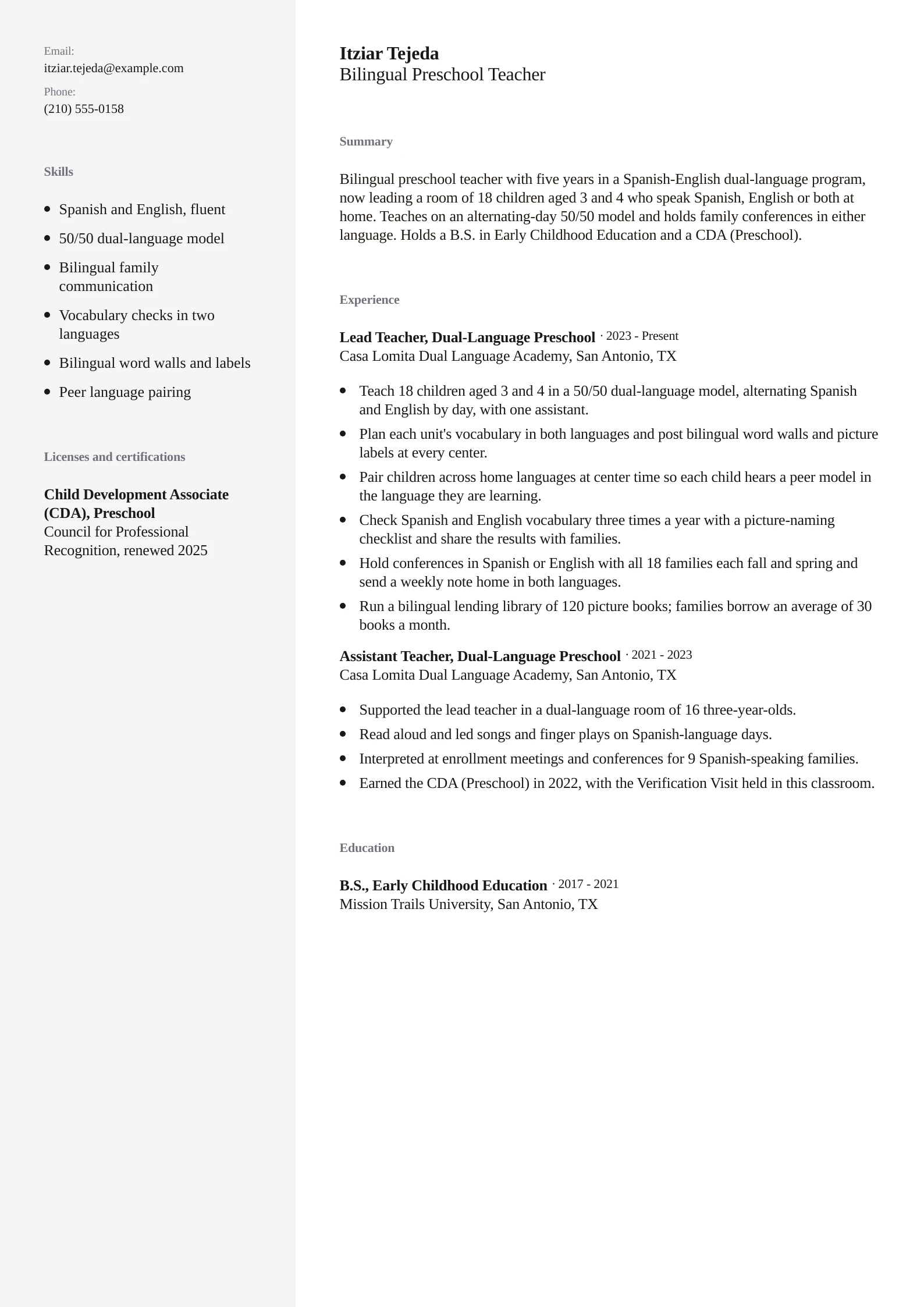
Bilingual teacher in a Spanish-English dual-language room
Itziar names the program model, 50/50 Spanish and English on alternating days, and the home languages of her 18 children. Spanish appears in her skills and again in the work itself: conferences, weekly notes and a bilingual lending library. Her CDA and bachelor's degree are both listed. Use it if you teach in two languages or talk with families in a language other than English.
Dual-language model named in the first bullet
Spanish shown in conferences, notes and the library
Vocabulary checks in both languages
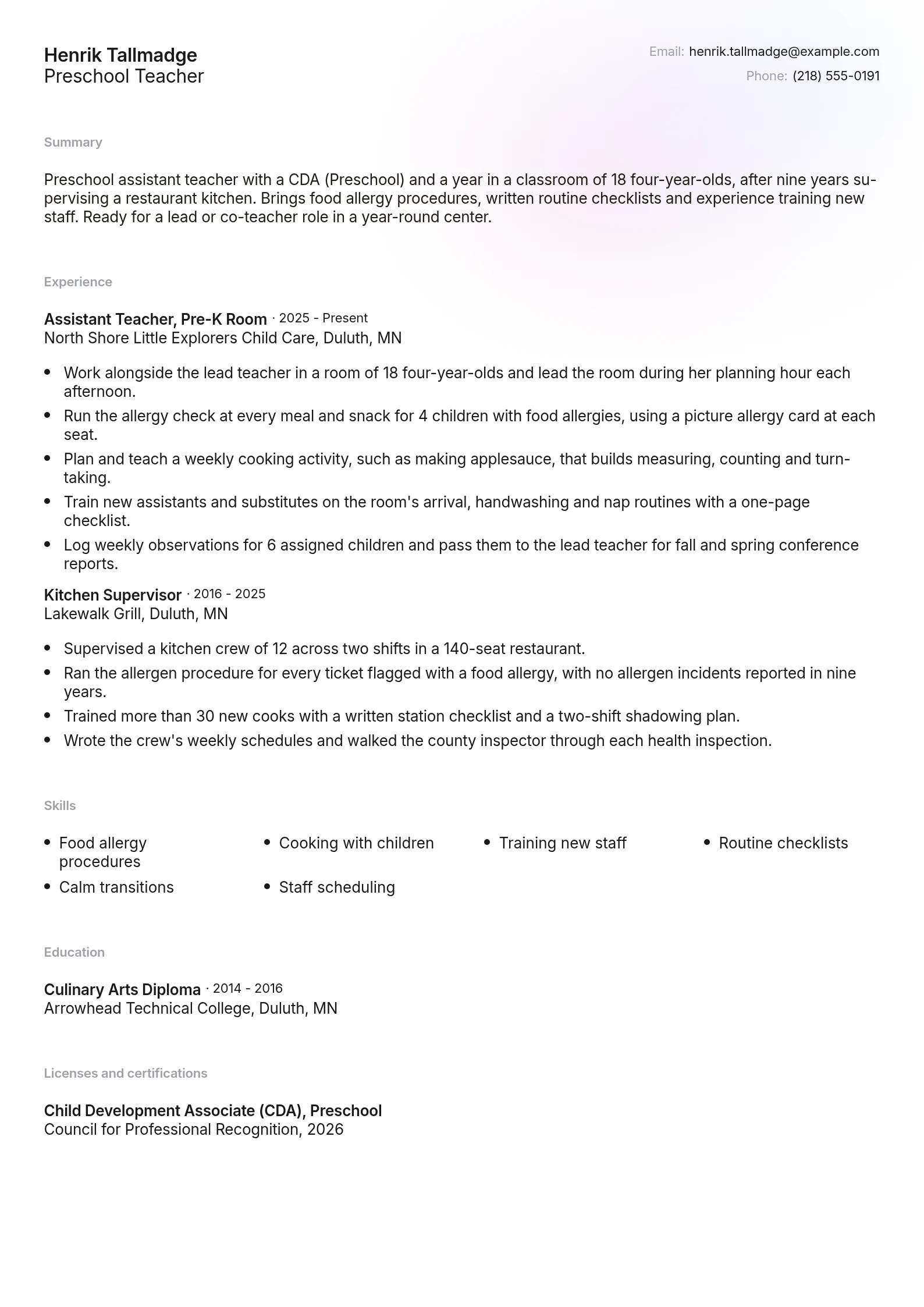
Career changer from a restaurant kitchen
Henrik puts his preschool assistant job and new CDA at the top, then cuts nine kitchen years to four bullets that carry over: allergen procedures, training new staff, written checklists and health inspections. His classroom bullets show the same habits with children, such as allergy checks at every meal for 4 children. Use it if you're changing careers into early childhood and have a year or less in a classroom.
Early childhood job and CDA listed first
Kitchen allergy and training work tied to the classroom
Cooking activity that teaches measuring and counting
Write the credential exactly as it was issued
Name the credential, the issuer, the year and the age group it covers. Put it in the first line of your summary and again in a Certifications section, because directors compare it against their state's lead-teacher rules and the job post before reading anything else.
Copy the full name from your certificate or transcript. A phrase like "early childhood certified" leaves the director guessing which credential you hold.
Credential
Write it like this
Settings that ask for it
Add this detail
CDA, preschool setting
Child Development Associate (CDA), Preschool. Council for Professional Recognition, 2025
Head Start assistant roles, and child care centers and private preschools where state rules accept it
The setting (Preschool, not Infant-Toddler) and your renewal year
Associate degree
A.A.S., Early Childhood Education. College, city, year
Head Start, which asks for at least an associate degree, and many centers
For a related-field degree, the number of ECE or child development credit hours
Bachelor's degree
B.S., Early Childhood Education. University, year
Head Start programs that list it as preferred, and private schools
Your student teaching placement and its age group
State teaching certificate
Nebraska Standard Teaching Certificate, Early Childhood Inclusive B-3 Endorsement. Nebraska Department of Education
Public school pre-K
The exact endorsement name and the expiration year
Montessori Primary credential
Montessori Primary (3-6) Credential. Training center (MACTE-accredited), 2022
Montessori schools hiring a lead guide
The AMI or AMS affiliation or MACTE accreditation, and the 3 to 6 age level
Describe the room: ages, group size, adults and tools
A strong preschool bullet tells a director which children you taught and what you documented. Planning activities and supervising play are true of every applicant, so they don't help anyone choose you.
Open the first bullet of each job with the age band, the group size and the adults you worked with or directed, such as "16 children aged 3 and 4 with one assistant." Name the assessment, screening or record-keeping tool, such as Teaching Strategies GOLD, ASQ-3 or Transparent Classroom, and how often you used it. Count screenings, referrals, home visits and conferences per year, and say where a referral led if you know.
Assistants can write the same way. Give the room size and the lead teacher you supported, then name the part of the day you ran, such as arrival, story group or outdoor play.
Room, tool and count
Lead 20 children aged 3 to 5 with two assistant teachers. Finalize Teaching Strategies GOLD checkpoints in fall, winter and spring, and screen every new child with the ASQ-3, which led to 6 referrals in 2025-26.
Duty list
Planned age-appropriate activities, supervised children and communicated with parents daily.
What a center, Head Start, district or Montessori school reads first
The setting decides which credential, calendar and records go at the top. About 65% of preschool teachers work in child care services, but Head Start, public schools and Montessori schools each look for their own records and vocabulary, so rewrite the summary and first bullets for each application.
If you've worked in more than one setting, lead with the job that matches the posting and cut the others to two or three bullets.
Inclusive and dual-language rooms run inside any of these settings. Add that detail on top: the number of children with IEPs and the specialists you plan with, or the program model and the languages you teach in.
Setting
Credential to lead with
Calendar to show
Put near the top
Child care center
A CDA or an ECE degree, whichever the posting names
Year-round, often with early opening or late shifts
Age band, group size and ratio, daily family notes, coaching assistants
Head Start
At least an associate degree in early childhood education
Often the school year, sometimes full-year
GOLD checkpoints, screenings and referrals, home visits and conferences per family
Public school pre-K
State teaching certificate with its early childhood endorsement
School year, often starting in August
Assessment windows, the paraeducator you direct, kindergarten transition, conference attendance
Montessori school
Primary (3-6) credential from an AMI, AMS or MACTE-accredited program
Varies, and some run 12 months
Mixed-age group size, work cycle, observation records, lessons given
Show a CDA or degree in progress with hours and a date
List a credential in progress in the same section as finished ones, with the words "in progress" and the date you expect to finish. Head Start, for example, can hire an assistant teacher who is enrolled in a CDA program and finishes within two years of hire, so a clear in-progress line can meet a posting's requirement.
For a CDA, write the experience hours you've logged out of the 480 the preschool credential needs, counting only hours with children aged 3 to 5 in a center-based program. Tobias writes "CDA (Preschool) in progress: 310 of 480 experience hours" and leaves his toddler-room hours out of that number. If your training is done, say so: the credential needs 120 hours, with at least 10 in each of eight subject areas.
Name the step you've reached when only the last parts remain, such as "Professional Portfolio complete, Verification Visit scheduled for November 2026." A director can see how close you are without asking.
For a degree, give the expected graduation month and the credits finished, such as "A.A.S., Early Childhood Education, expected May 2027, 42 of 60 credits." For a Montessori Primary credential, name the training center and the stage you're in, such as the academic-year practicum.
Keep "in progress" next to the credential everywhere it appears, including the summary, so a director reading only the top of the page sees the same status as your Certifications section.