Hiring managers judge an event coordinator by the events they actually ran: how many guests, how much budget, how many vendors, and what happened on the day when the plan changed. The five examples below cover corporate conferences, hotel banquets, a university events office, virtual and hybrid production, and a first job after a hospitality degree.
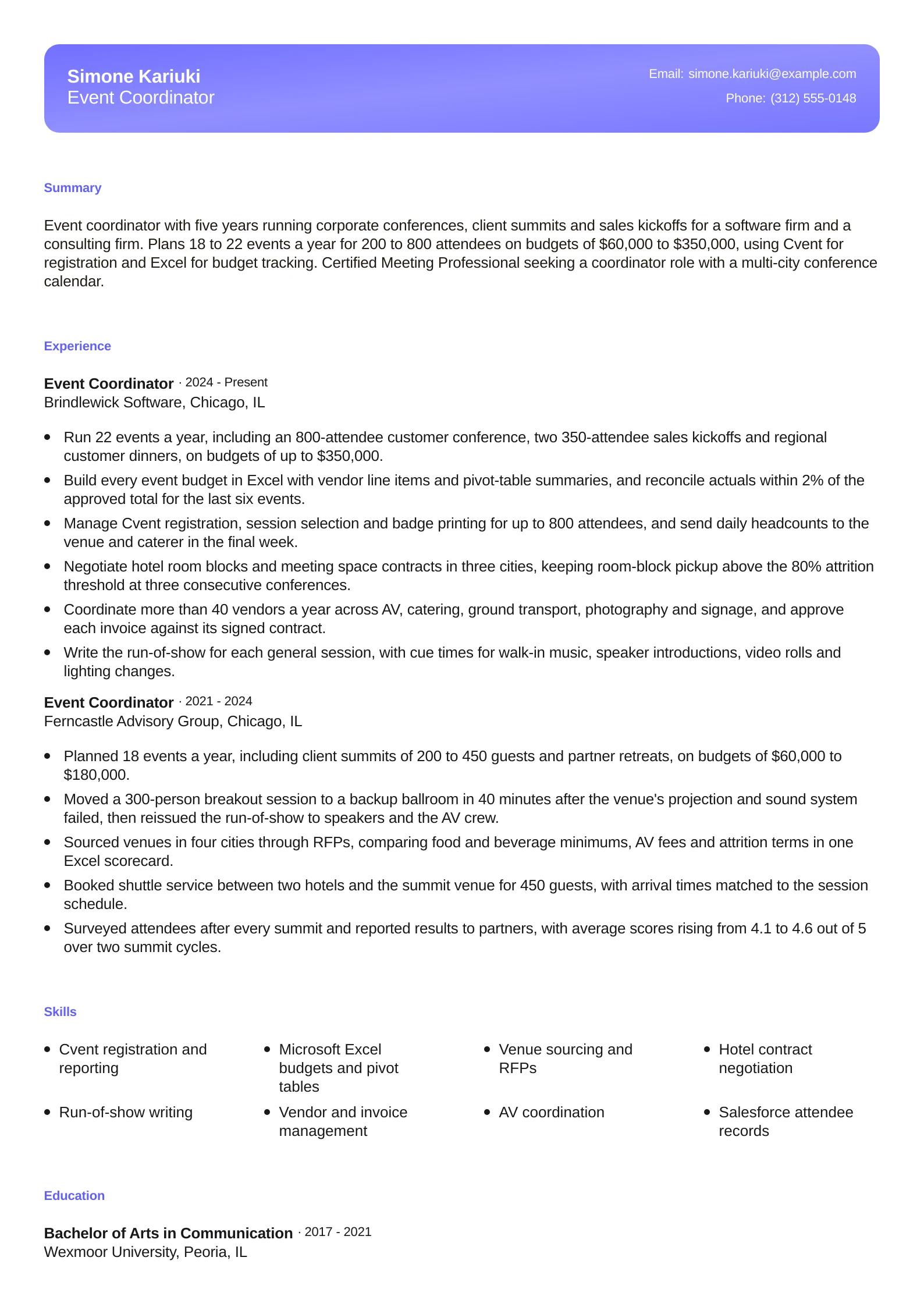
Simone Kariuki's resume fits most corporate event coordinators: two employers, 18 to 22 events a year, conferences of up to 800 attendees and a CMP earned in 2025. Each role opens with the events she ran and their size, then moves to budgets, Cvent registration and hotel contracts.
Copy the shape of her Ferncastle bullets if you have a day-of save to report. The AV failure line gives the headcount, the 40 minutes it took and what she sent to speakers afterward, which is the detail an interviewer will ask you to expand on.
Hotel, campus, virtual and first-job versions
Each example below changes the setting or the seniority, so the tools, numbers and event types change with it. Pick the one closest to the job you're applying for, not the one closest to your current title.
Hotel catering and banquet events
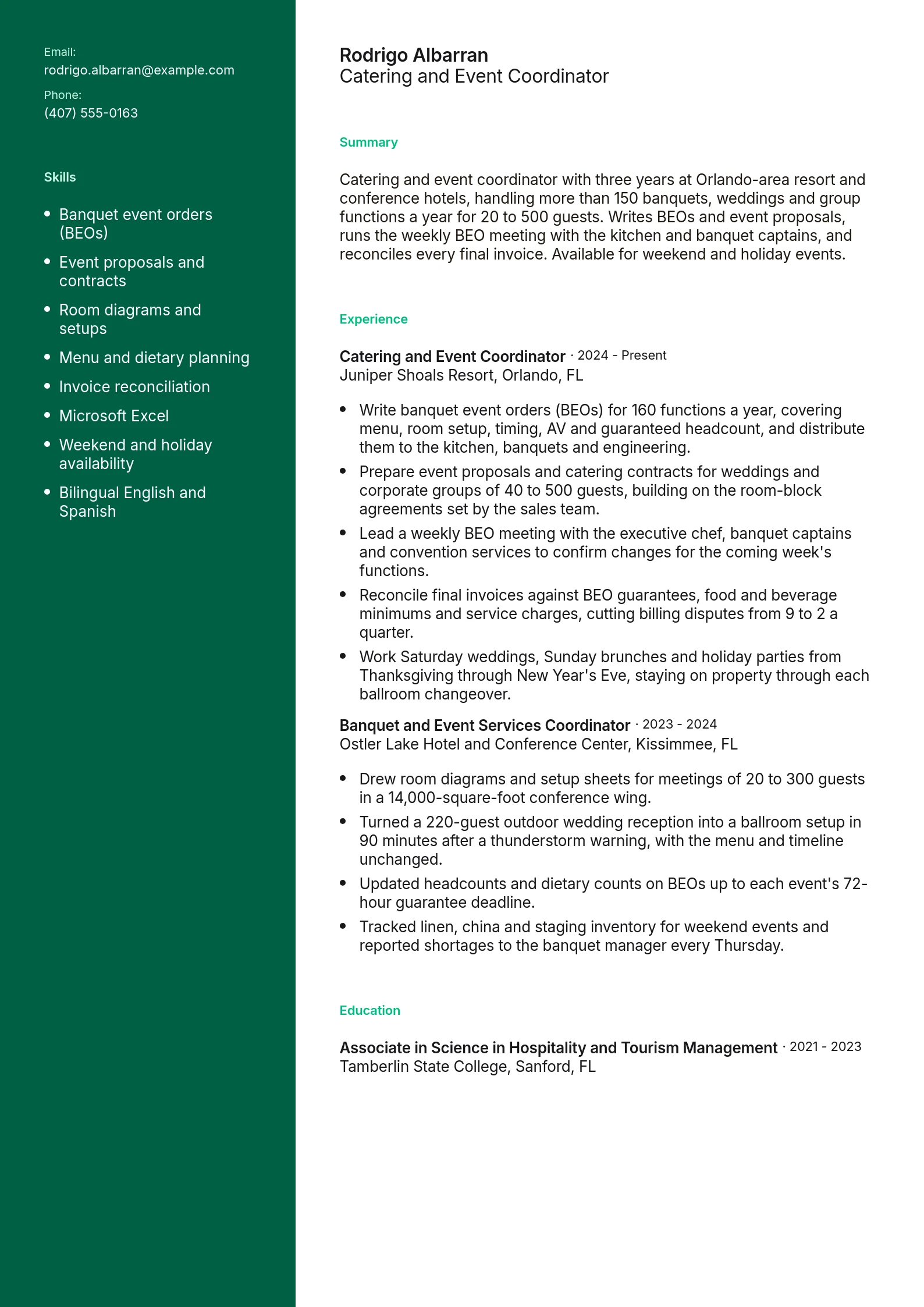
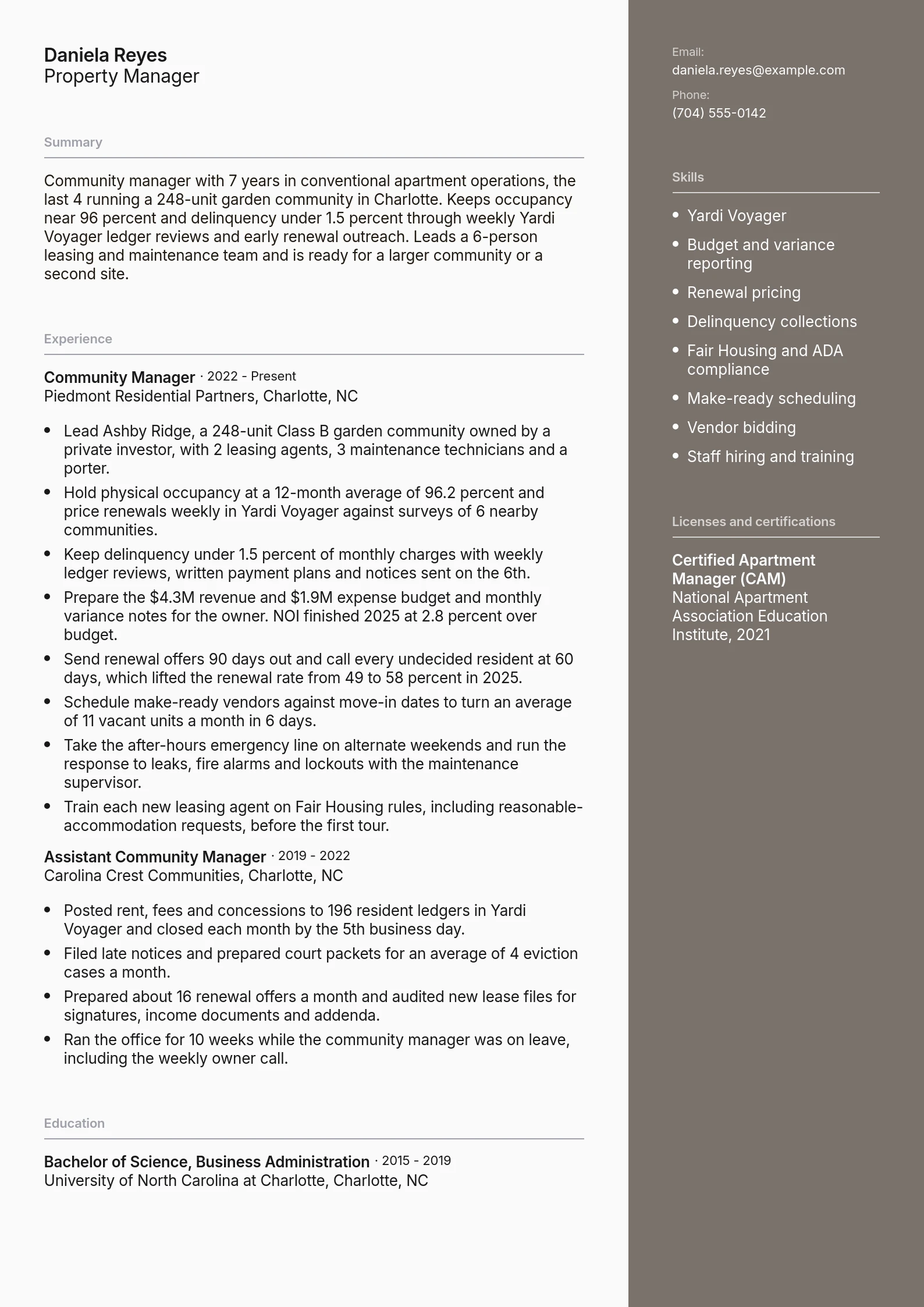
Rodrigo's resume suits coordinators who work inside a hotel's catering and conference services team. His bullets are built around the BEO: what goes into one, who receives it and how the final invoice is checked against it. He states weekend and holiday availability in his summary and backs it with a Thanksgiving to New Year's Eve bullet, and a storm move from an outdoor reception to the ballroom gives him a day-of example.
BEOs for 160 functions a year
Billing disputes cut from 9 to 2 a quarter
Weekend and holiday calendar stated
University business school events office
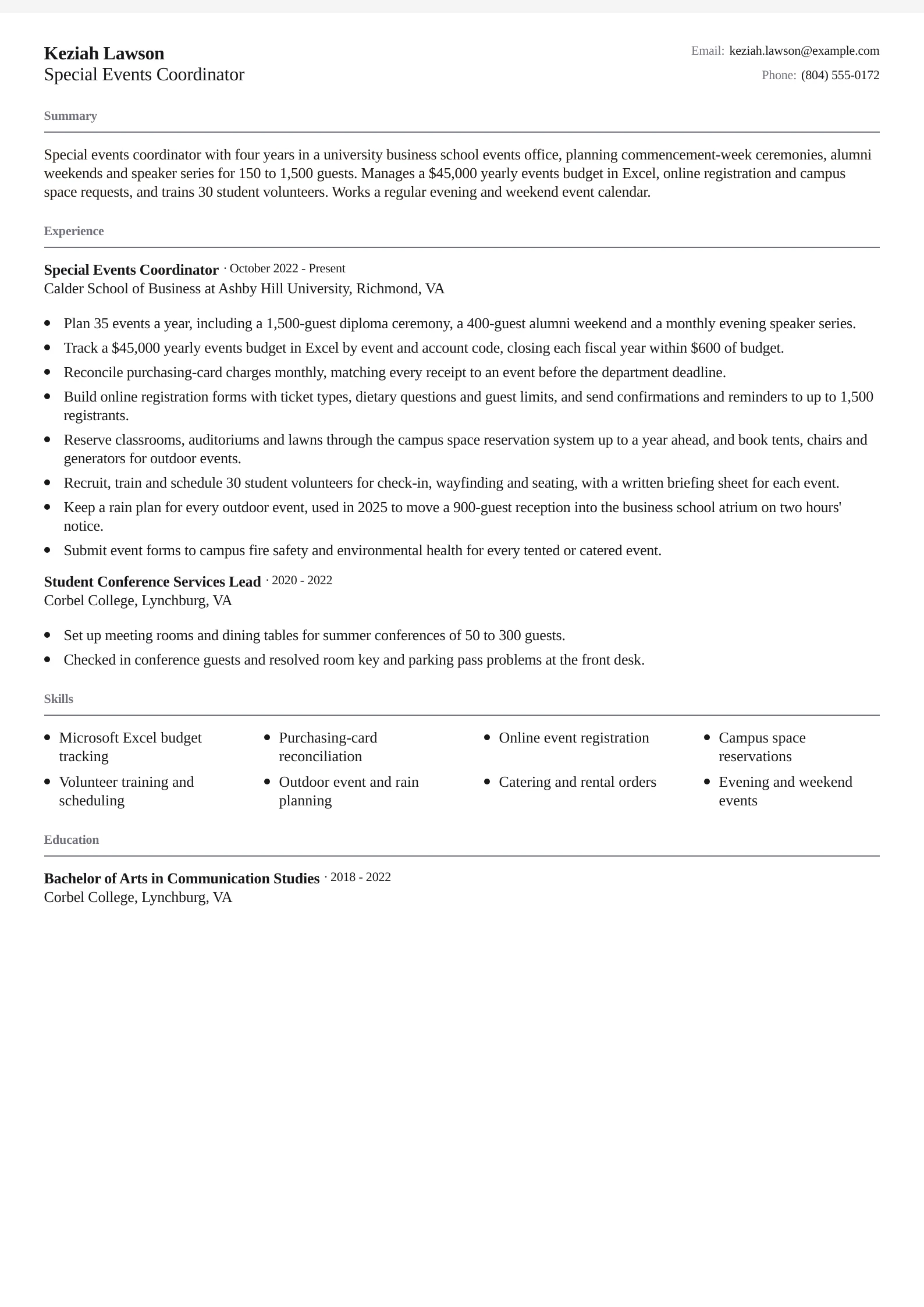
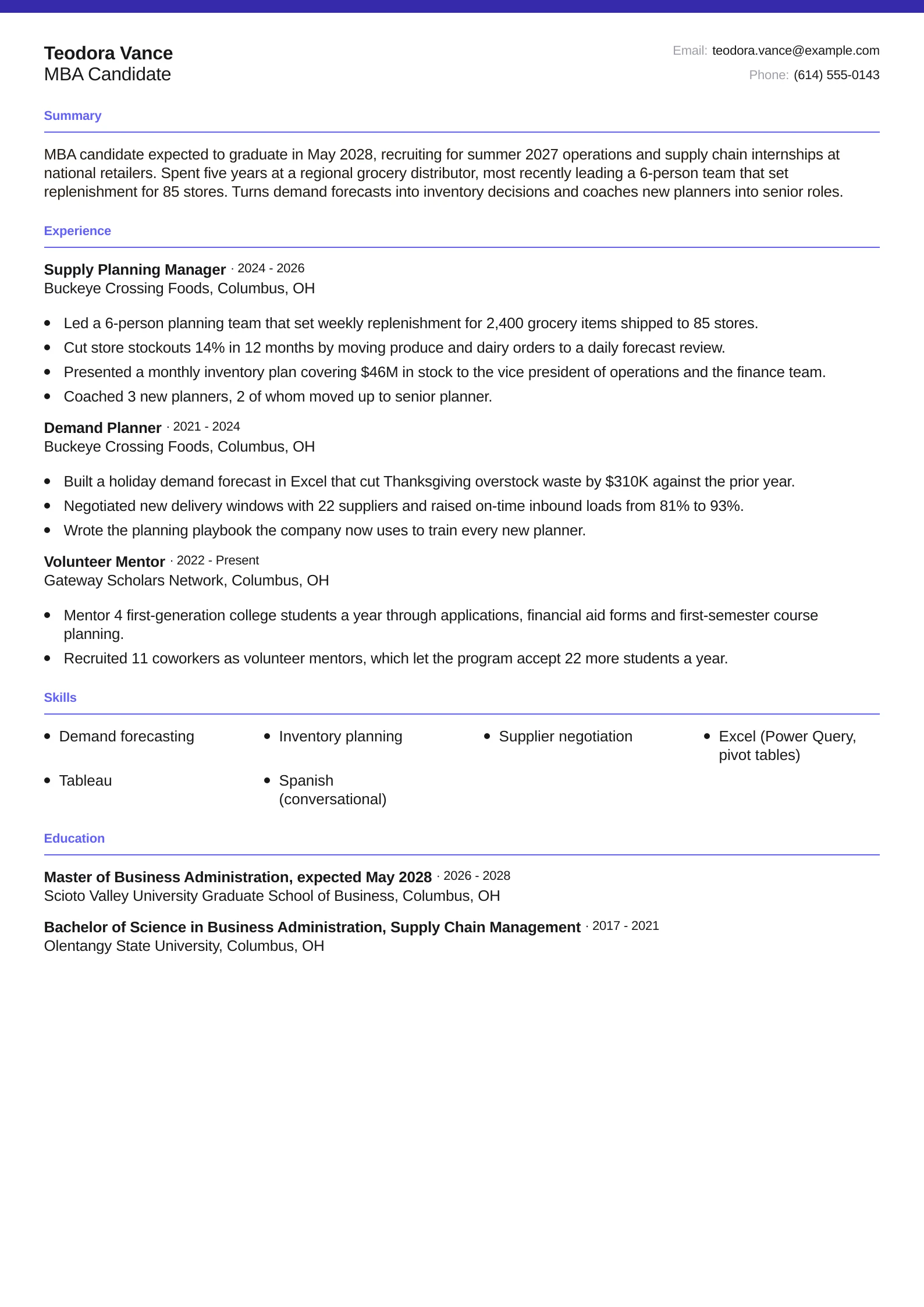
Keziah's resume fits coordinators in higher education or a nonprofit, where one person handles the budget, the volunteers and the campus paperwork. She shows a $45,000 yearly budget closed within $600, monthly purchasing-card reconciliation and 30 student volunteers she trains herself. Her rain-plan bullet and the fire safety forms show the campus rules she plans around, and her summary names the evening and weekend calendar.
$45,000 budget closed within $600
30 trained student volunteers
Rain plan used for a 900-guest reception
Virtual and hybrid event production
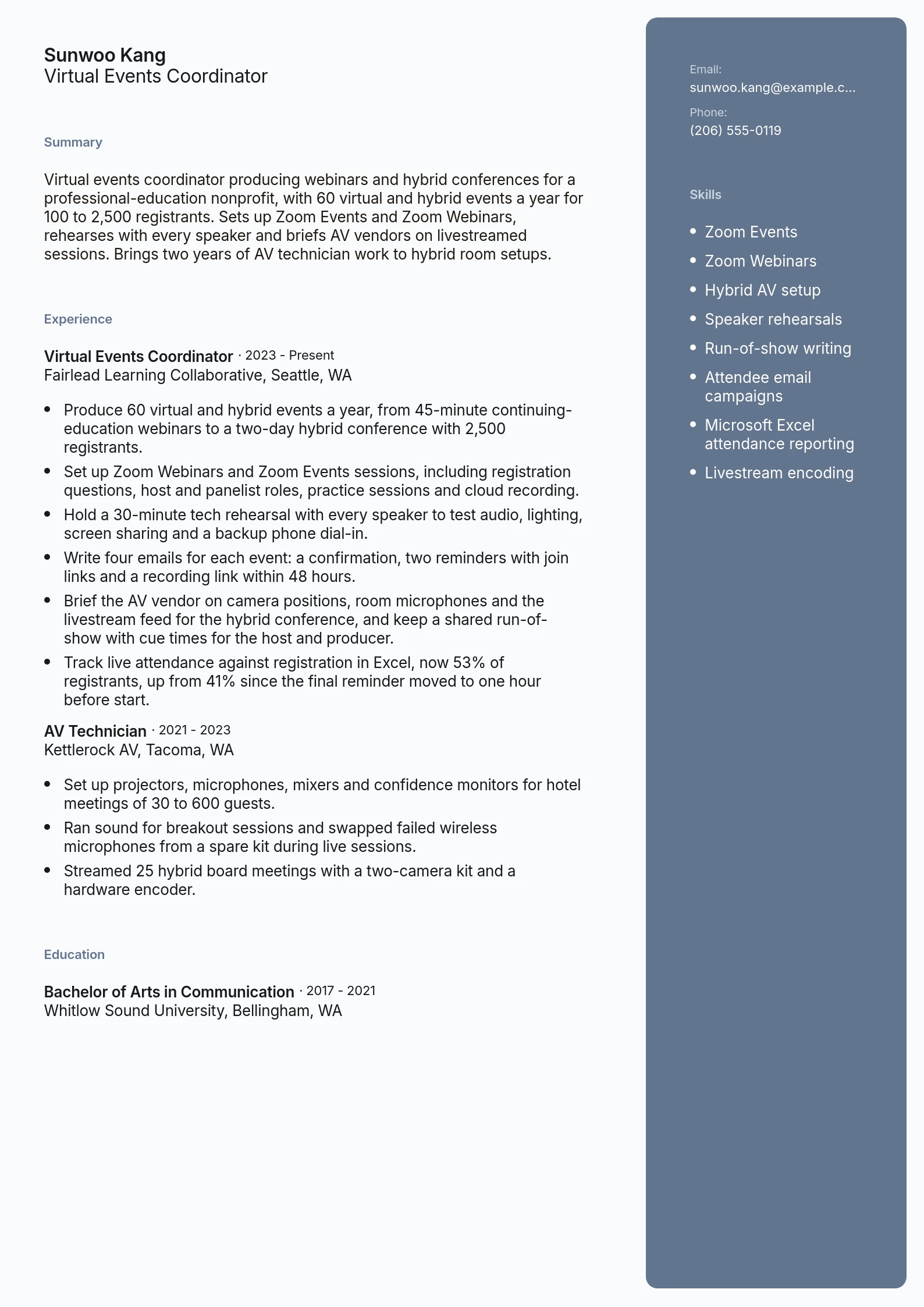
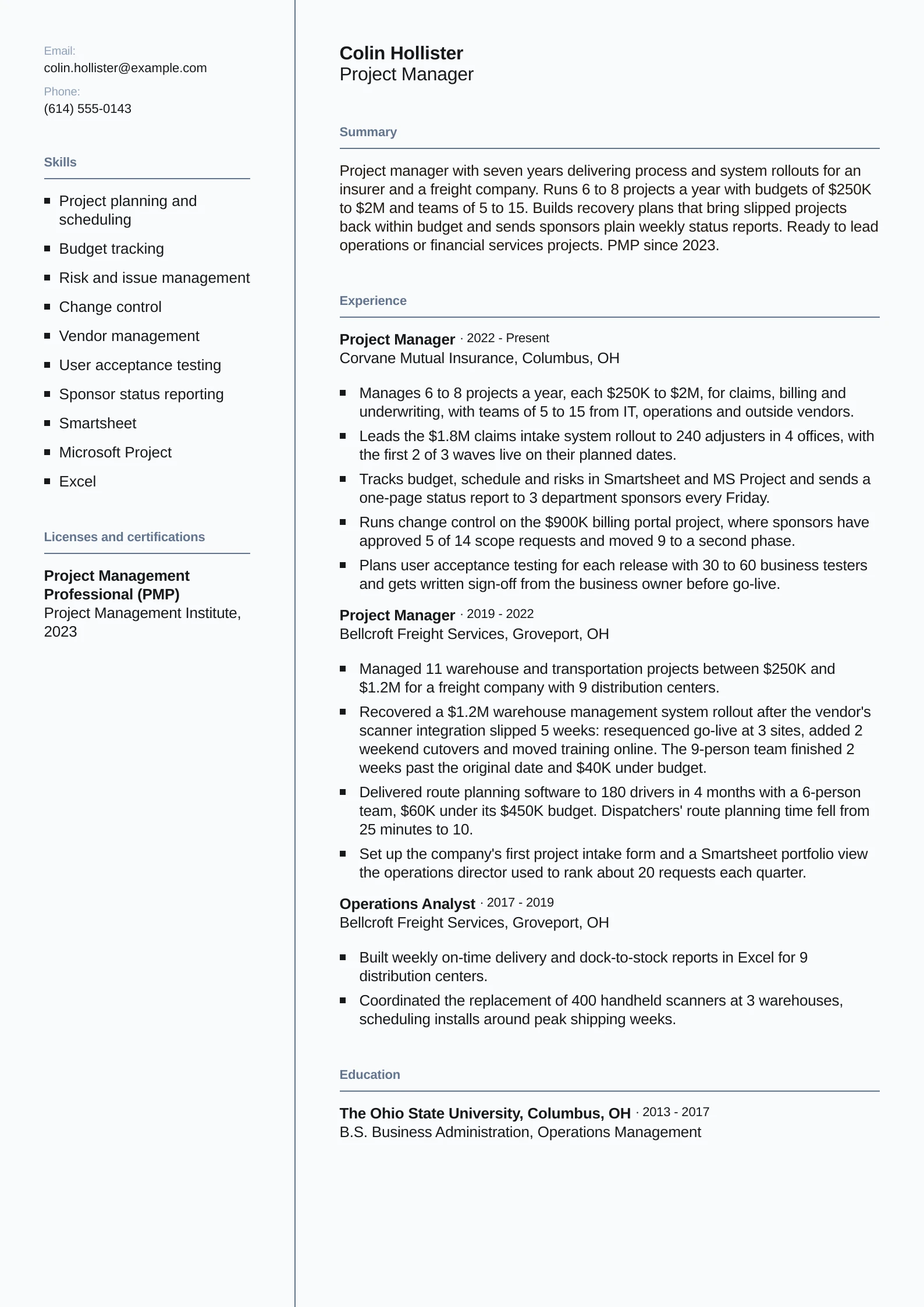
Sunwoo's resume is for coordinators whose events happen on Zoom as much as in a room. It names Zoom Events and Zoom Webinars beside the setup tasks they were used for, lists the four emails every registrant receives, and gives a live attendance rate that rose from 41% to 53%. An earlier AV technician job explains why the camera plan and livestream feed for a hybrid conference are his to brief.
Zoom Events and Zoom Webinars setup
Tech rehearsal with every speaker
Live attendance up from 41% to 53%
First coordinator job after a hospitality degree
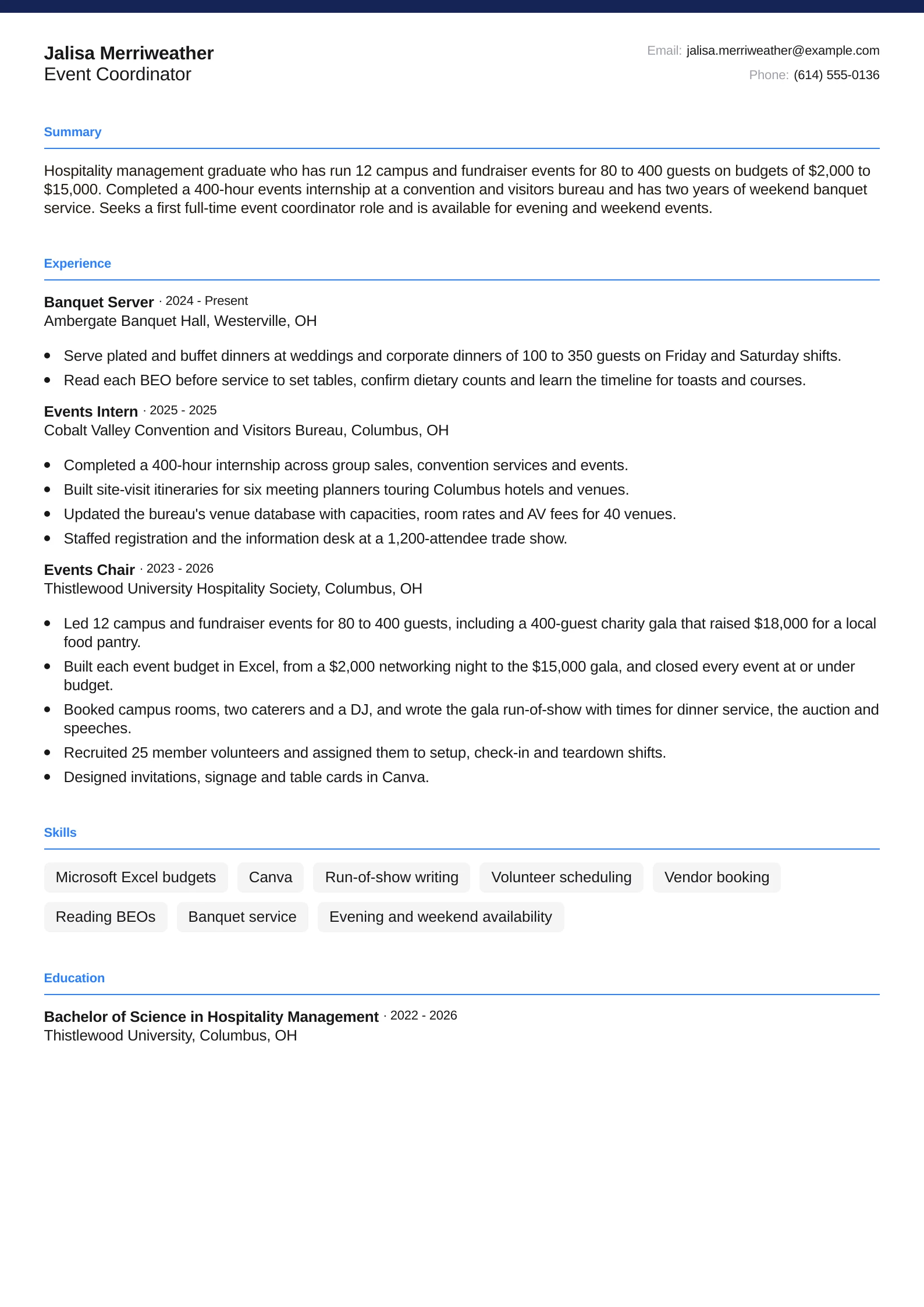
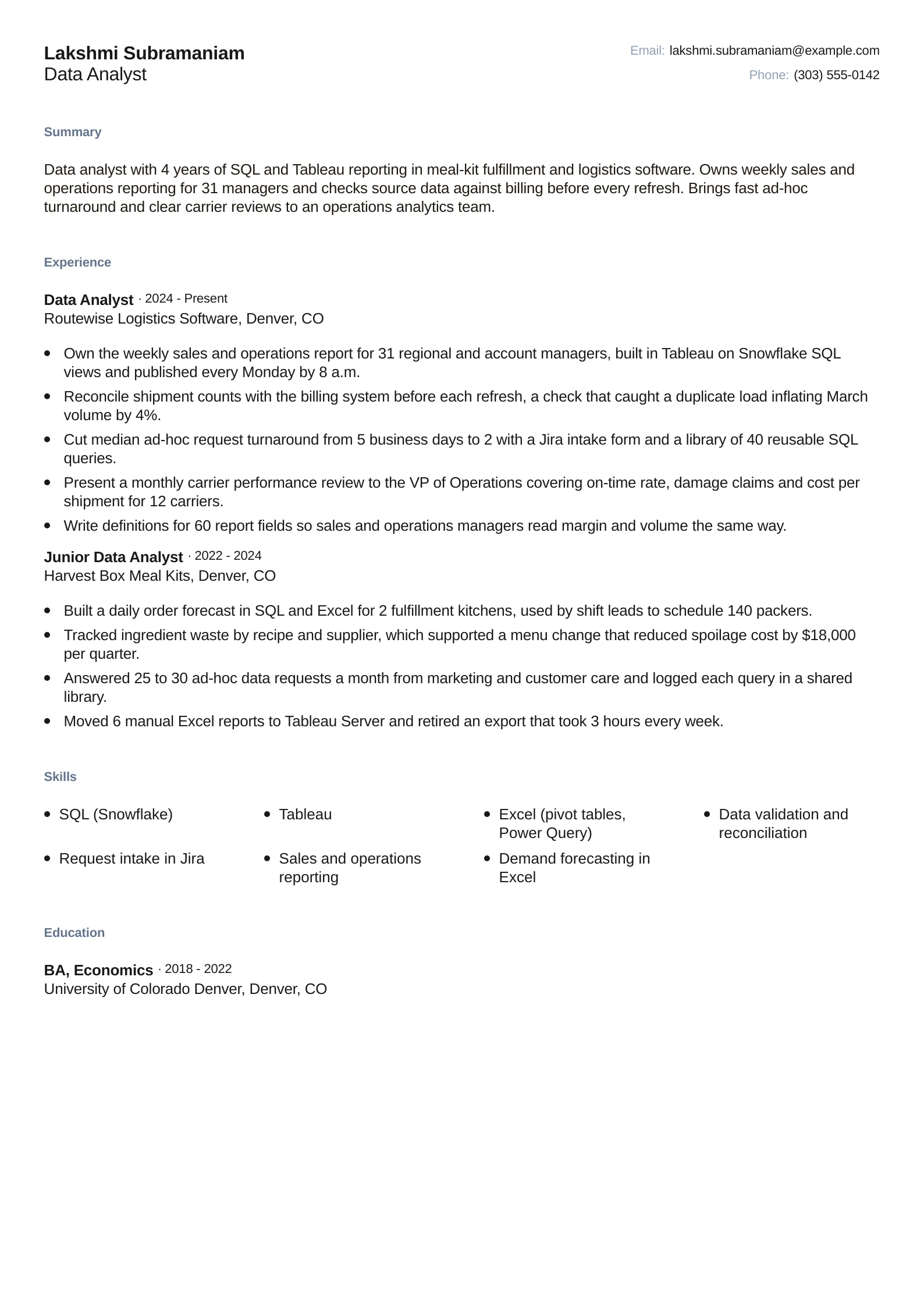
Jalisa's resume suits a recent graduate who has run events on campus but not yet held a full-time event job. Her student society role carries the biggest numbers: 12 events, a $15,000 gala budget and $18,000 raised. A 400-hour visitors bureau internship adds venue research and trade show registration, and her part-time banquet server job shows she already reads a BEO before service.
12 campus and fundraiser events
Gala run-of-show and Excel budget
400-hour visitors bureau internship
Give guests, budget and vendors for every event you name
Every event on your resume needs its size in numbers, because "coordinated conferences" could mean 40 guests or 4,000. Put the numbers in the first bullet of each role, and use the same units in every role so a reader can see the events grow.
Add one bullet about a day when the plan changed: a venue switch, a speaker who didn't arrive, an AV failure or a storm. Give the headcount, how long the fix took and who you told. A list of planning duties with no numbers reads as someone who helped with events rather than ran them.
Number
Example phrase
Who should lead with it
Guests or attendees
conferences of 200 to 800 attendees
Everyone. Give a range or your largest event.
Events per year
22 events a year, including two sales kickoffs
Corporate, hotel and virtual coordinators with a busy calendar
Budget held
$45,000 yearly budget, closed within $600
Anyone who built or tracked the budget, even a small one
Vendors managed
40 plus vendors, including AV, catering and transport
Corporate and conference coordinators who sign or manage contracts
Day-of change
moved a 300-person session in 40 minutes after an AV failure
Anyone with a real example. Use one per resume.
Deadlines met
final headcount on every BEO by the 72-hour guarantee deadline
Hotel coordinators and anyone working to guarantee dates
Attendance or results
live attendance rose from 41% to 53% of registrants
Virtual coordinators and anyone who reports survey scores
List the CMP with its issuer and year, once you've passed the exam
Write the credential as "Certified Meeting Professional (CMP), Events Industry Council, 2025", using the year you passed. Put it in a credentials section below your experience, and mention it in your summary if the ad lists it. Applying or being approved to sit the exam is not the same as holding the CMP, so leave it off until you pass.
The Events Industry Council checks experience and education before you can sit the exam. For experience, you need 36 months of full-time work in meetings, events, exhibitions, hospitality or tourism within the past five years, or 24 months plus a hospitality, tourism or event management degree earned in that time, or 36 months as a full-time instructor in the field. For education, you need 25 clock hours tied to the CMP International Standards in the past five years, or a 200-hour internship through an accredited institution.
Your resume is part of the application, so your experience section has to show meeting-management work across those months. Simone's dates show how it fits: she started full time in August 2021 and passed in 2025, after more than three years of planning conferences and summits.
The CMP runs on a five-year cycle that starts in the year you pass, so a CMP earned in 2025 is due for recertification in 2030. There's no second exam. You show 36 months of industry work and 25 clock hours of continuing education from those five years, or 15 hours plus three industry activities such as association membership or speaking. If you plan medical or pharmaceutical meetings, the CMP-HC healthcare subspecialty can follow once you've passed the CMP.
Match keywords to the setting in the ad
Event coordinator ads screen for named tools, documents and event types, not for "organized" or "detail-oriented". Read the ad for its setting first, then use the terms from that row. Put each term in a bullet that says what you did with it, and repeat the main ones in your skills list.
Copy the ad's own event names. If a university ad says commencement, convocation and summits, use those words for the events you ran, not "large-scale events".
Setting
Tools and documents ads name
Event terms to use
Corporate
Cvent, Salesforce, Microsoft Excel pivot tables, Outlook, Teams
Zoom Events, Zoom Webinars, livestream encoder, AV vendor
speaker permissions, practice session, recordings, attendee communications, hybrid AV
Put Excel, Cvent or the BEO in the same line as the result
Name each tool beside the job it did: a budget reconciled, a registration list built, a BEO sent to the kitchen. Write at least one budget bullet that shows Excel at work, such as vendor line items, formulas and a pivot-table summary, because the word "Excel" in a skills list says much less.
For a hotel role, say what goes on your BEOs and who receives them. For virtual events, name the platform and the setup steps you handle, such as panelist roles, practice sessions and cloud recording. For budgets, give the size and how close to it you finished.
Each tool tied to a task and a number
Build every event budget in Excel with vendor line items and reconcile actuals within 2% of the approved total. Manage Cvent registration and badge printing for up to 800 attendees.
Tools listed with no task
Proficient in Excel, Cvent and BEOs. Responsible for event budgets and registration.
Choose a one-page layout that starts with your experience
Use a layout where your experience starts in the top third of the page, because event counts and budgets are what the reader looks for first. A single column or a narrow sidebar both work. Keep tools and certifications in a short list beside or below the experience.
Coordinators with four or more years, like Simone and Keziah, need room for five to eight bullets in their current role, so a layout with a wide main column suits them. Hotel and entry-level candidates usually have shorter roles, and a sidebar holds their skills, education and availability without pushing experience down.
Leave event photos, logos and decorative graphics out of the template. If you have floor plans, a run-of-show sample or event designs to share, add one portfolio link in the header.
Keep each bullet to one or two lines. A run-of-show is minute by minute, but a resume bullet that retells a whole event gets skipped.
State the evening and weekend calendar you've already worked
Event ads write evenings, nights and weekends into the job, and some add lifting up to 50 pounds during setup. Answer that in your summary and one bullet by naming the events you've already worked.
Give real event types and times: Saturday weddings, a Sunday alumni brunch, a 6 a.m. load-in for a conference. Hotel candidates can add holiday season dates. Mention lifting or standing only through work you've done, such as setting chairs and staging for a 300-guest ballroom.
Availability line for your summary
Available for evening, weekend and holiday events, with three years of Saturday weddings, early-morning conference setups and December holiday parties.