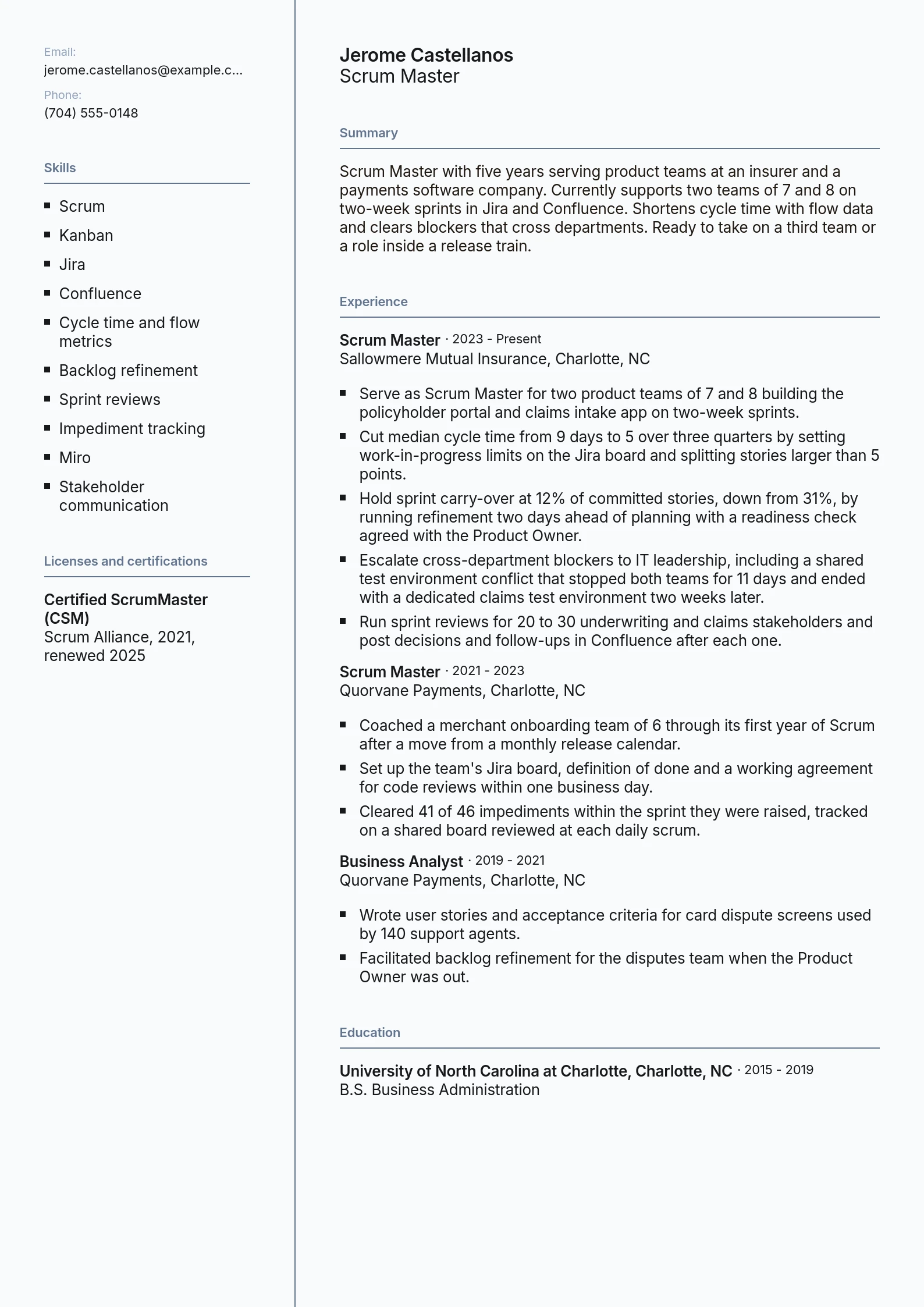
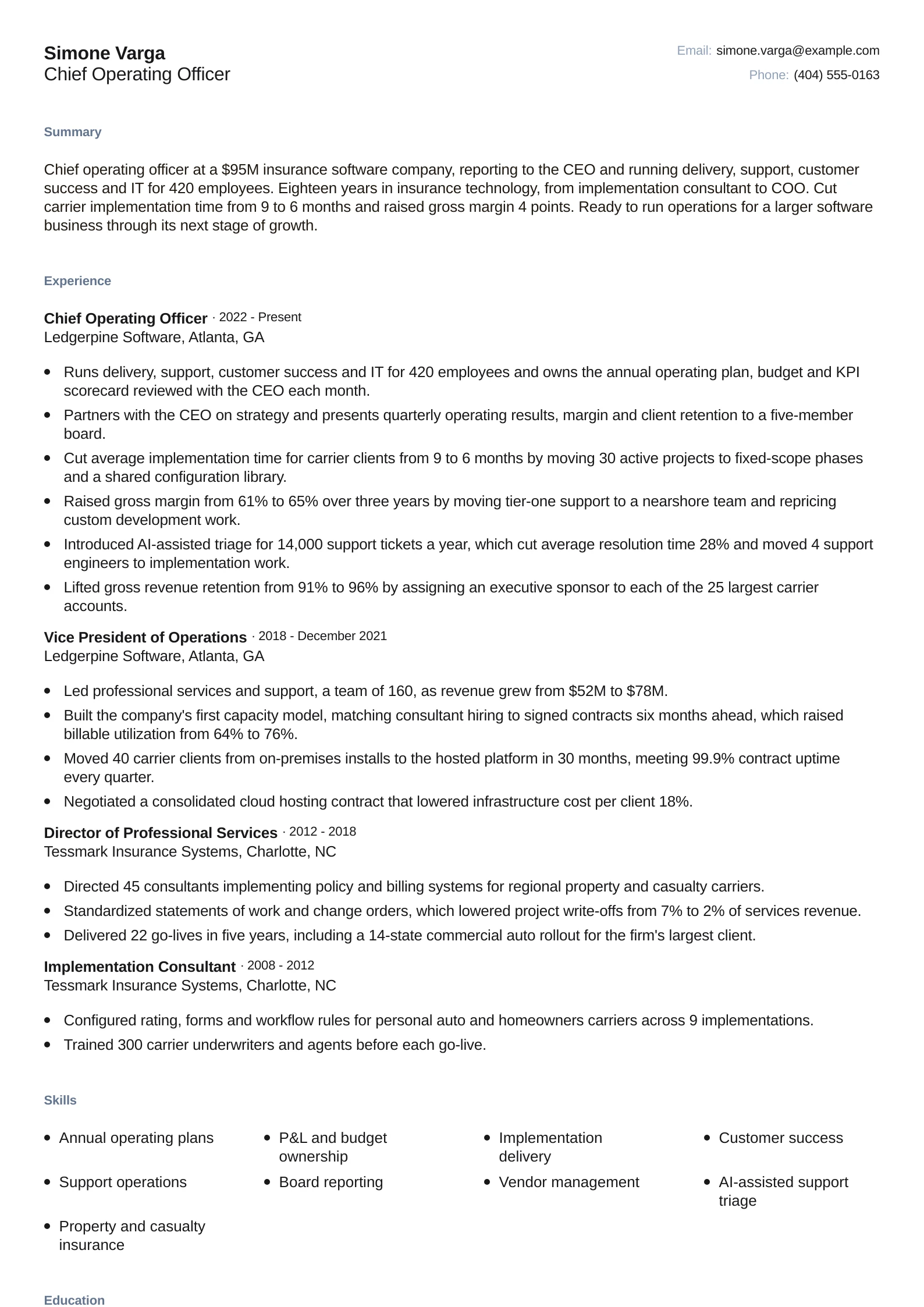
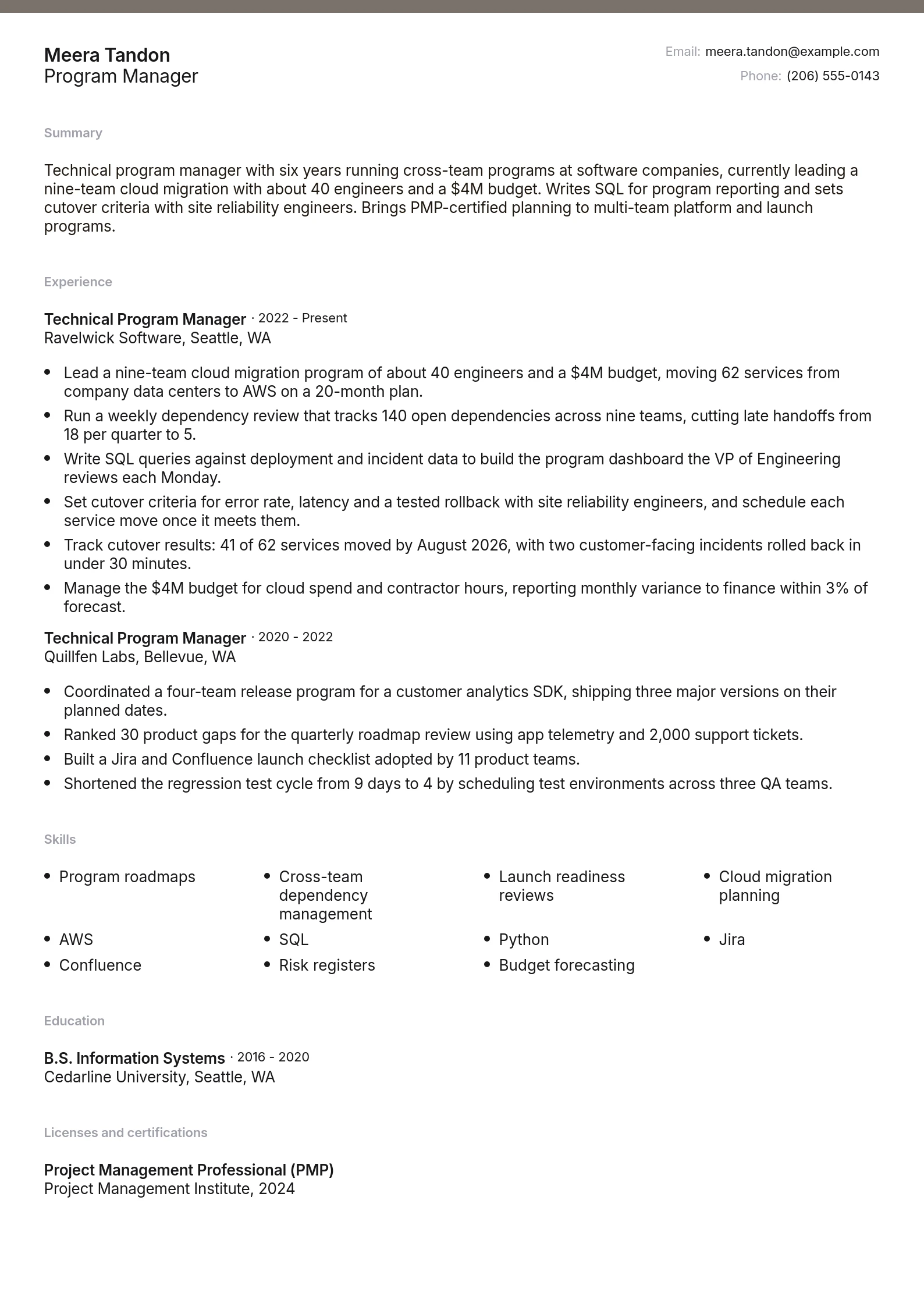
Search committees size up your last job before they read your title: who you reported to, the P&L or revenue you carried, and how many people and layers of managers sat under you.
The four resumes below cover a COO, a CEO reporting to a private equity board, a revenue SVP and a CFO, and each one puts those numbers in the first line of every executive role.
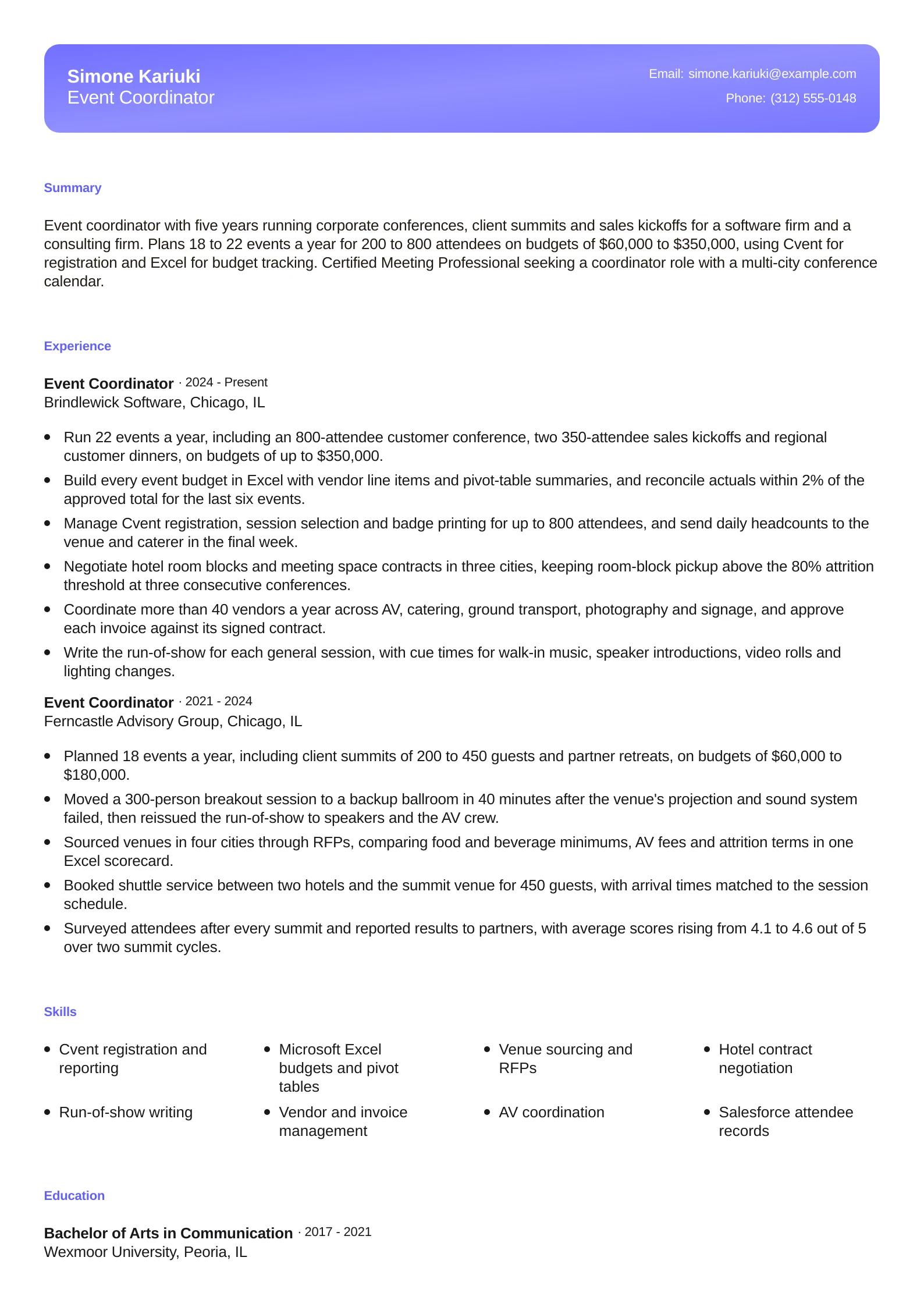
Chief operating officer resume for a 9-plant manufacturer
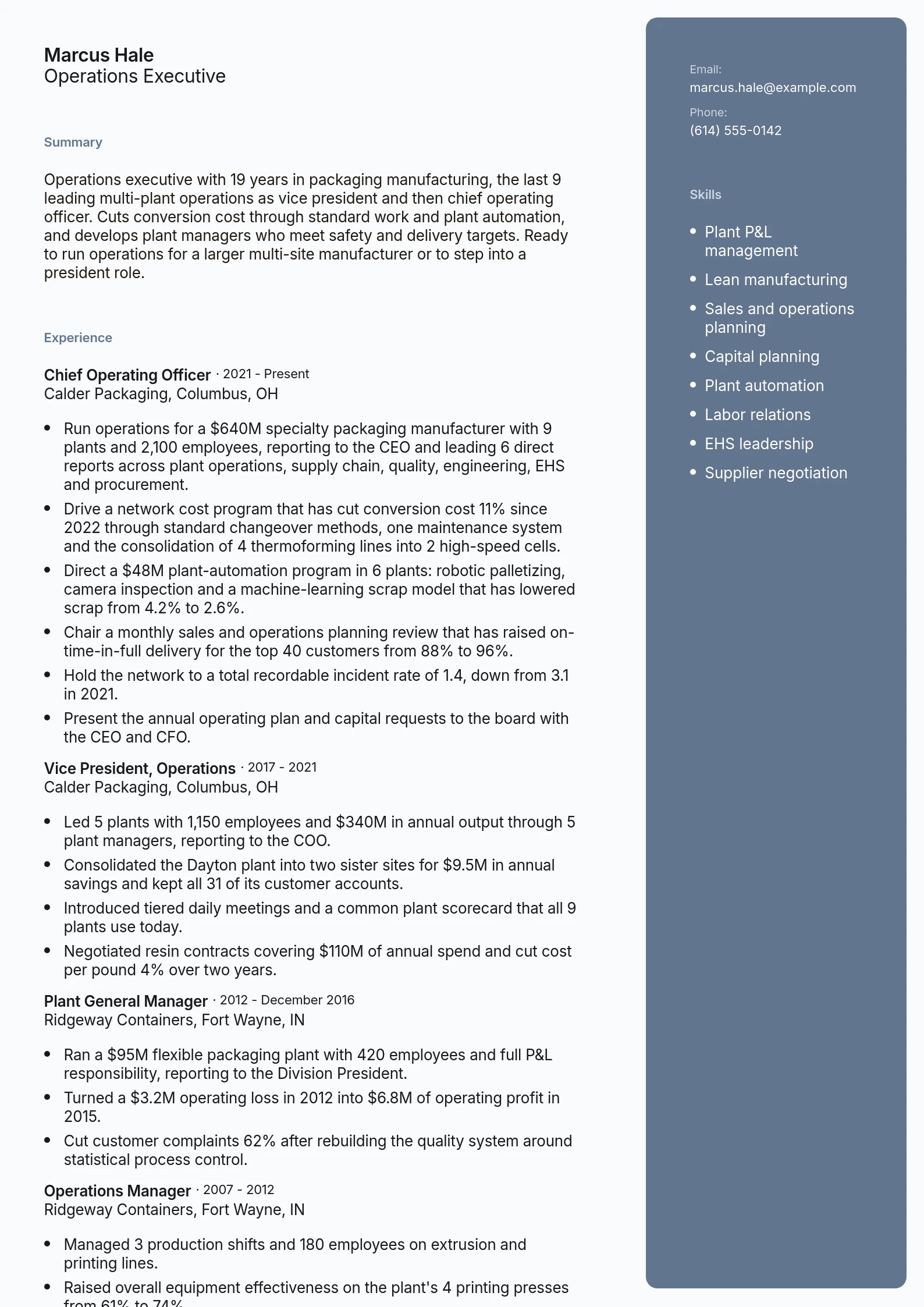
Marcus Hale runs operations for a $640M packaging company and reports to the CEO. Each of his senior roles opens with the same facts in one bullet: revenue, sites, headcount and reporting line. A reader sees the step up from a $95M plant to a 9-plant network without reading further.
His results are network numbers: conversion cost down 11%, scrap down from 4.2% to 2.6% after a machine-learning model went into 6 plants, and on-time delivery up to 96% for the top 40 customers. Copy this layout if you run operations, a plant network or a business unit and report to a CEO or president.
Resumes for a board-reporting CEO, a revenue SVP and a sponsor-backed CFO
Pick the example whose reporting line matches the job you want next. The CEO answers to a board, the senior vice president to a C-suite officer, and the CFO to a CEO while producing the monthly package the private equity owner reads.
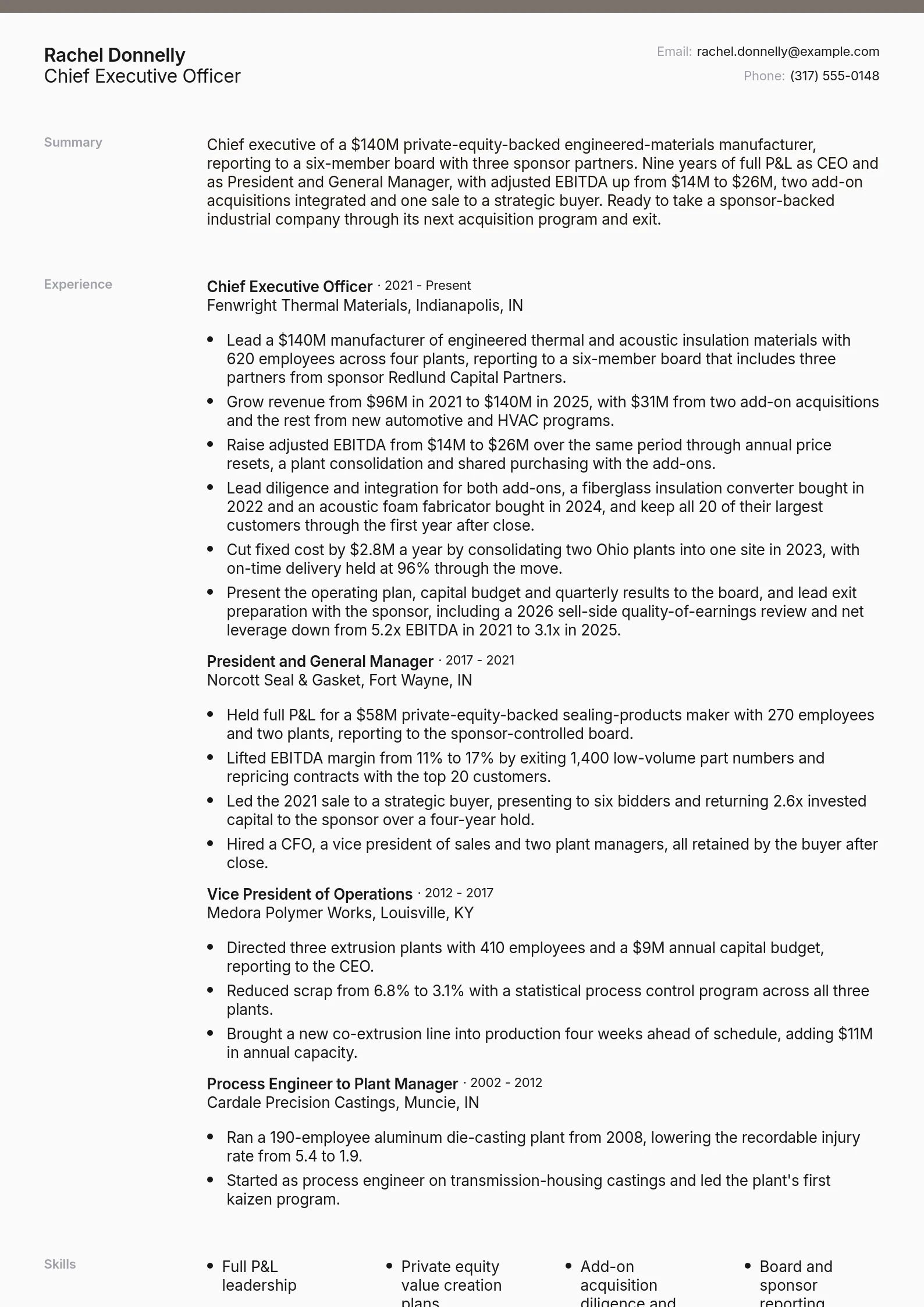
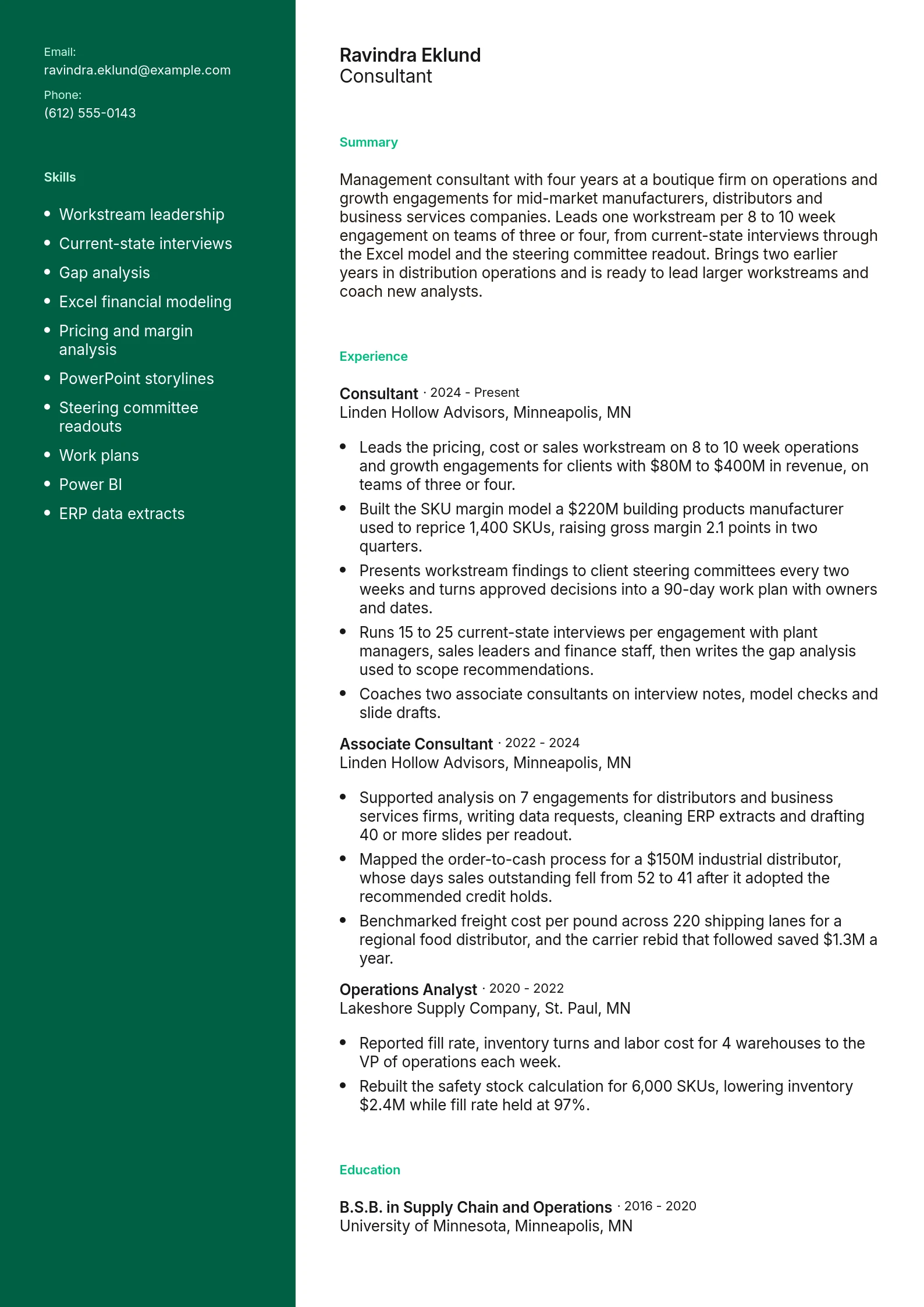
Chief executive officer reporting to a private equity board
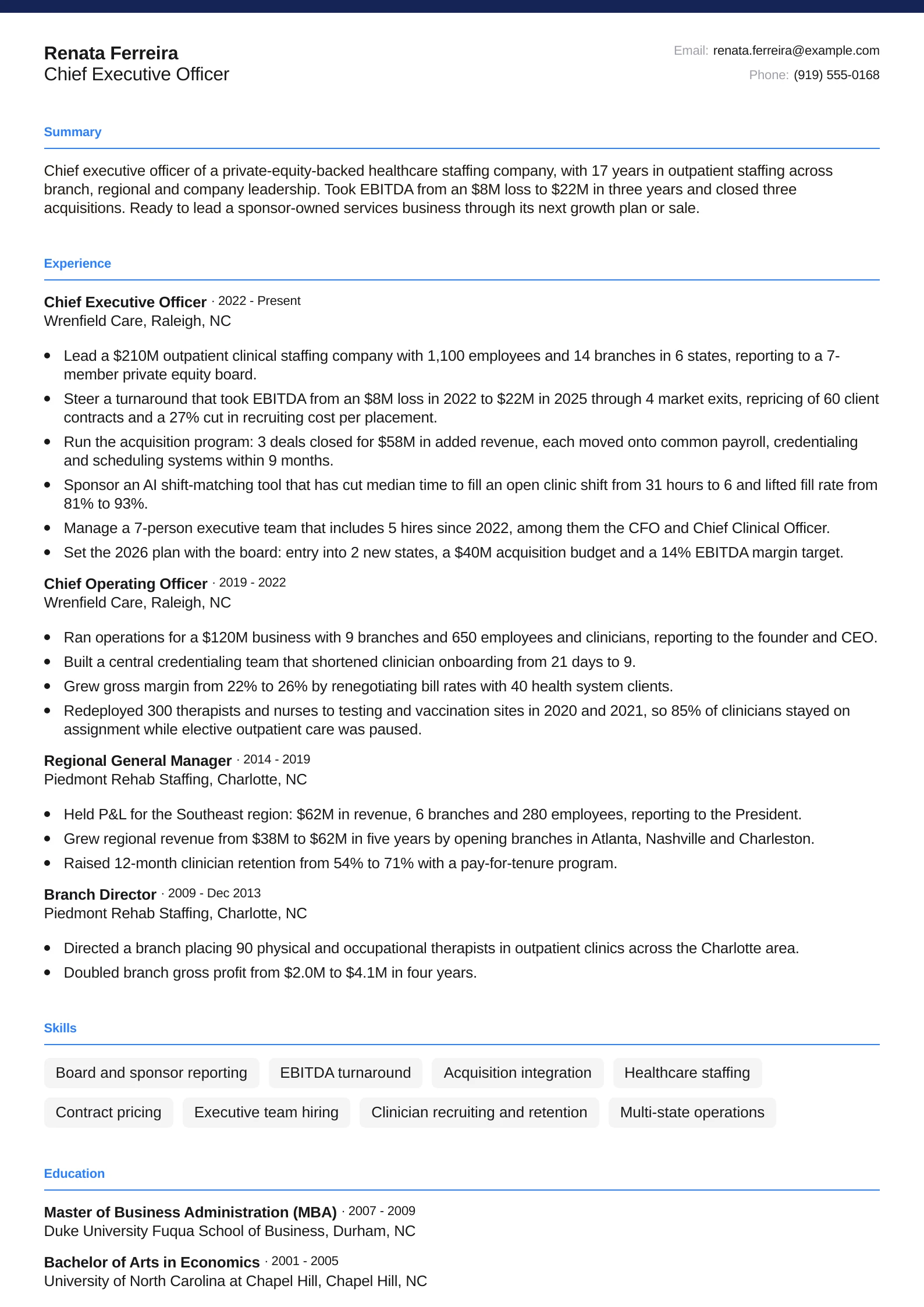
Renata Ferreira's first bullet names her 7-member board alongside revenue, headcount and branch count, and her second gives the EBITDA turnaround in dollars with the three actions behind it. Her earlier COO and regional GM roles show the path to the top job. Use this one if you are a CEO or president, or a COO going for the CEO seat in a sponsor-owned services company.
Board size and owner type in the first line
EBITDA from an $8M loss to $22M, with the actions named
3 acquisitions, each integrated within 9 months
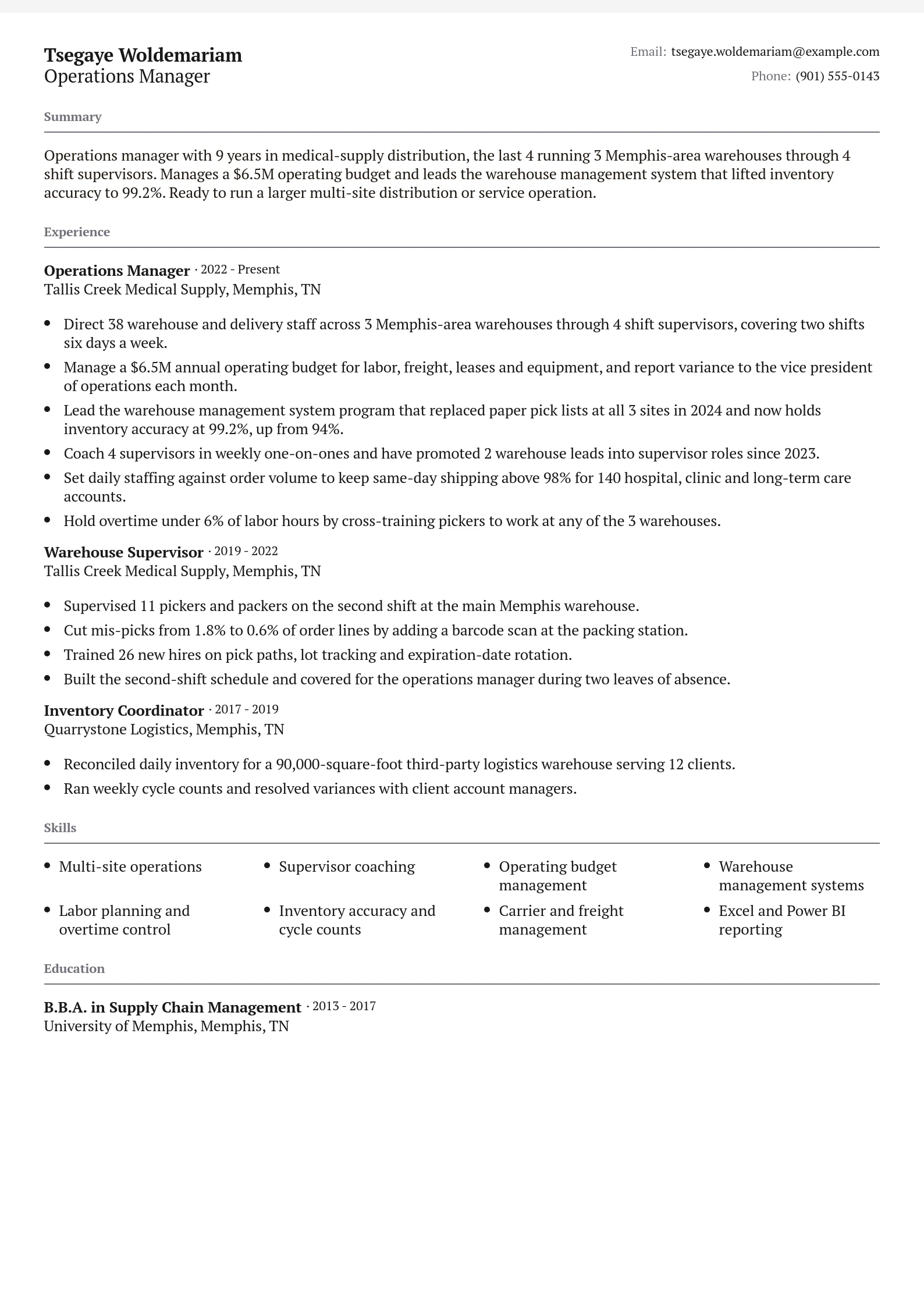
Senior vice president leading through three layers of managers
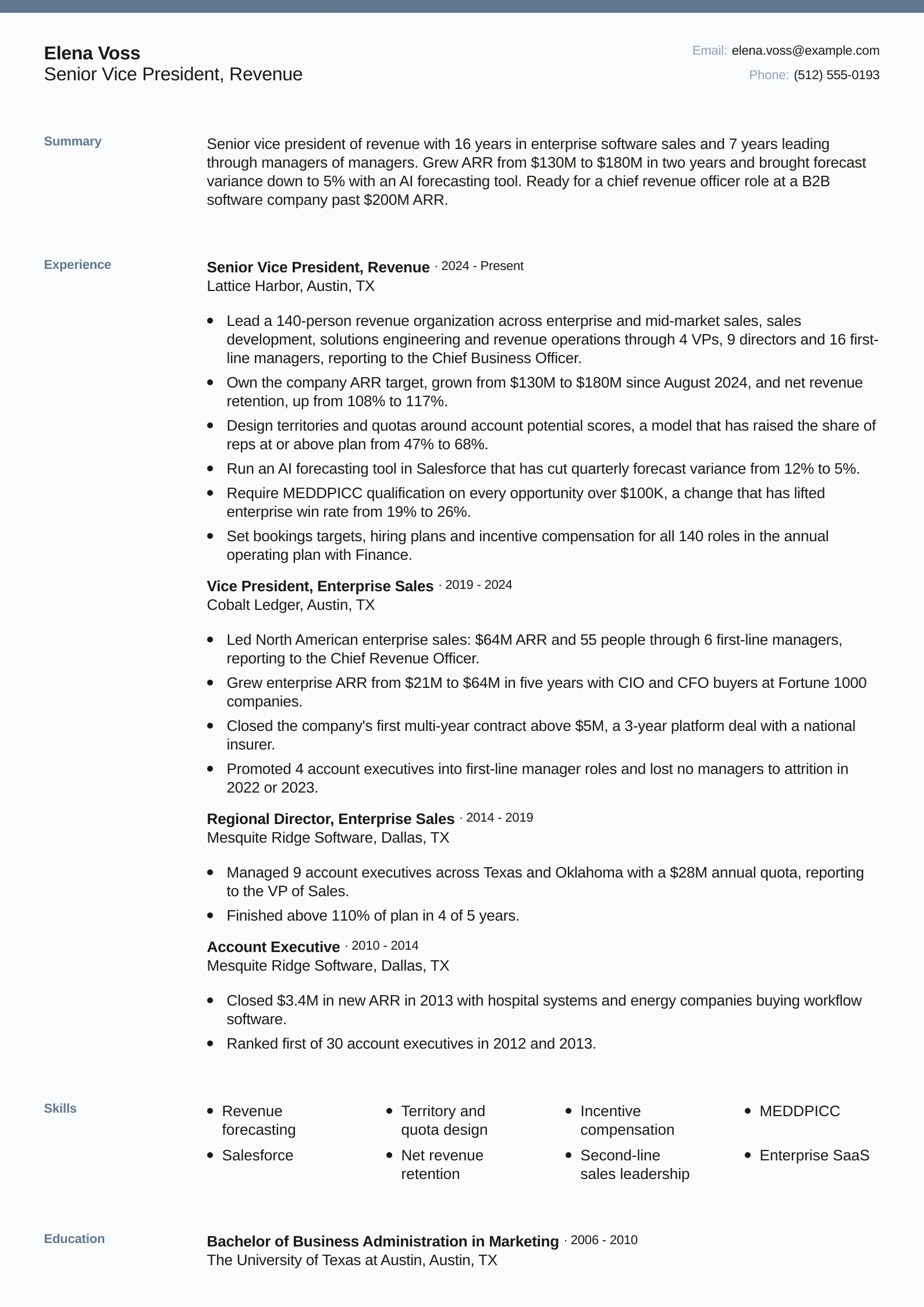
Elena Voss counts her VPs, directors and first-line managers in the scope line, so a reader can see she leads leaders. ARR, net revenue retention, win rate and forecast variance carry her results, and the tighter two-column layout fits the extra metrics. It suits VPs and SVPs of sales, revenue or go-to-market aiming for a CRO role or a larger SVP seat.
4 VPs, 9 directors and 16 first-line managers in the scope line
AI forecasting tool that cut variance from 12% to 5%
MEDDPICC and quota design tied to win rate and attainment
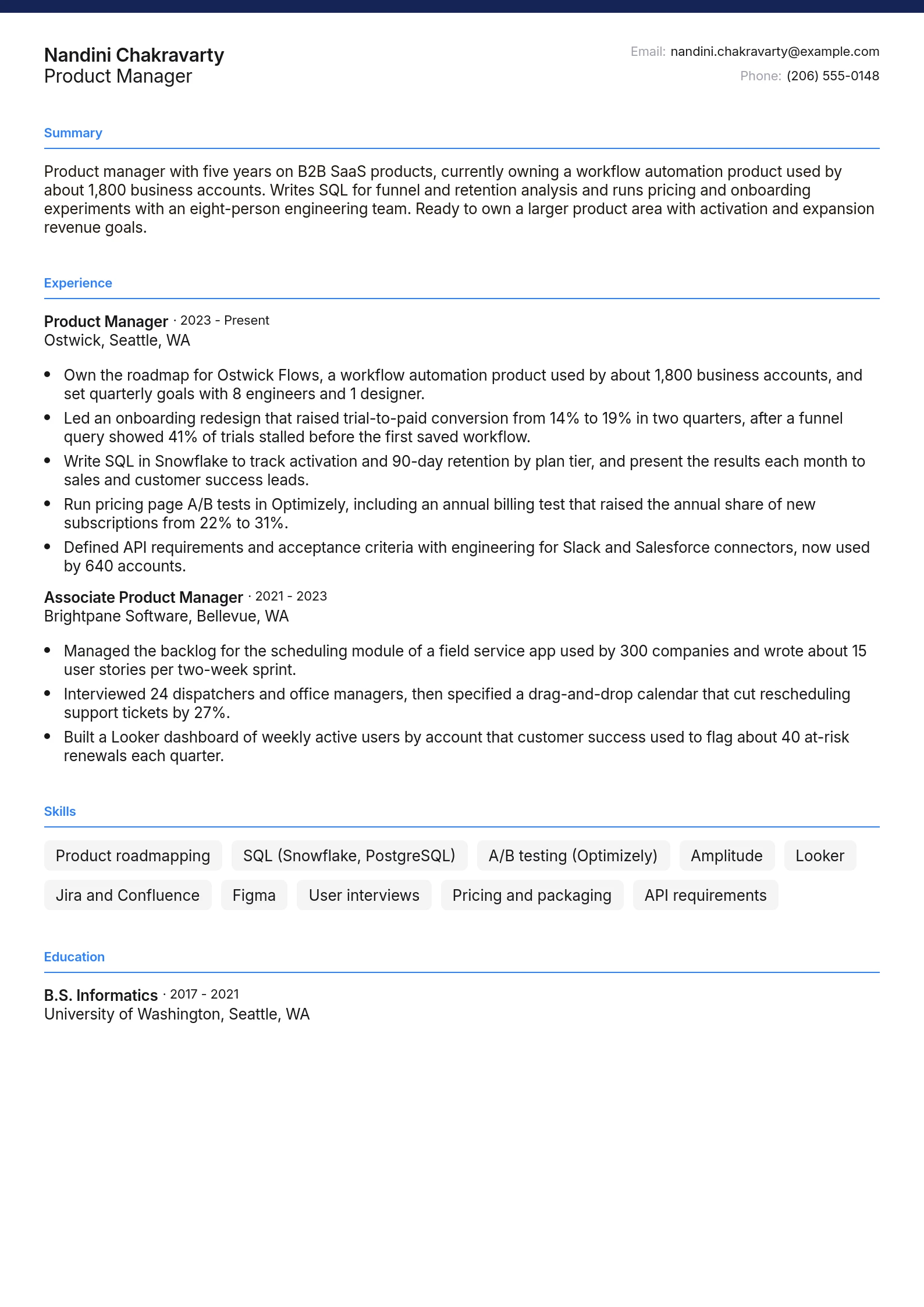
Chief financial officer in a private-equity-owned brand
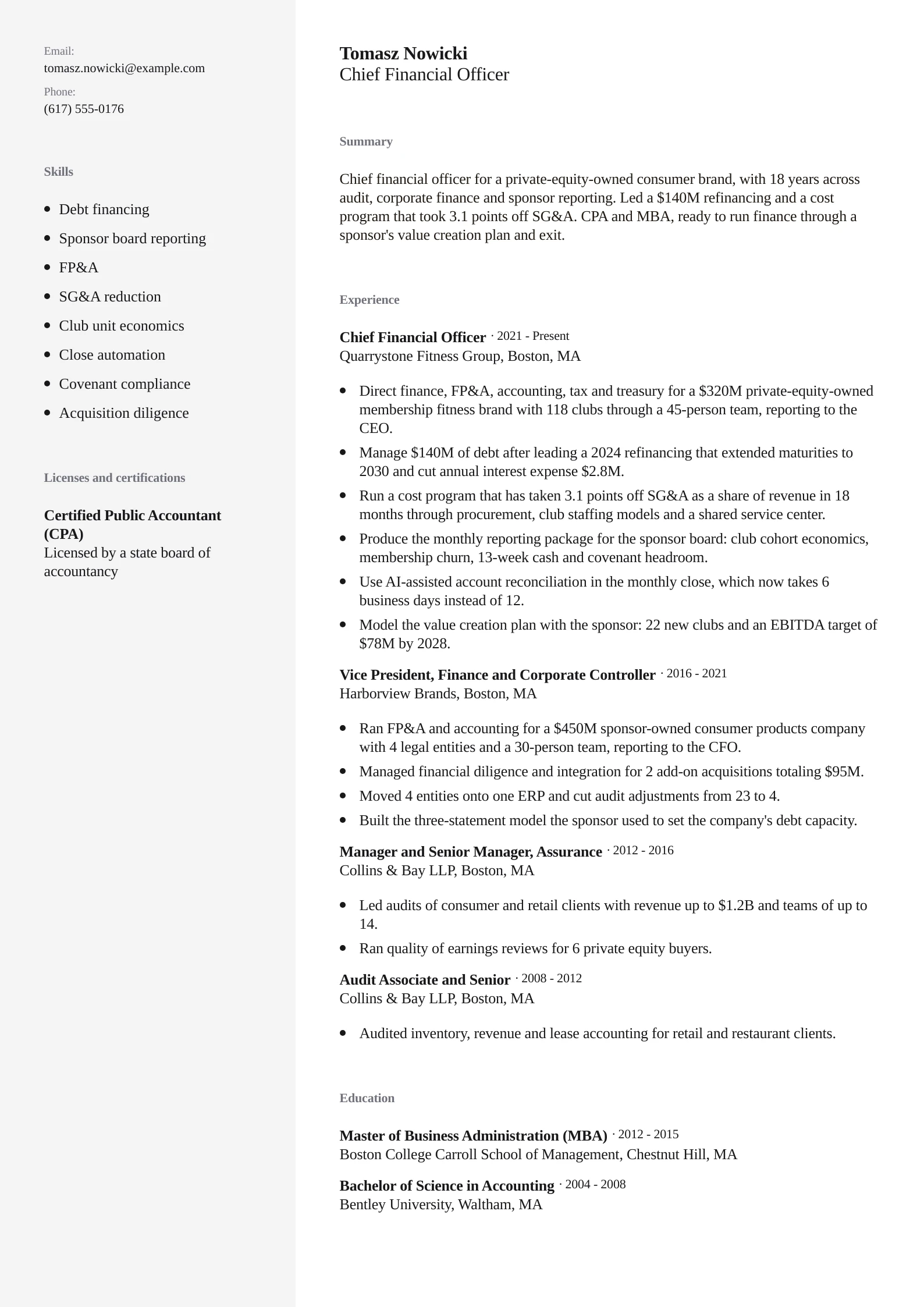
Tomasz Nowicki's bullets follow what a sponsor board asks about: a $140M refinancing with the interest it saved, 3.1 points off SG&A, and the contents of the monthly board package. His audit years get two short entries and his CPA sits in credentials. It suits CFOs, VPs of finance and controllers moving into a sponsor-backed CFO seat.
$140M refinancing with maturity and interest saved
Monthly sponsor board package contents listed
Close cut from 12 business days to 6 with AI-assisted reconciliation
Two pages, newest role first, scope in every opening line
An executive resume in 2026 is two pages in reverse chronological order, with your current role filling most of page one. All four examples here fit 16 to 19 years of experience on two pages because their oldest roles get only one or two bullets each.
Build every senior role the same way. Write the title, employer and dates, then one scope bullet, then four or five outcome bullets with the largest numbers first. The COO example puts its cost and automation results before safety and board work, so the reader meets the biggest dollar figures first.
Cut roles that started more than 15 years ago to one or two bullets, and drop jobs from more than 20 years ago. A CFO who began in audit needs mainly the client size and team size from those years, as in the CFO example.
Choose the layout for the number of bullets you need to fit. A main column with skills in a sidebar, as in the COO and CFO examples, suits five or six long bullets per role. The tighter two-column layout in the SVP example fits more short metric bullets on a page. Cut bullets before you shrink the text.
Put education last, with degree, school and years. An MBA goes in education, and a license such as a CPA gets its own credentials line when the posting asks for one.
Open each role with reporting line, money, people and layers
Make the first bullet of each senior role a scope line with four facts: who you report to, the revenue, P&L or budget you answer for, how many people work for you, and how many layers of managers sit under you. Executive postings set a floor on these, such as a sales organization above $20M ARR or 15+ years leading large businesses, and readers check your numbers against that floor before they read your results.
Use the measure the posting uses. Revenue leaders write ARR and growth rate, CFOs write company revenue and the debt or cost base they manage, and general managers write revenue with operating profit. If your employer's figures are confidential, round them ($600M+) instead of leaving them out. Use only numbers you could explain line by line in a reference call or a board interview.
Seat
Reports to
Money to name
People to name
Scope line from this page
Chief operating officer
CEO
Company revenue, operating cost, capital budget
Employees, sites, direct reports by function
"$640M specialty packaging manufacturer with 9 plants and 2,100 employees, reporting to the CEO"
Chief executive officer
The board, with seat count and owner type
Revenue and EBITDA
Employees, branches or sites, executive team
"1,100 employees and 14 branches in 6 states, reporting to a 7-member private equity board"
Senior vice president
A C-suite officer, by title
ARR or bookings, growth rate, quota
Headcount and each layer of managers
"140-person revenue organization ... through 4 VPs, 9 directors and 16 first-line managers"
Chief financial officer
CEO, plus the sponsor board or audit committee
Company revenue, debt, cost base
Finance team size and functions led
"finance, FP&A, accounting, tax and treasury ... through a 45-person team"
Plant or business unit general manager
Division or group president
P&L revenue and operating profit
Employees and managers
"$95M flexible packaging plant with 420 employees and full P&L responsibility"
Write the summary as seat, scale, two results and the next role
A good executive summary is three sentences: your seat and industry with years of experience, two results with numbers from your largest scope, and the role you want next. A search consultant should be able to read it to a client as your introduction.
Name the next role plainly in the last sentence, such as "a chief revenue officer role at a B2B software company past $200M ARR" or "a president role". Pick the two results the posting cares about: a CFO applying to a sponsor-owned company leads with refinancing and cost, while a COO leads with unit cost, safety or delivery. Leave out traits the reader cannot check, such as visionary or strategic thinker.
Shows seat, scale and results
Chief operating officer for a $1.1B industrial distributor with 26 branches and 3,400 employees, reporting to the CEO. Cut freight cost per order 14% and raised branch fill rate from 91% to 97% in three years. Ready to run a larger distribution network or move into a president role.
Could describe any manager
Strategic, results-driven executive with a proven track record of leading teams, driving growth and delivering operational excellence. Skilled in change management, stakeholder engagement and cross-functional collaboration.
Take keywords from the posting's scale, method, AI and ownership lines
The keywords that matter on an executive resume are the posting's own terms, written next to your numbers. Read the posting for four kinds of phrase and put each where a reader expects it.
Scale terms go in your scope line and summary: P&L ownership, general manager, second-line leader, reports to the CEO, partner to the executive leadership team. If a posting asks for P&L ownership and you held one, write "full P&L responsibility" with the revenue figure, as the plant GM role in the COO example does.
Method and system terms go in bullets and skills, tied to a result: territory design, quota, incentive compensation, MEDDPICC, Salesforce, S&OP, refinancing. The SVP example lists MEDDPICC in skills and also shows the win rate change after requiring it, and the bullet is the version a hiring panel believes.
AI belongs in an experience bullet with its measured effect, because current postings for revenue, security and communications leaders name AI directly. Write what the tool did and what changed, such as forecast variance from 12% to 5% or median shift fill time from 31 hours to 6, instead of listing AI strategy as a skill.
Ownership and deal terms matter for C-suite and sponsor-owned roles: board, private equity, sponsor, EBITDA, acquisition, integration, value creation. If you report to a board, put its size and the owner type in your first line, as the CEO example does.
If your title differs from the posting's, use the posting's title once, in the last sentence of your summary, and keep your real titles in the experience section. A VP of Revenue Operations posting, for example, reads for revenue planning, forecasting, quota and incentive compensation, so a sales operations leader would name those in the summary and show them in bullets.