Calls or tickets per shift, how many you resolved and the hours you can work are what customer service hiring managers check first. Each example below is written for a different desk: inbound phone, remote email and chat, bilingual retention and B2B orders, plus a first job and a move from restaurant work.
Inbound call center resume with resolution and handle-time numbers
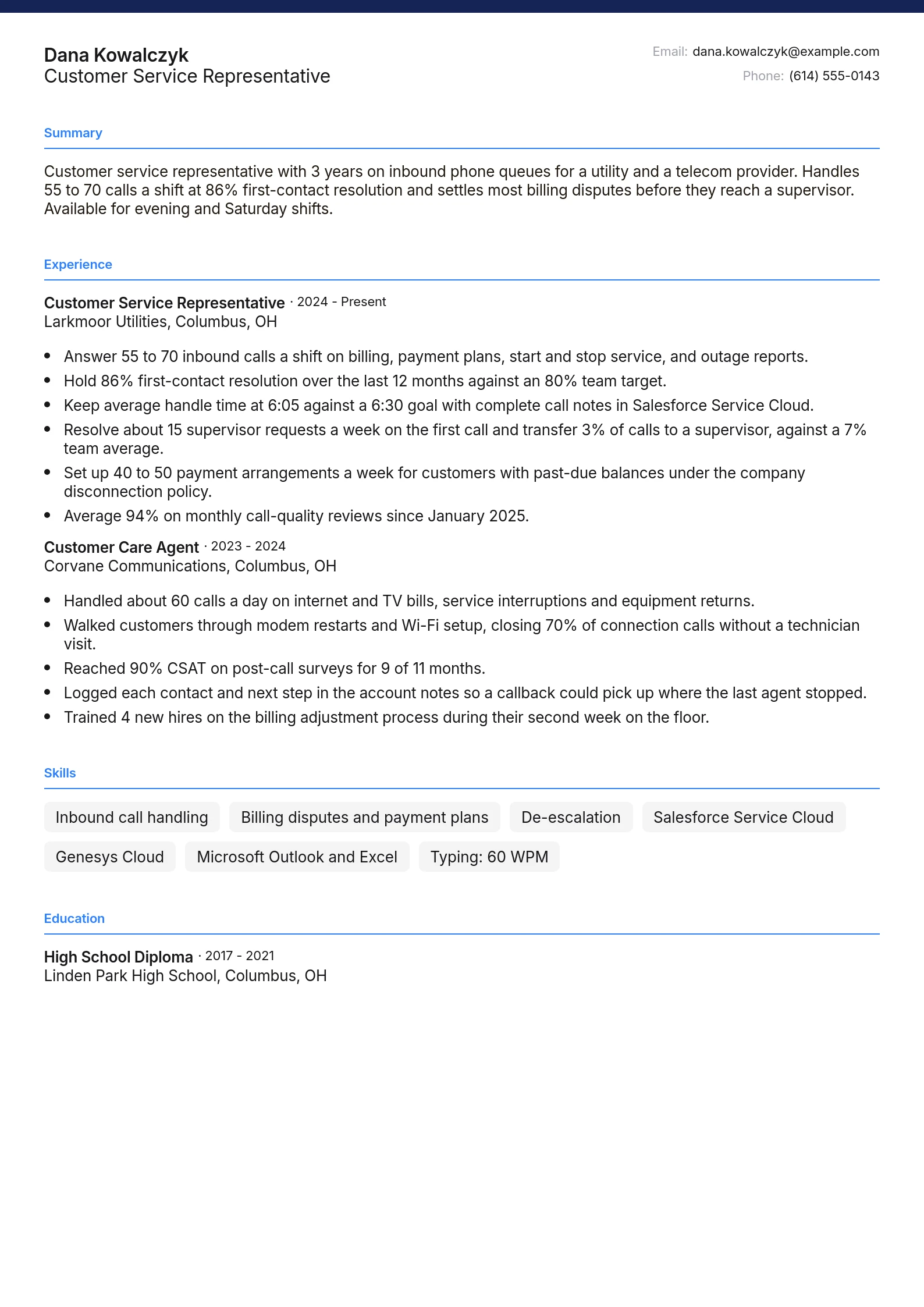
Dana's resume opens with the queue she works and the numbers her center tracks: 55 to 70 calls a shift, 86% first-contact resolution and handle time under goal. Her summary ends with evening and Saturday availability, so a scheduler sees it without reading the bullets.
Copy this layout if you've worked a phone queue for a year or more. Swap in your own call types, the scores your center reports and the shifts you can take.
Pick the example that matches the desk in the job ad
A ticket queue, an order desk and a bilingual phone line each want different evidence at the top of the page. Choose the example closest to the job you're applying for, even if your last job title was different.
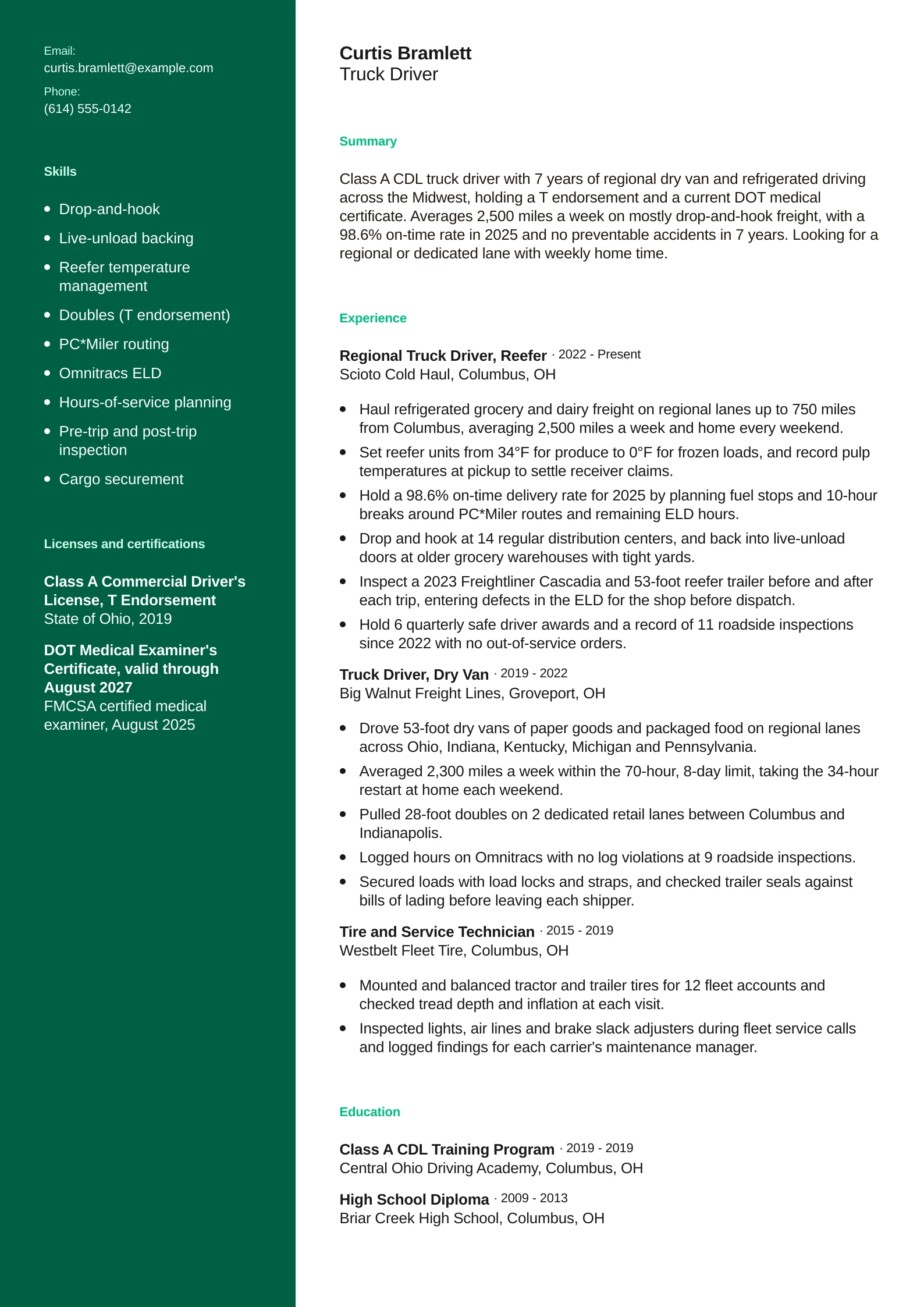
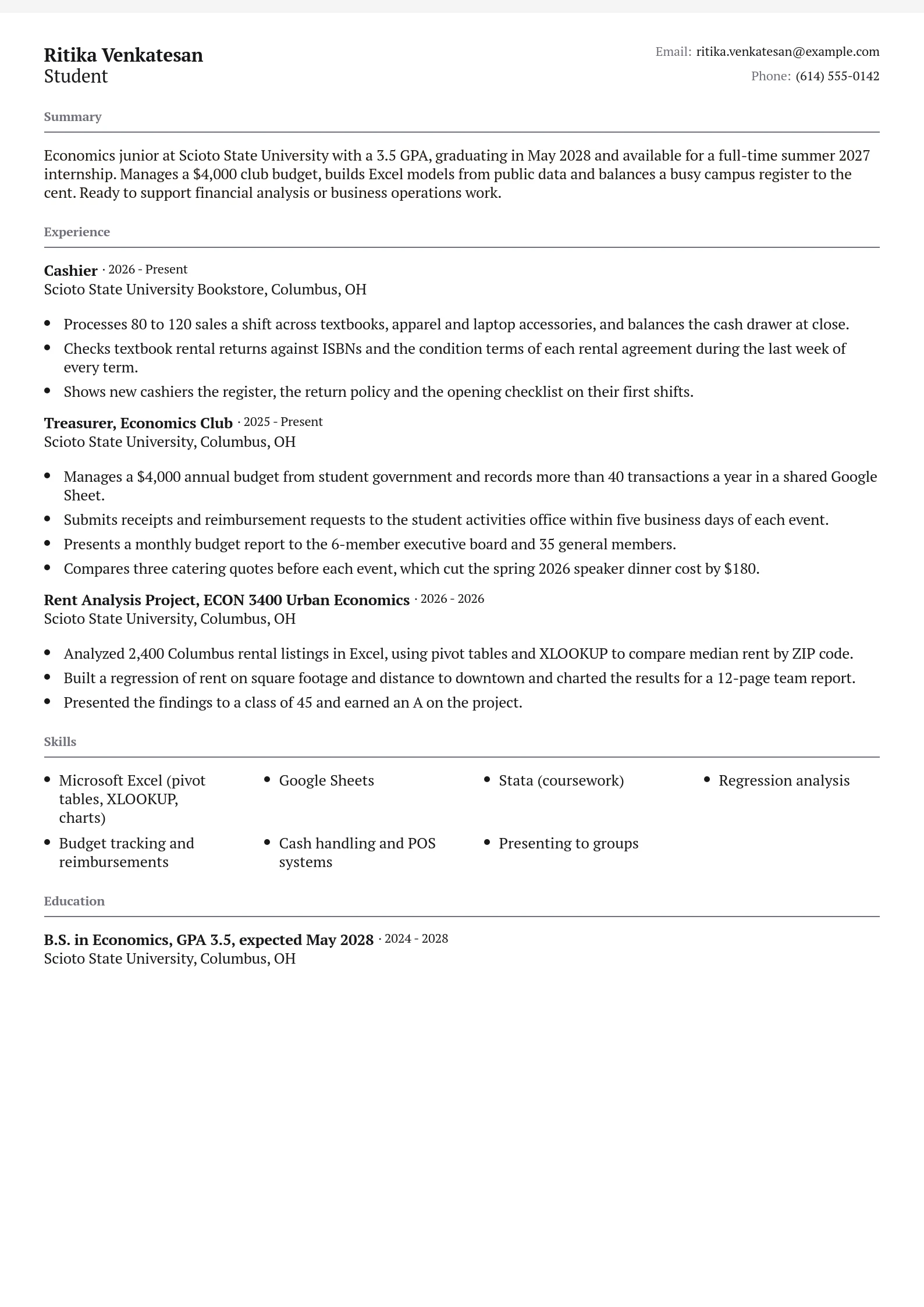
Entry-level customer service resume with no call center experience
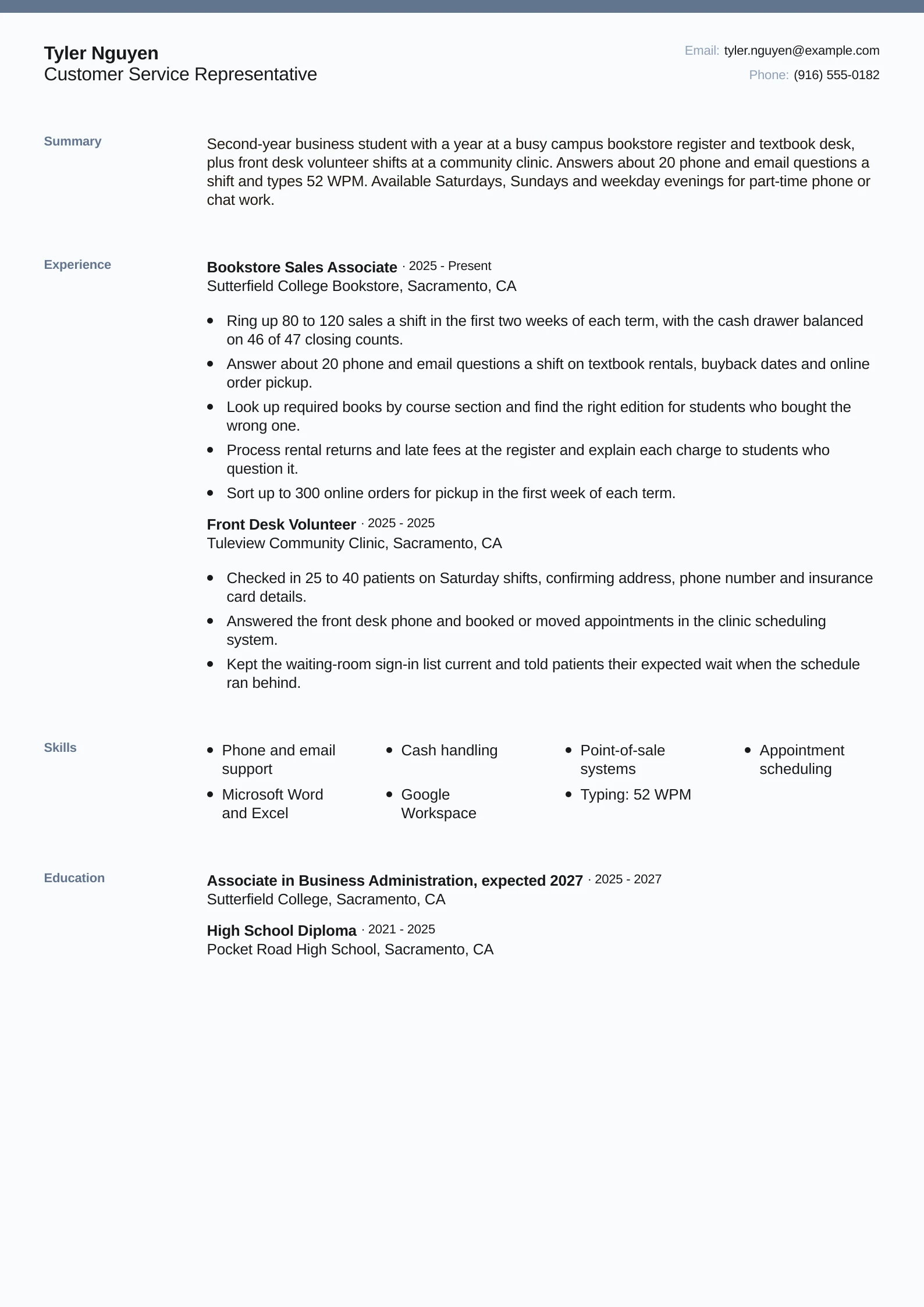
Tyler has never worked a phone queue, so his resume uses the closest evidence he has: 80 to 120 bookstore sales on rush-week shifts, about 20 phone and email questions a shift and patient check-ins at a clinic front desk. His typing speed and weekend availability sit in the summary, where a recruiter filling part-time hours looks first. Suits students and first-job applicants with retail, volunteer or school experience.
Counts sales, questions and check-ins in place of satisfaction scores
Lists a 52 WPM typing speed
Names weekend and weekday evening availability in the summary
Remote customer support resume for email and chat tickets
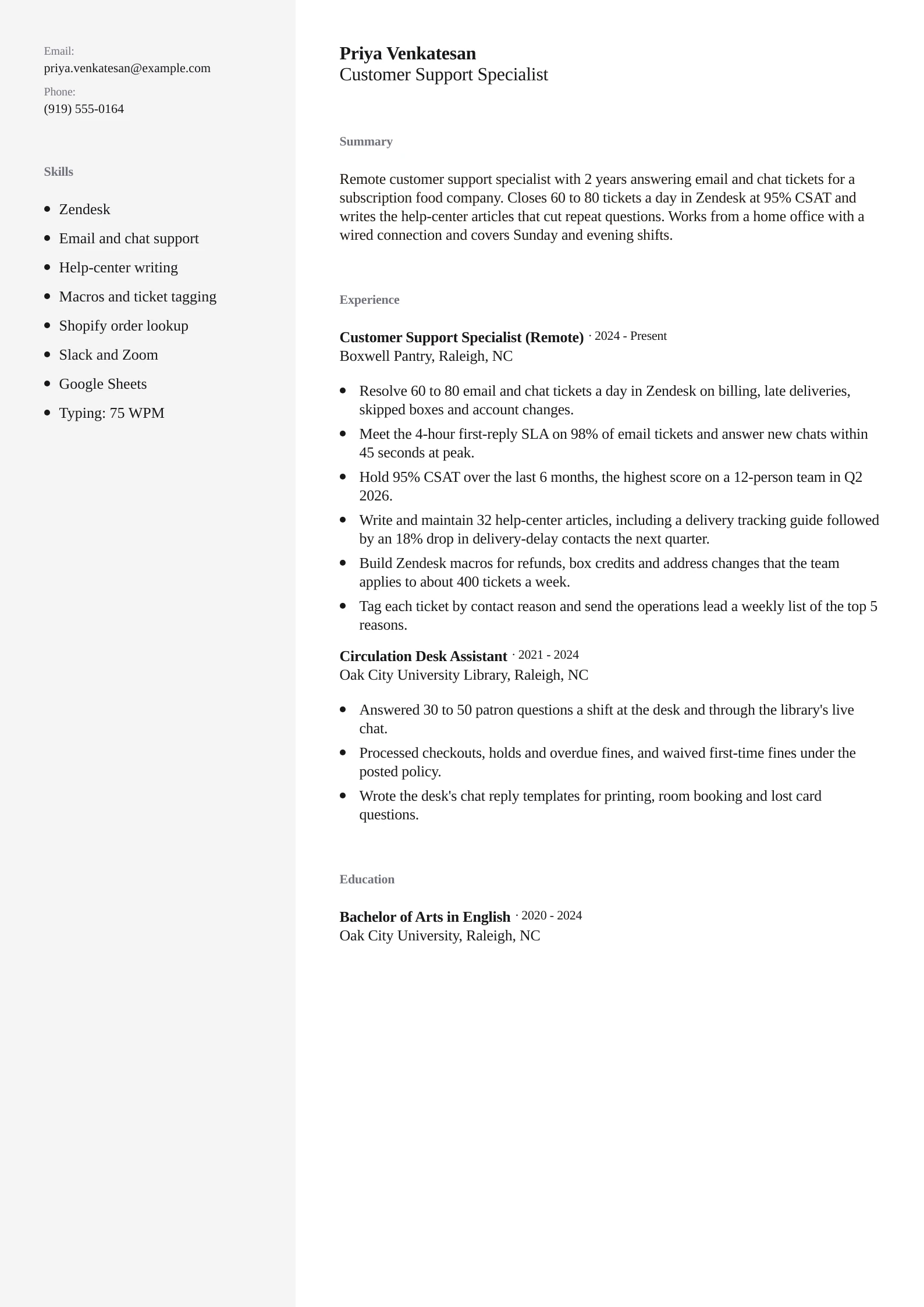
Priya's resume is built for a written queue: 60 to 80 Zendesk tickets a day, a 4-hour first-reply SLA met on 98% of email tickets, and 95% CSAT. It also shows work beyond answering tickets, with 32 help-center articles and the macros her team uses every week. The summary names her wired home office and Sunday and evening shifts. Use it if you've done email, chat or social support and want remote ticket work.
Gives ticket volume, SLA and CSAT together
Shows help-center articles and macros as separate results
States the home office setup and wired connection
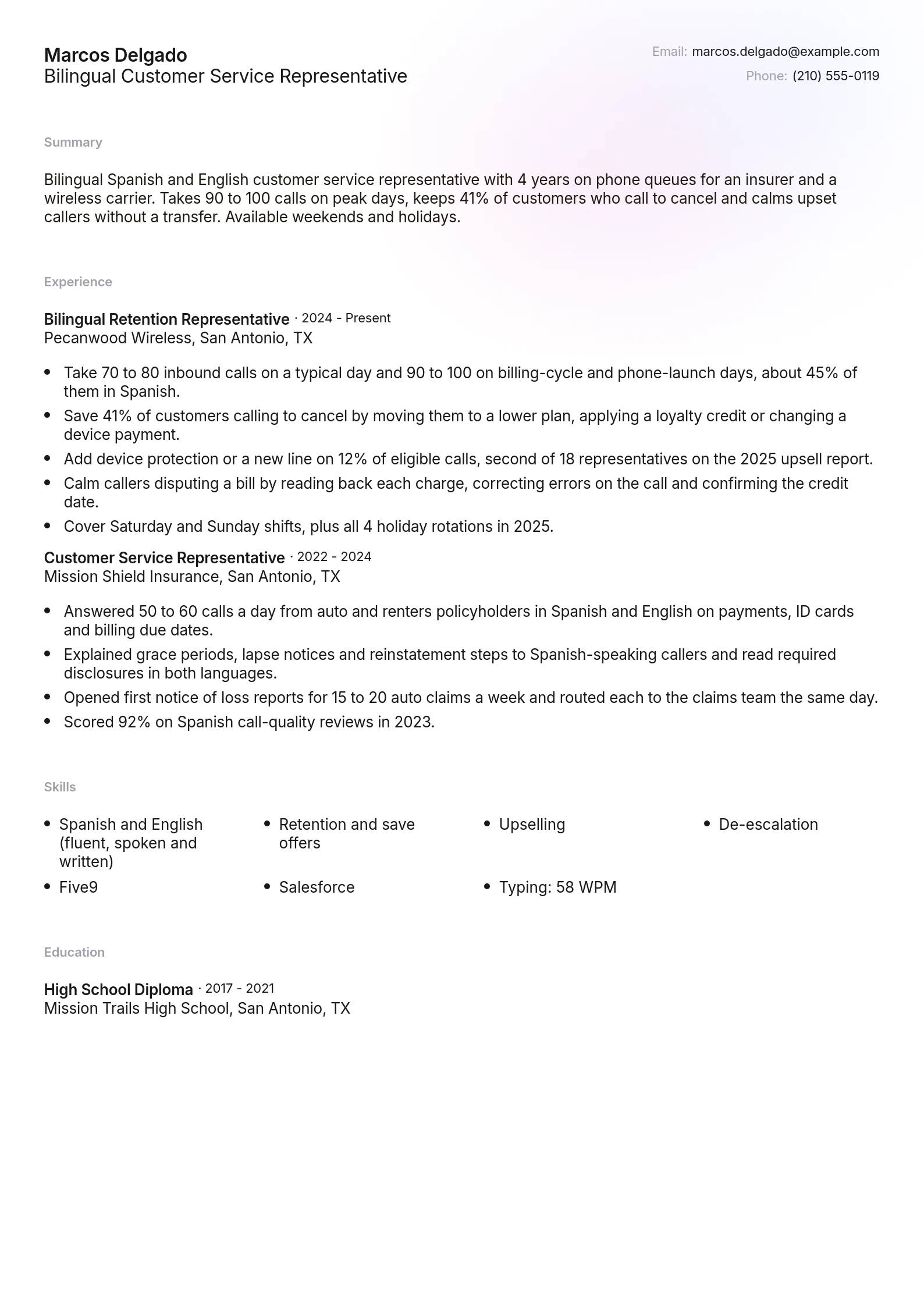
Bilingual customer service resume for a retention phone line
Marcos shows his Spanish through the share of calls he takes in it, about 45%, as well as in his skills list. His bullets give a 41% save rate on cancellation calls, his upsell rate and peak-day volume of 90 to 100 calls, and his summary closes with weekend and holiday availability. Suits bilingual representatives applying to retention or sales and service queues where saves and add-ons are scored.
Gives the share of calls taken in Spanish
Reports cancellation saves and upsell rate
Lists weekend and holiday availability
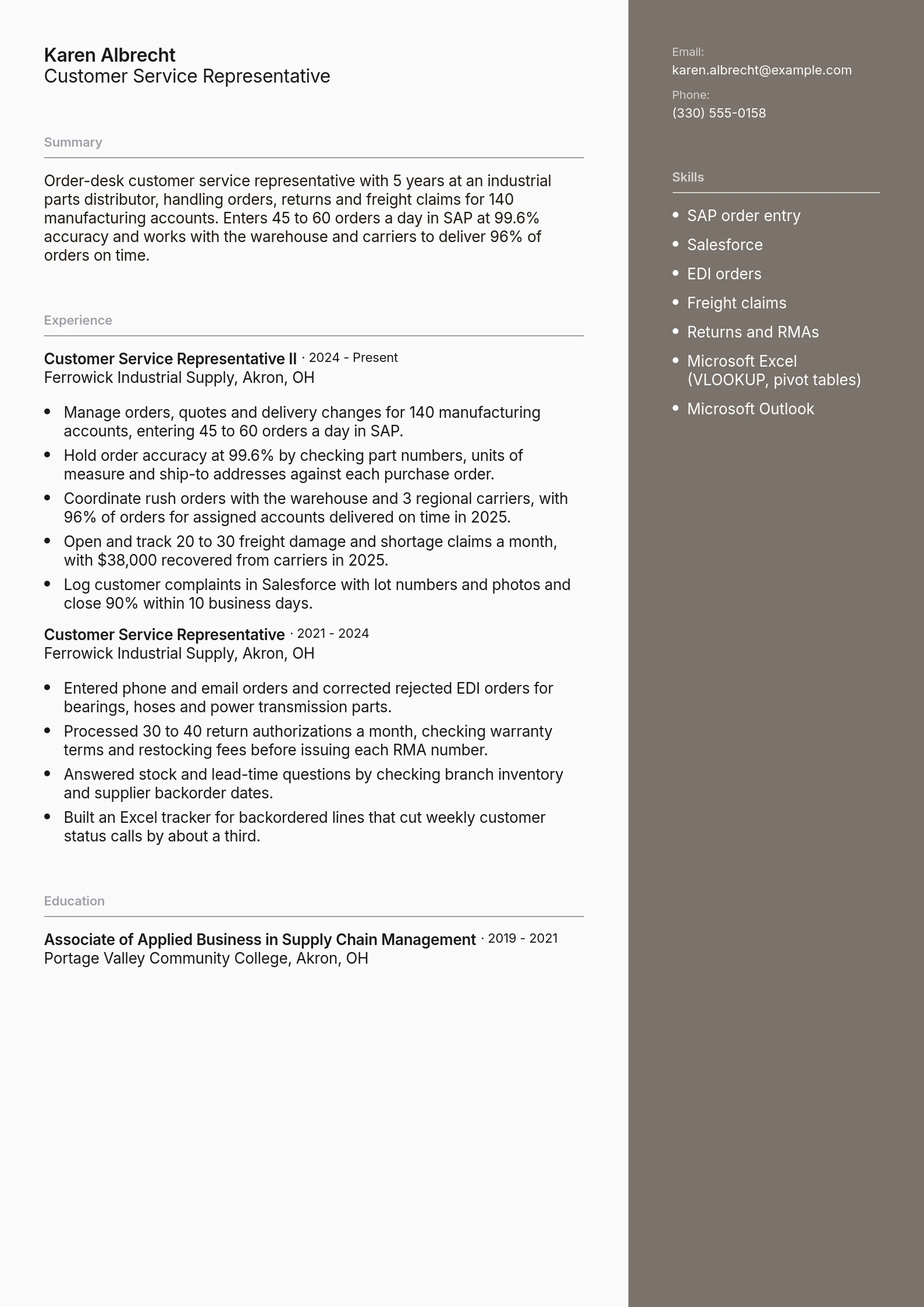
B2B customer service resume for an order desk
Karen's resume reads like an order desk, not a call center: 140 manufacturing accounts, 45 to 60 SAP orders a day at 99.6% accuracy, 96% on-time delivery and $38,000 recovered on freight claims. Two titles at one employer show a promotion without a change of company. Use it if you handle orders, returns, claims and delivery dates for business customers at a distributor or manufacturer.
Measures order accuracy and on-time delivery in place of CSAT
Names SAP, Salesforce and EDI
Shows a promotion inside one company
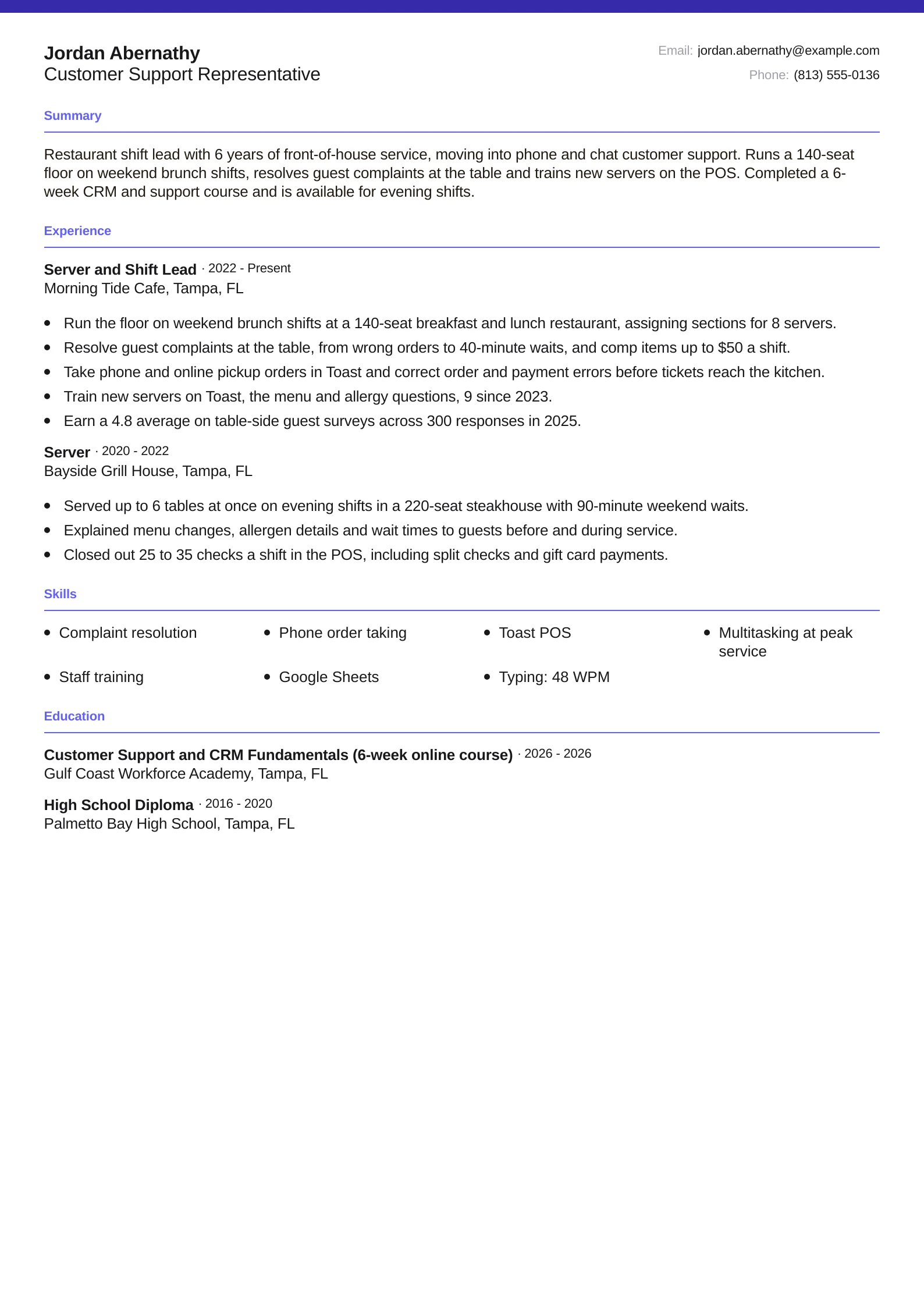
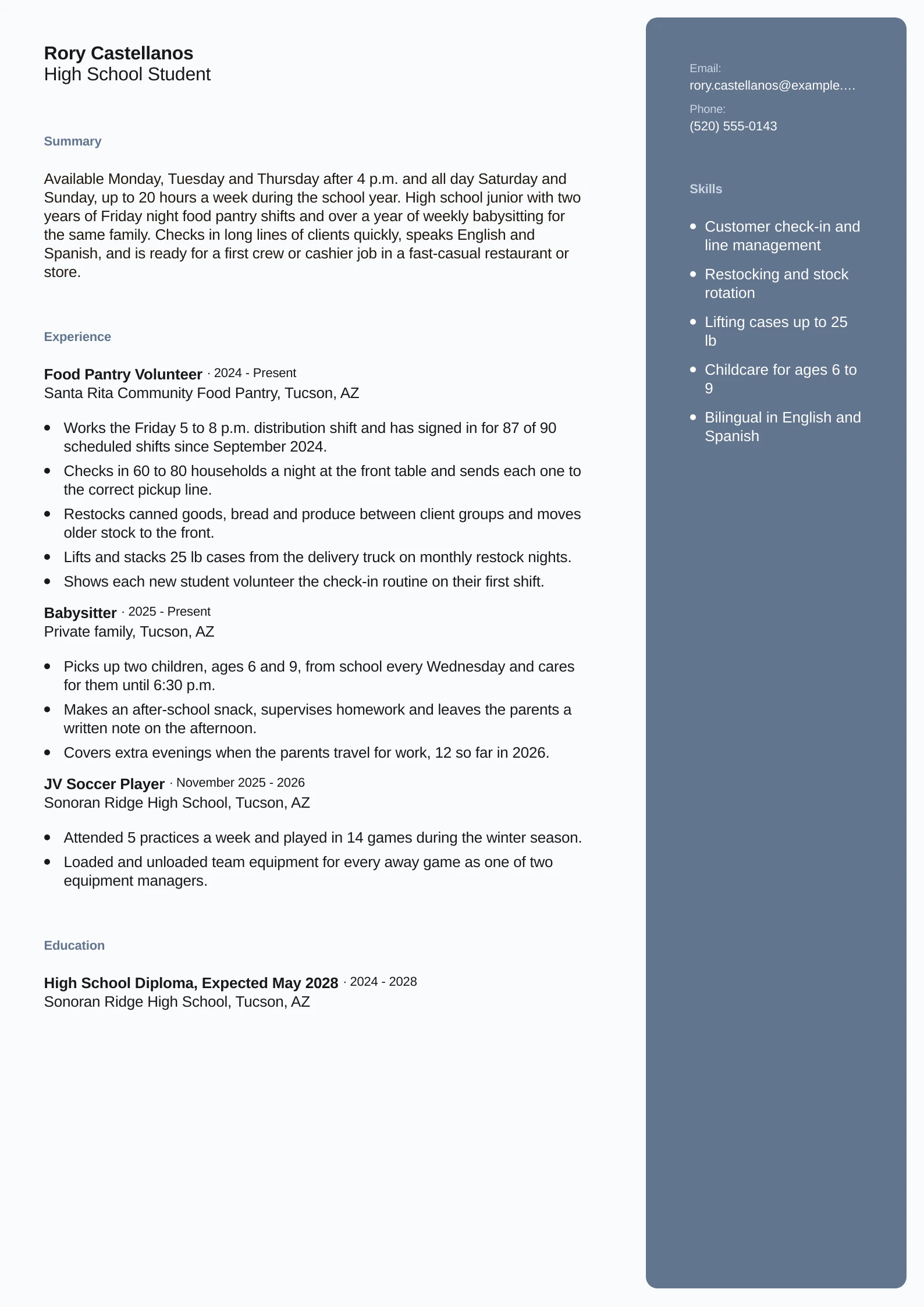
Career change resume from restaurant server to customer support
Jordan has no support title yet, so his bullets turn restaurant work into what a support team screens for: guest complaints resolved at the table, phone and online orders taken and corrected in Toast, and new servers trained on the POS. His summary names the support job he wants, a 6-week CRM course and his evening availability. Suits servers, bartenders and retail workers moving into phone or chat support.
Names the support job he wants in the first sentence
Turns complaint handling and order fixes into support bullets
Lists a short CRM course under education
Put contacts per shift and resolution rate in your bullets
Show how many calls, chats or tickets you handled and how many you resolved, plus any score your team tracked. Hiring managers use these numbers to judge whether you can keep up with their queue, and 60 calls a shift at 91% CSAT tells them more than any adjective.
If nobody gave you targets, count what you can stand behind: contacts on a typical shift, orders or refunds processed, errors caught, new hires trained. A first-job applicant can use register sales, patient check-ins or questions answered. Give a range such as 40 to 50 when you're estimating, and never invent a percentage your employer didn't measure.
Number
What it shows
Example line
If your team didn't track it
Contacts per shift or day
You can keep pace with their queue
Answer 55 to 70 inbound calls a shift on billing, payment plans and outages
Estimate a typical shift and give a range
First-contact resolution (FCR)
You fix problems without callbacks or transfers
Hold 86% first-contact resolution against an 80% team target
Name the issues you closed yourself, such as refunds, plan changes or payment plans
Customer satisfaction (CSAT)
Customers leave the contact satisfied
Reached 90% CSAT on post-call surveys for 9 of 11 months
Use call-quality review scores or count written compliments over a set period
Average handle time (AHT)
You resolve calls without rushing or stalling
Keep average handle time at 6:05 against a 6:30 goal
Leave it out, because handle time means little without the goal
Response time or SLA
You meet deadlines on a written queue
Meet the 4-hour first-reply SLA on 98% of email tickets
Give tickets closed a day and the channels you covered
Accuracy
Orders and records go through without rework
Hold order accuracy at 99.6% by checking part numbers and ship-to addresses
Count errors caught or cash drawers balanced
Saves and upsells
You protect revenue on retention and sales queues
Save 41% of customers calling to cancel
Count plan changes or add-ons sold in a typical week
Copy the ad's system names and channel words exactly
Use the exact words from the job ad for the channels, systems and measures you've worked with. Customer service ads are specific: one asks for Zendesk, Freshdesk or Salesforce Service Cloud, another for SAP order entry, another for inbound and outbound calls in Spanish and English.
Name the system, not the category. Write Zendesk, Five9, Genesys Cloud or Salesforce in your skills list, then repeat the most important one in a bullet so the reader sees it in use, as in: Resolve 60 to 80 email and chat tickets a day in Zendesk. If your employer built its own tool, call it a CRM or ticketing system and describe what you did in it.
Match the channel words to the desk. Phone ads say inbound, outbound, queue, escalations and retention. Ticket ads say email, chat, social, SLA and knowledge base. Order desk ads say orders, returns, claims, refunds and delivery requests. List only the ones you could explain in an interview, because the recruiter will ask how you used them.
For a first job, list the office tools most desks use, such as Outlook, Excel and Zoom, plus any point-of-sale or scheduling system you've run. Skip communication, empathy and problem solving as standalone skills. A bullet about fixing a double charge while the caller is still on the line shows all three.
Typing speed and a second language are the two soft-sounding items worth listing on their own, because ads screen for them by number and name. Write Typing: 55 WPM and Spanish (fluent, spoken and written) rather than fast typist or bilingual.
Write your shifts and home setup where a scheduler will see them
Put your availability in the last line of your summary, and for remote jobs add your home setup in the same place. Call centers that run around the clock staff evenings, weekends and holidays, and remote ads ask for a wired connection and a quiet room, so recruiters screen for both before they read your experience.
Name days and hours instead of saying you're flexible: Saturdays and Sundays, weekday evenings until 11 p.m., holidays included. List the shifts you can work and leave the ones you can't for the interview. For remote roles, give the connection type and speed, your headset and a private room. One ad in this field sets 20 Mbps as the minimum download speed, and another asks for a hardwired connection, a headset, a webcam and a workspace free from noise.
Check the line against the rest of your resume. A current day job from 9 to 5 next to weekday daytime availability makes a recruiter stop and ask which is true.
Days, hours and setup a recruiter can match
Available Saturdays, Sundays, holidays and weekday evenings until 11 p.m. Home office with wired 200 Mbps internet, a USB noise-canceling headset and a private room.
Too vague to schedule
Flexible schedule. Comfortable working from home.
Choose a one-page layout with a visible skills column
A plain one-page template with a separate skills column suits most customer service applications, because recruiters scan for system names, languages and typing speed before they read bullets. Every example on this page uses that structure, with skills in a side column next to the experience.
Pick the design by how much you need to fit. The remote support example uses a tighter split layout with smaller type, which helps if you have several short jobs or a long tools list. The entry-level and B2B examples use the plainest design, with no color band and skills as a simple list. The inbound, bilingual and career-change examples add a colored header that puts your name and target title at the top.
Keep numbers in the bullets as text. Skill bars, star ratings and flag icons for languages don't tell the reader your level, and they can scramble when an application system reads the file. If you're applying to a bilingual queue, put the language in the title under your name, as the bilingual example does with Bilingual Customer Service Representative.
Lead with the work your desk type is hired for
Customer service covers at least three different jobs, and the right resume leads with the evidence for the one in the ad. Read the duties: calls, retention and upselling point to a phone queue, tickets and a help center to a written queue, and orders, claims and plant coordination to an order desk.
If you've worked more than one desk, reorder your bullets for each application so the matching work comes first. The table shows what your first bullet, scores and skills list should carry for each.
What to show
Inbound phone queue
Written ticket queue
B2B order desk
First bullet
Calls a shift and the issues you handle
Tickets a day, channels and the helpdesk
Accounts, orders a day and the ERP system
Scores
FCR, CSAT, handle time, saves or upsells
First-reply SLA, CSAT, reopen rate
Order accuracy, on-time delivery, claims recovered
Systems to name
Phone platform, CRM, billing system
Zendesk, Freshdesk or Salesforce Service Cloud, store admin