Fire departments check your certifications before they read your story, so a firefighter resume works when it names each card by its exact title, issuer and date, then counts the calls you have run and how many were medical.
The five examples start from different places: a Texas engine company, a Florida volunteer department, a California wildland crew, a 9-1-1 ambulance and an Army motor pool.
Six years on a Texas engine company, credentials first
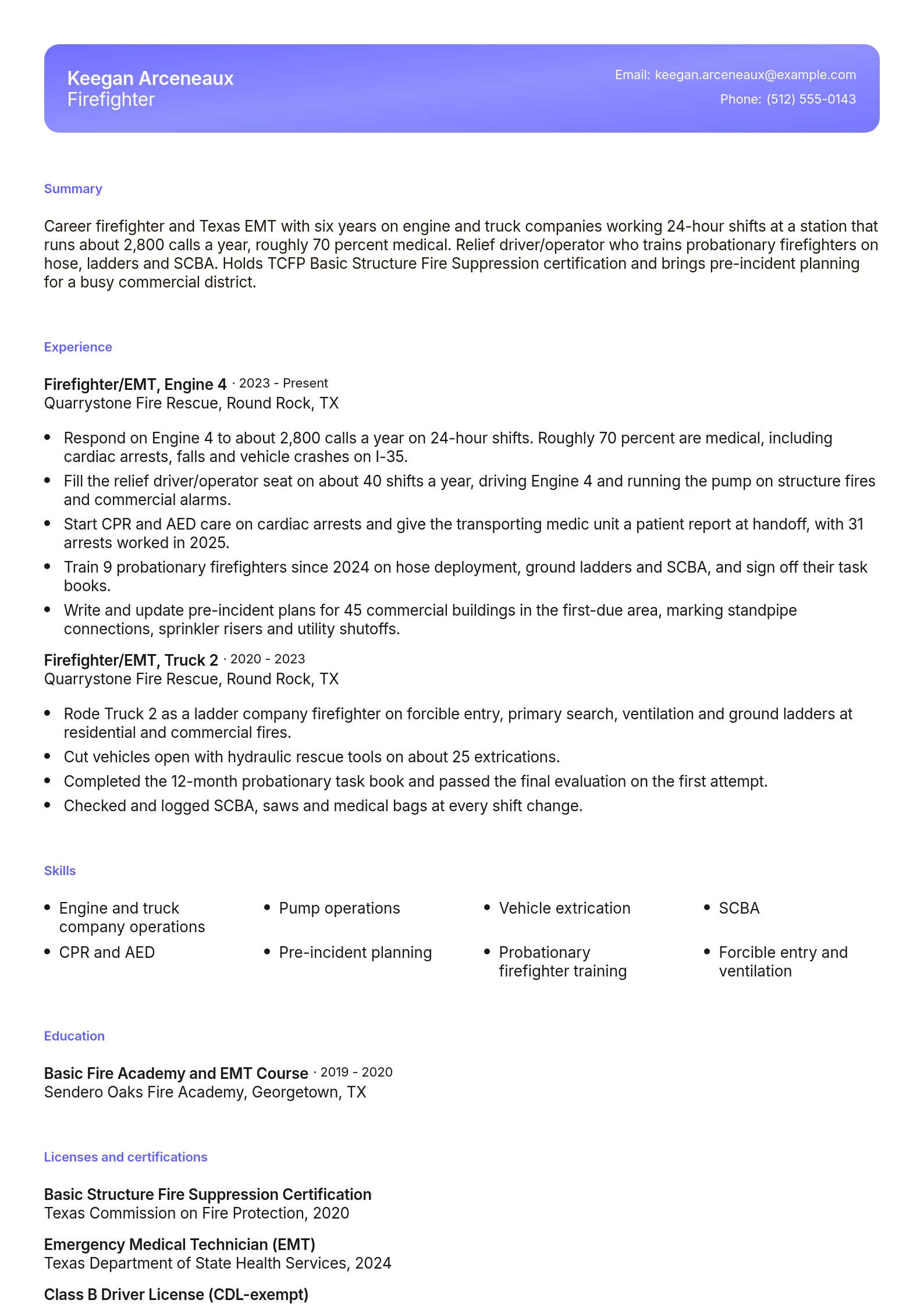
Keegan's resume names his Texas Commission on Fire Protection certificate, his Texas EMT card and the Class B license he needs to drive the engine, each with its issuer, then opens his current job with the number a lateral hiring panel looks for: about 2,800 runs a year, roughly 70 percent of them medical.
Copy the order of his bullets if you already ride an engine or truck. Call volume and medical share come first, then the extra seat you fill on shift, such as relief driver/operator, then what you teach probationary firefighters and the pre-incident plans you write.
Match the example to the cards you hold today
Each resume below enters the fire service by a different route: volunteer department, seasonal wildland crew, private ambulance or no fire background at all. Pick the one whose credential list looks most like yours, then replace the cards, dates and call counts with your own.
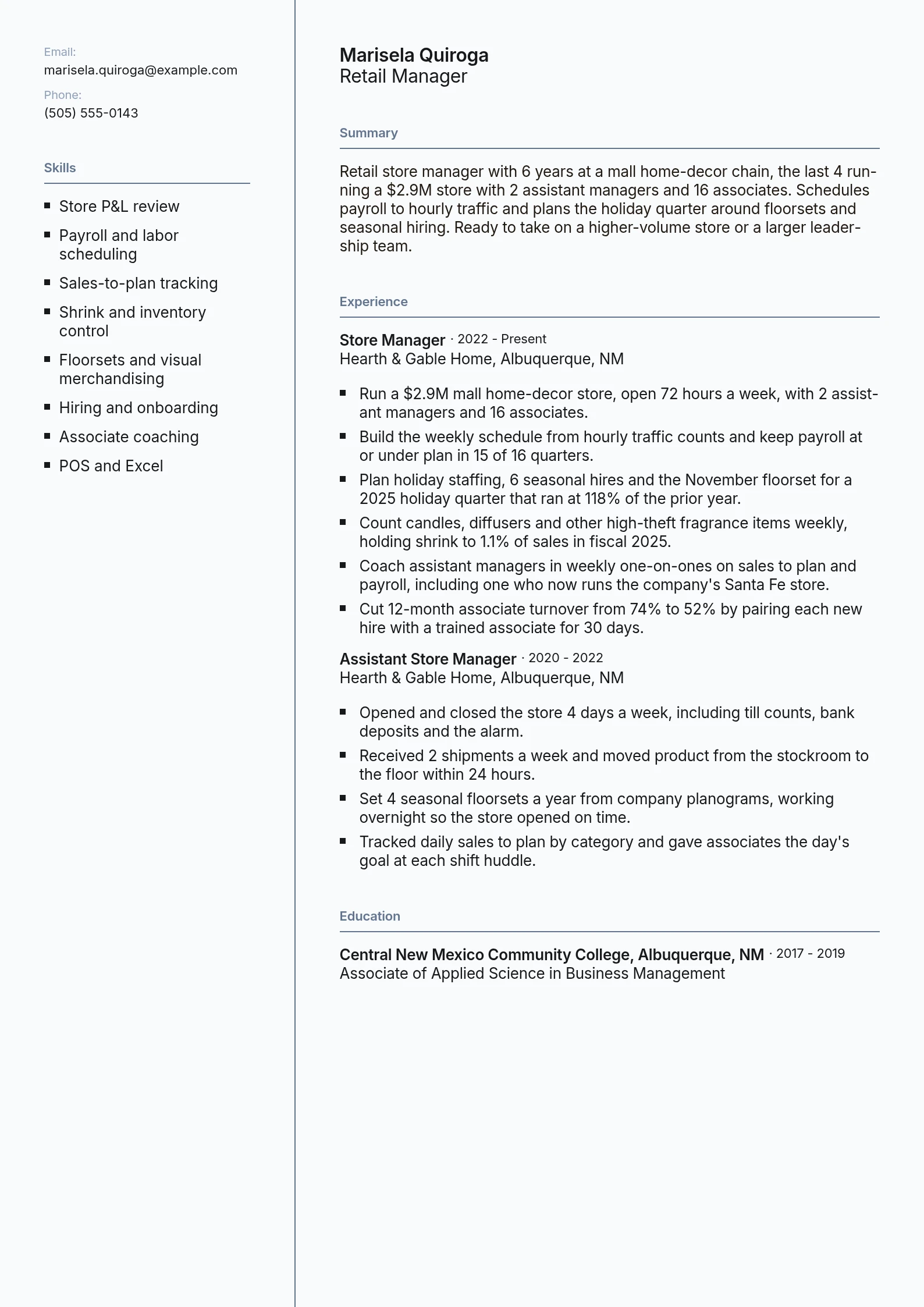
Volunteer firefighter fresh from a Florida academy
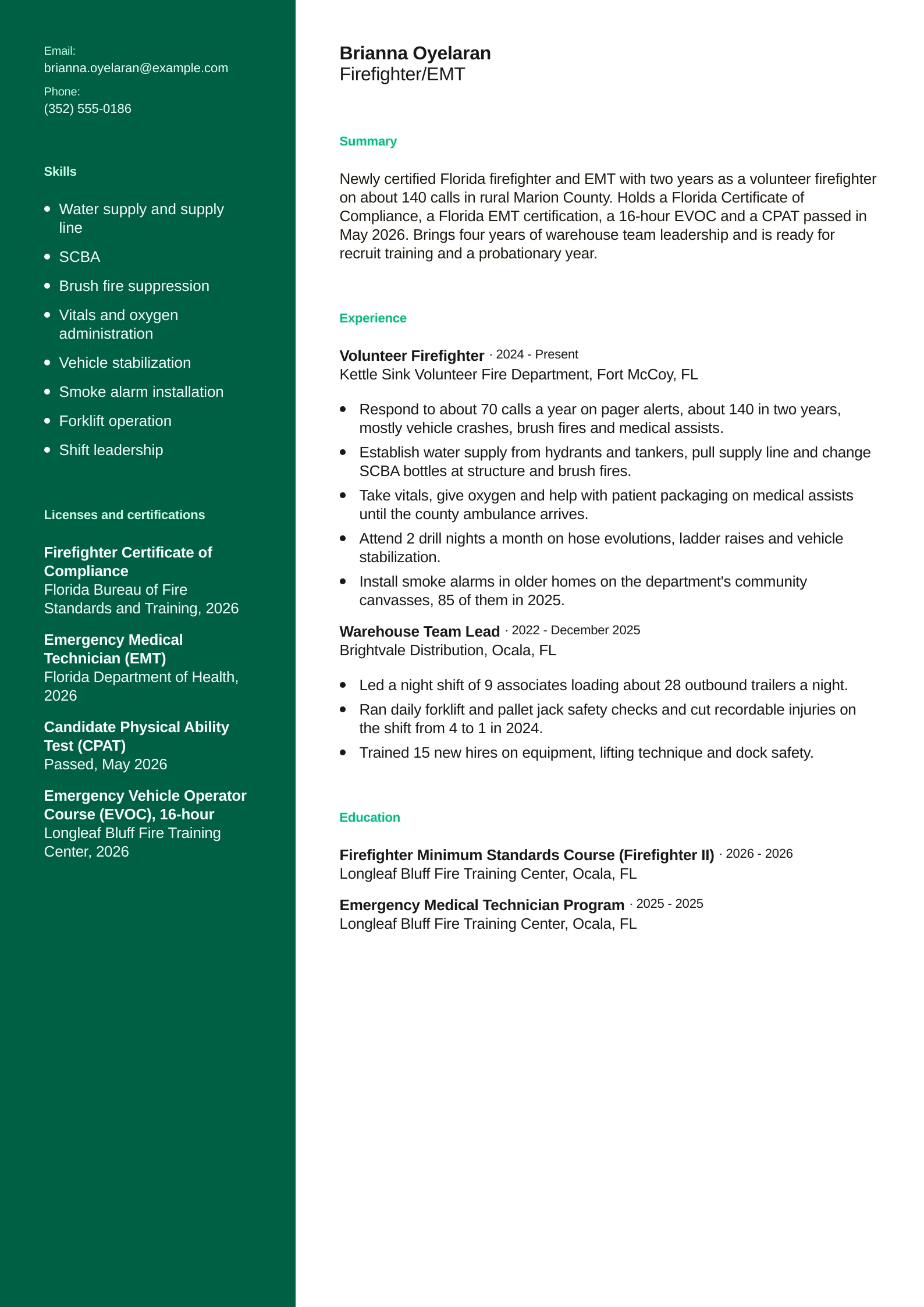
Brianna's resume suits a volunteer who has just finished a state academy and is applying for a first career job. Her Florida Certificate of Compliance, Florida EMT card, CPAT pass month and 16-hour EVOC carry their issuers and dates. Her volunteer bullets count about 140 calls, name the main call types and list the scene tasks she handled, and her warehouse job adds shift leadership and a safety record.
Four credentials listed with issuer and date
About 140 volunteer calls with the main call types
Warehouse team lead role with injury numbers
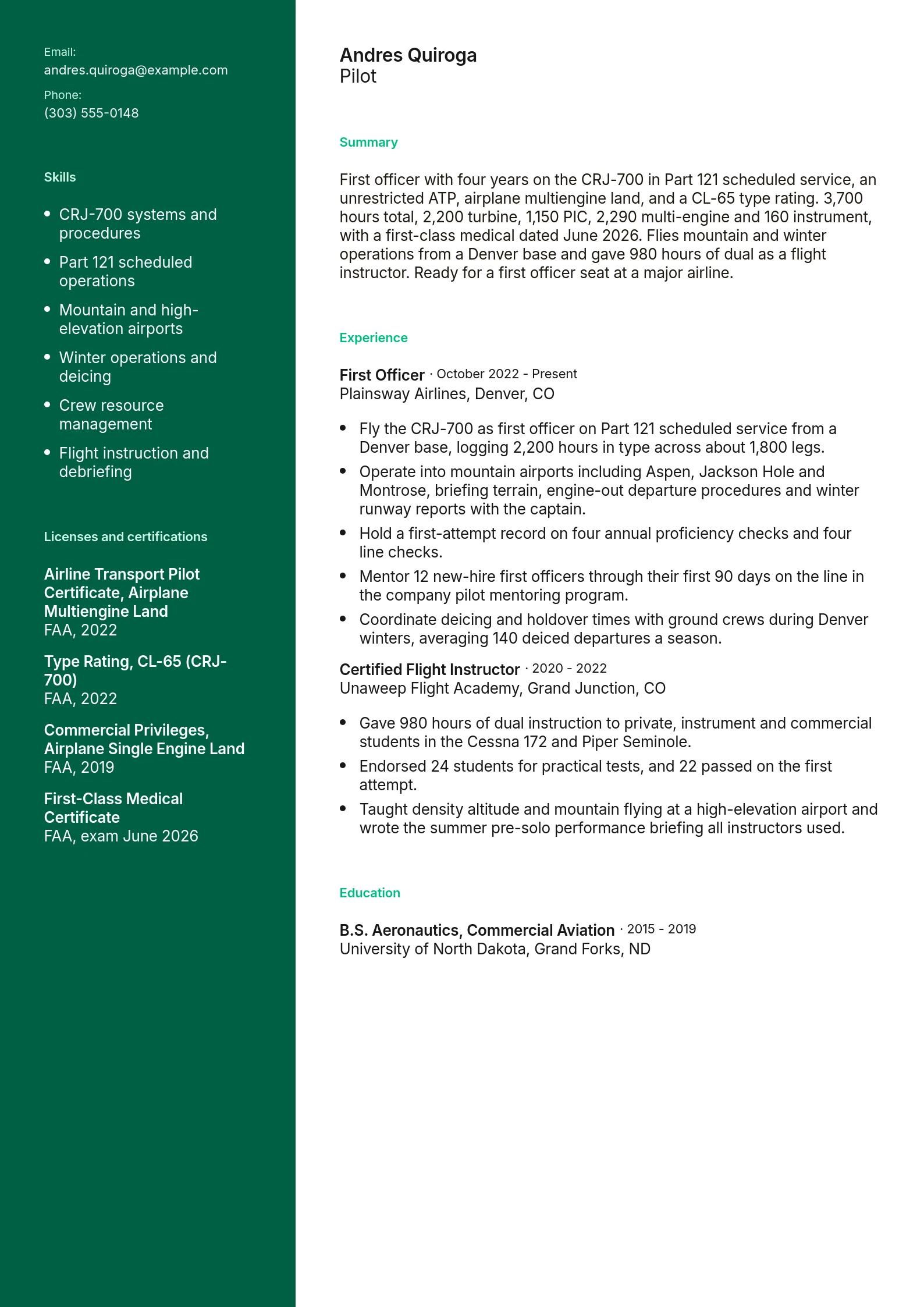
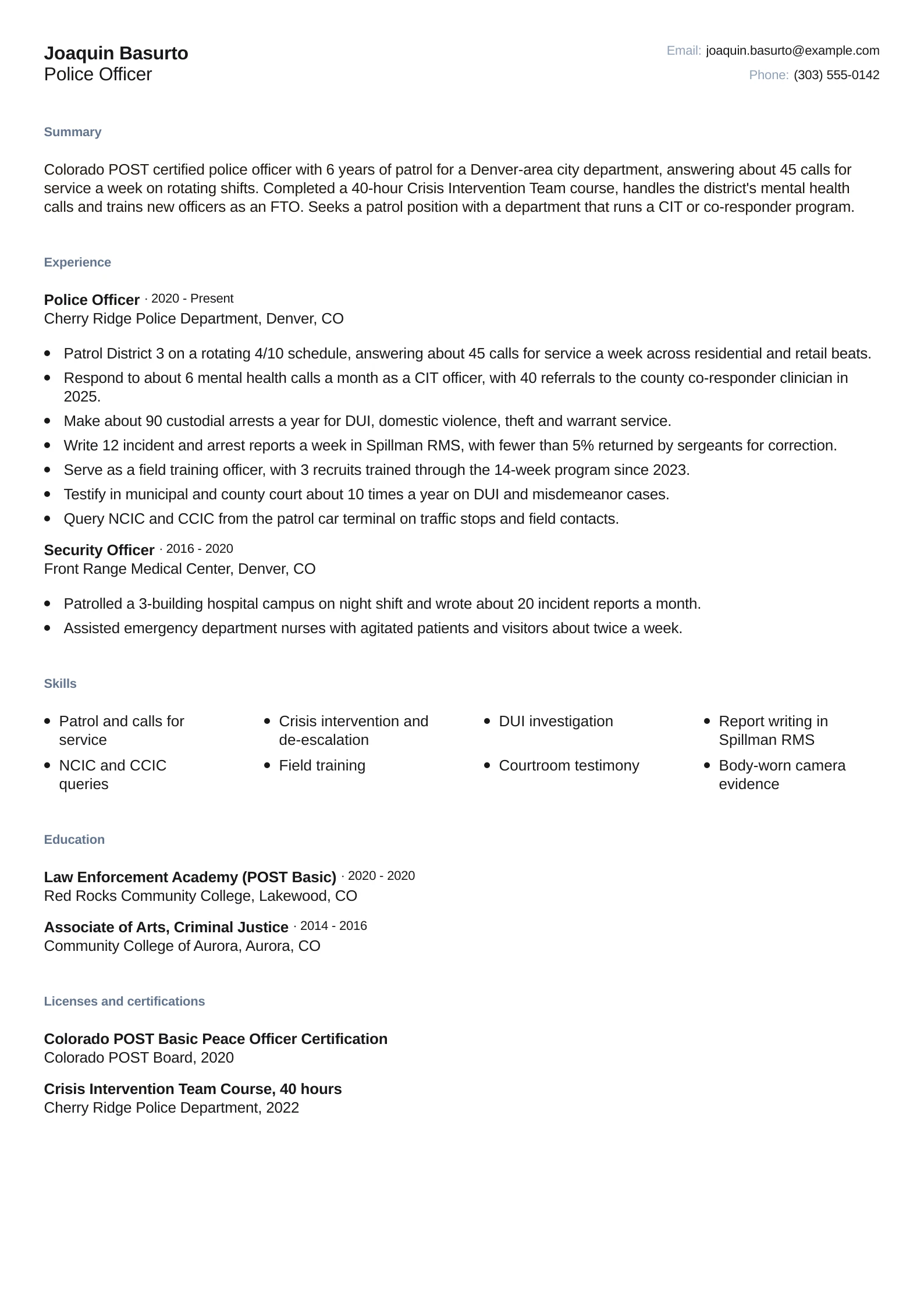
Wildland crew member moving to a structural department
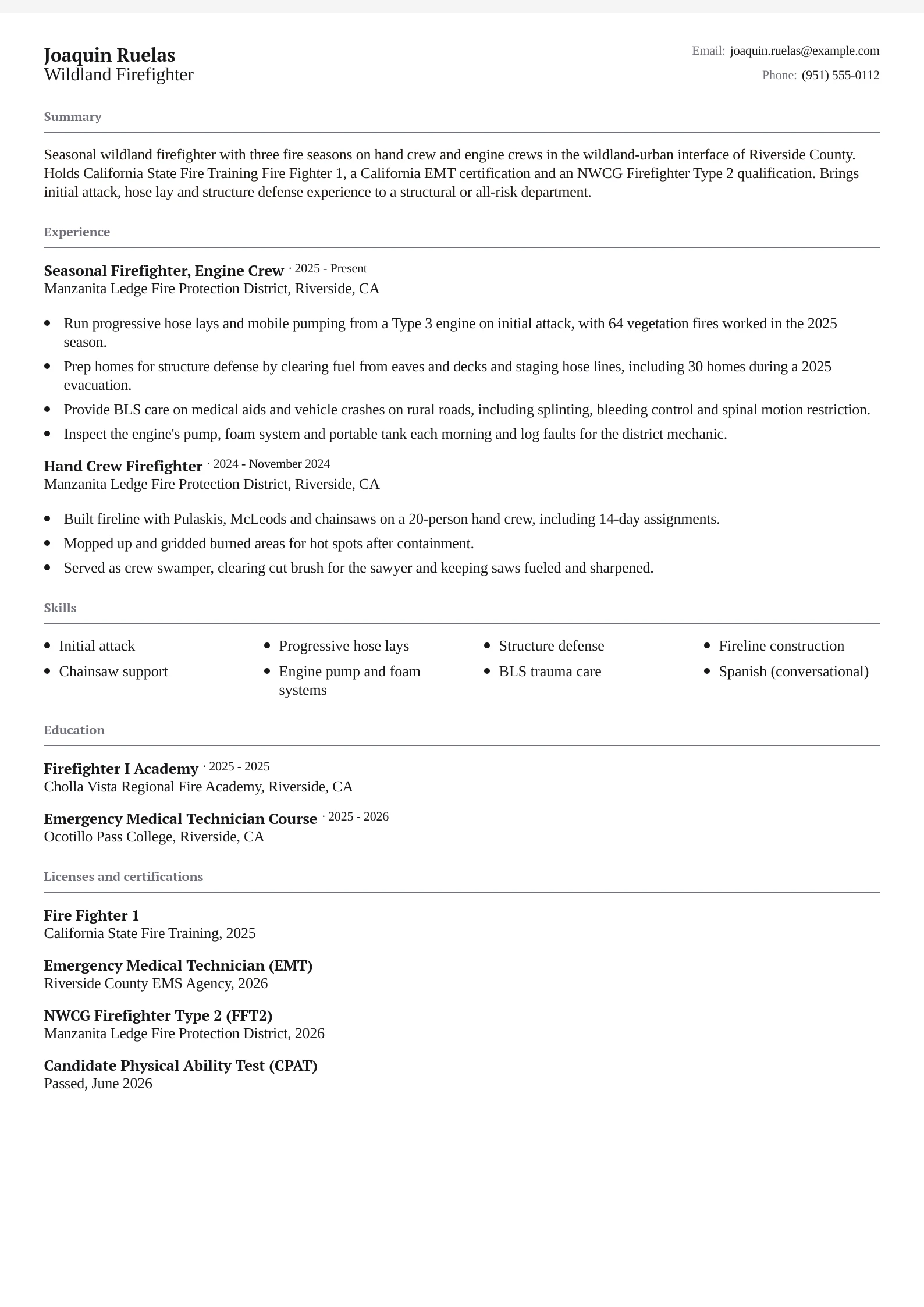
Joaquin's resume is for a seasonal wildland firefighter applying to a structural or all-risk department. It lists his hand crew season apart from his engine seasons, gives the month range of each, and names the hose lays, structure defense and medical aids that carry over to a city engine. California State Fire Training Fire Fighter 1, a county-issued EMT card and NWCG Firefighter Type 2 sit together.
Hand crew and engine seasons as separate entries
Structure defense and medical aids from wildland work
NWCG Firefighter Type 2 listed beside Fire Fighter 1
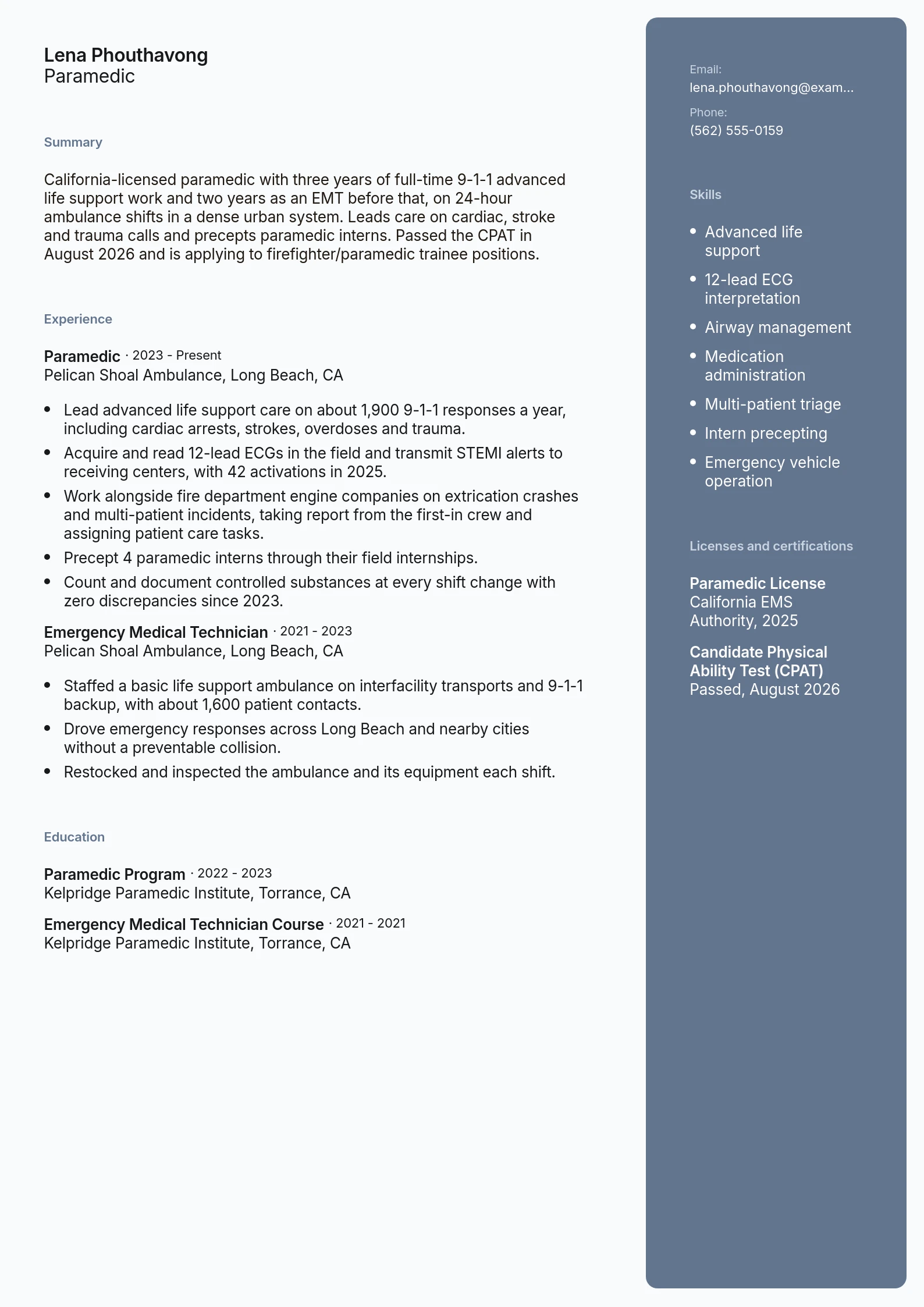
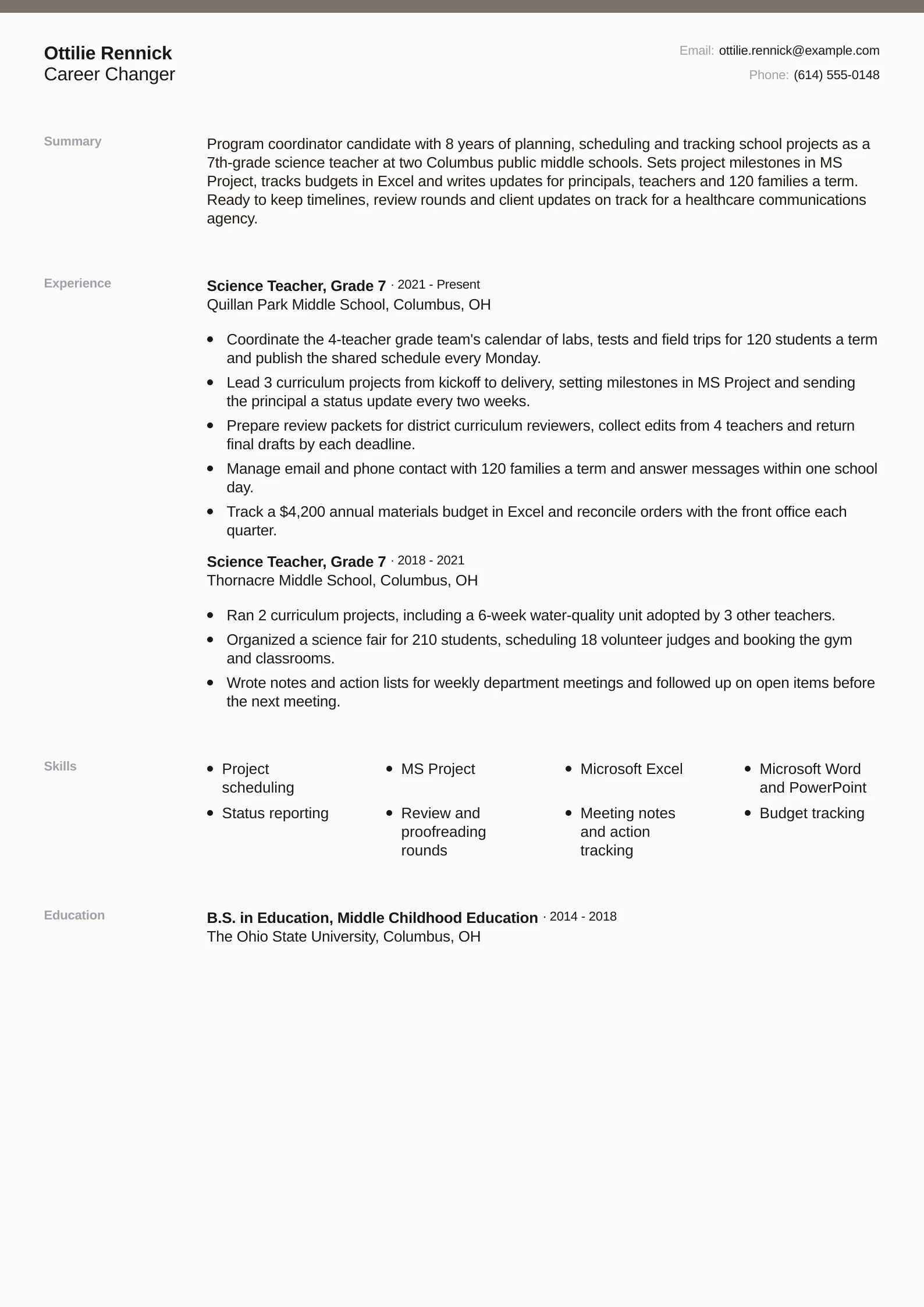
Paramedic crossing from a 9-1-1 ambulance
Lena's resume fits a paramedic applying to a firefighter/paramedic trainee track with no fire academy yet. Her California paramedic license and CPAT pass month come first. Her bullets give yearly 9-1-1 call volume, 12-lead ECG and STEMI alert numbers, the interns she precepts and how she works with engine companies on scene. Use it if the department will train you on the fire side.
California paramedic license and CPAT month
ALS call volume with cardiac and stroke detail
Joint scenes with engine companies
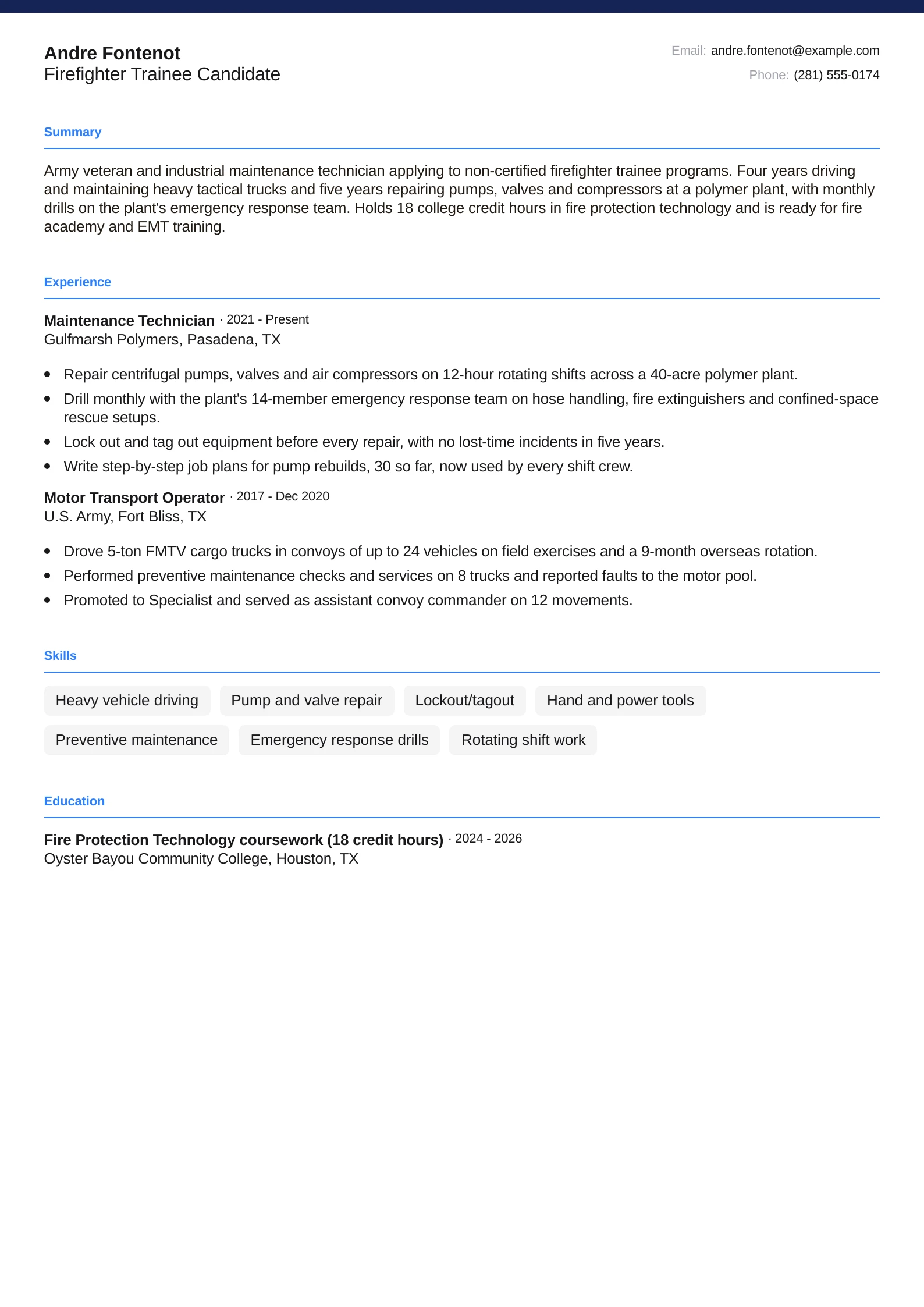
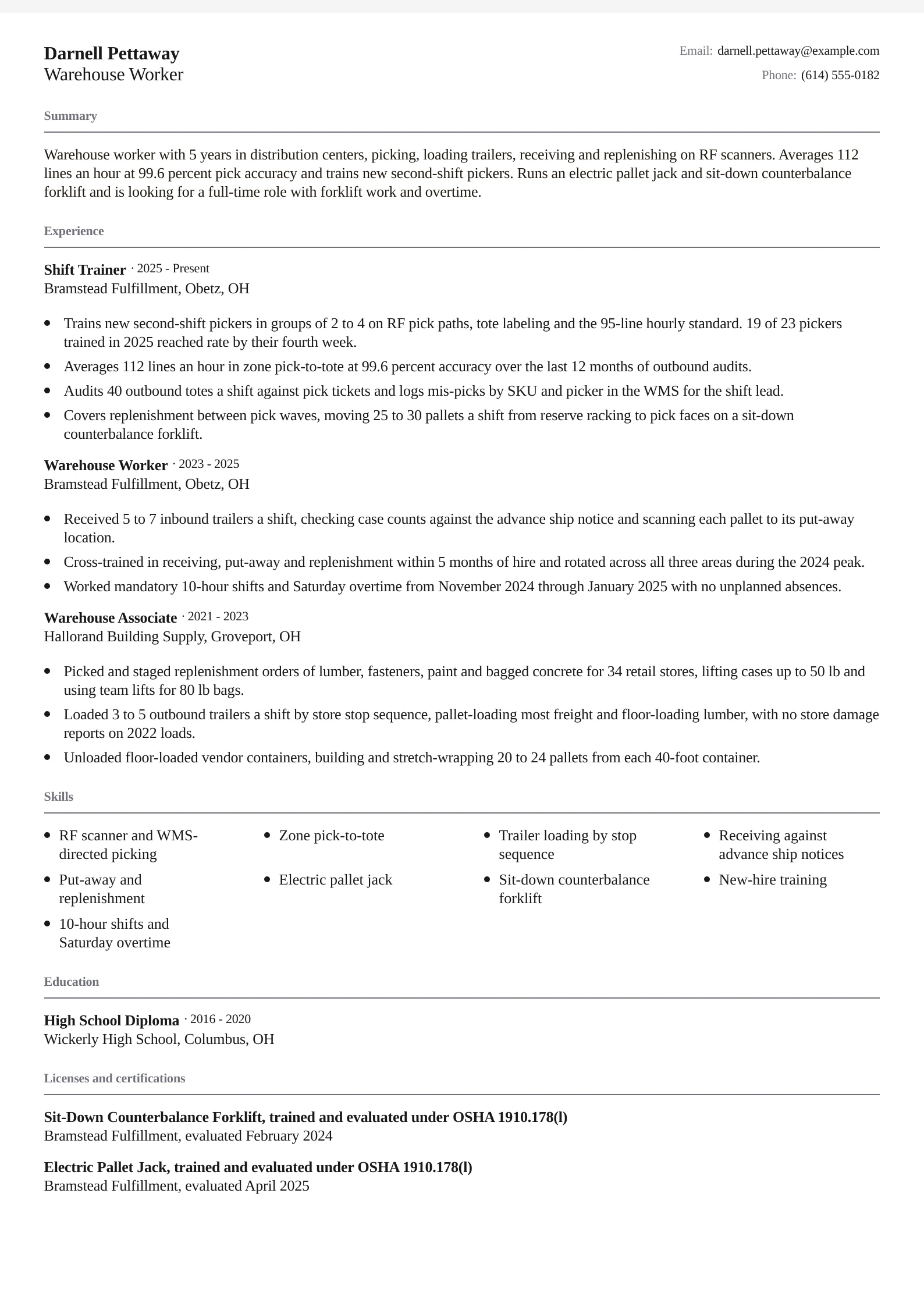
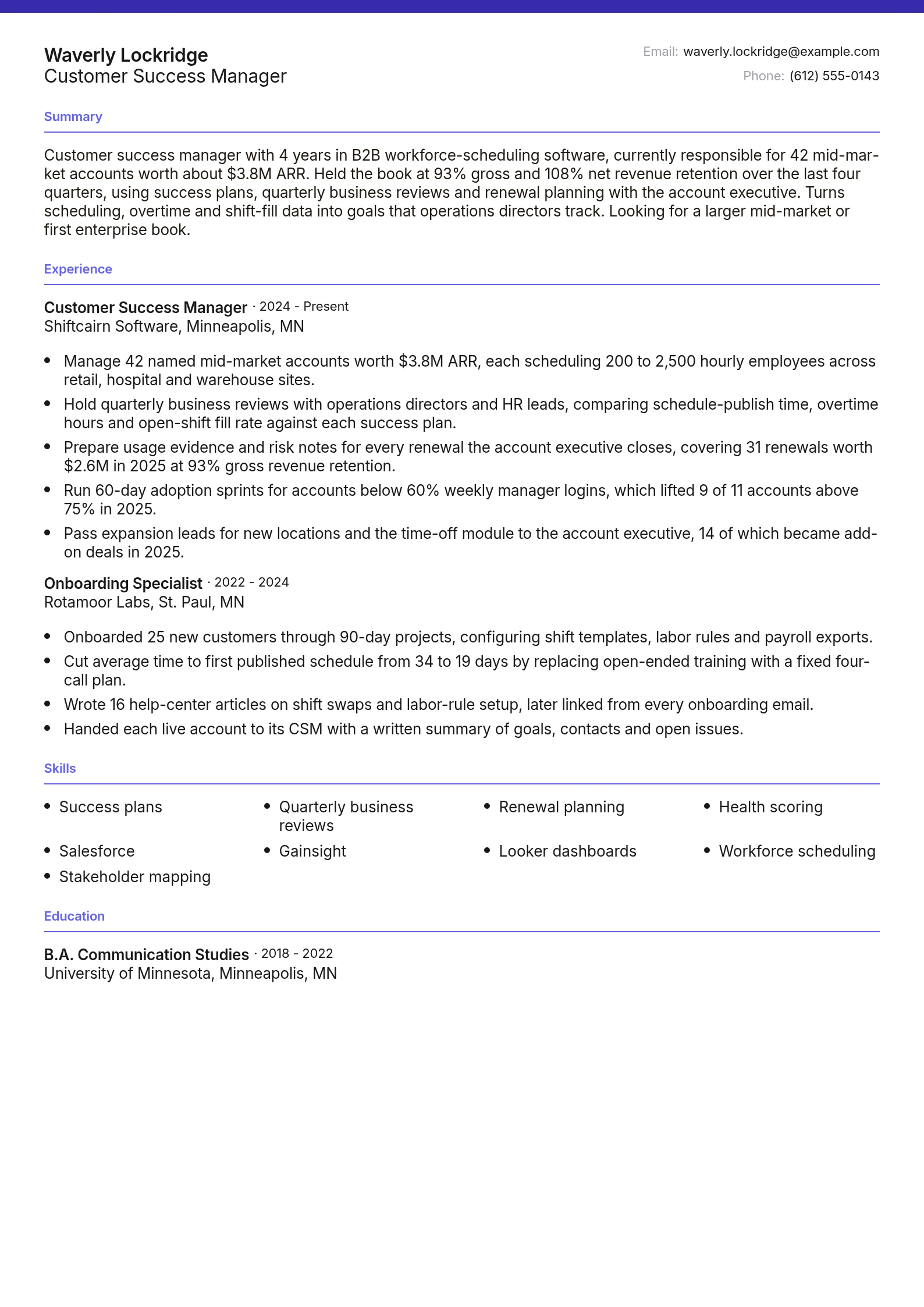
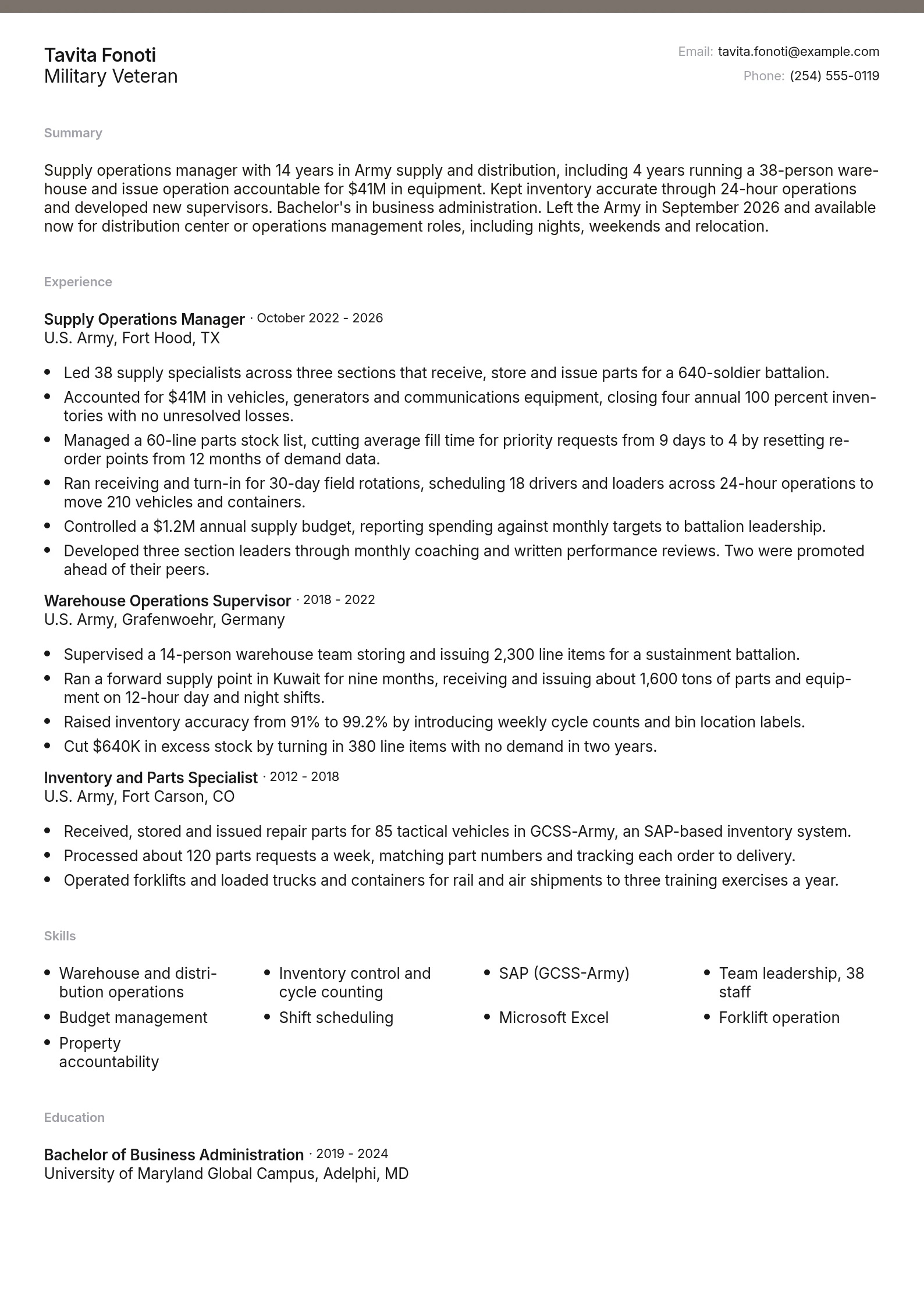
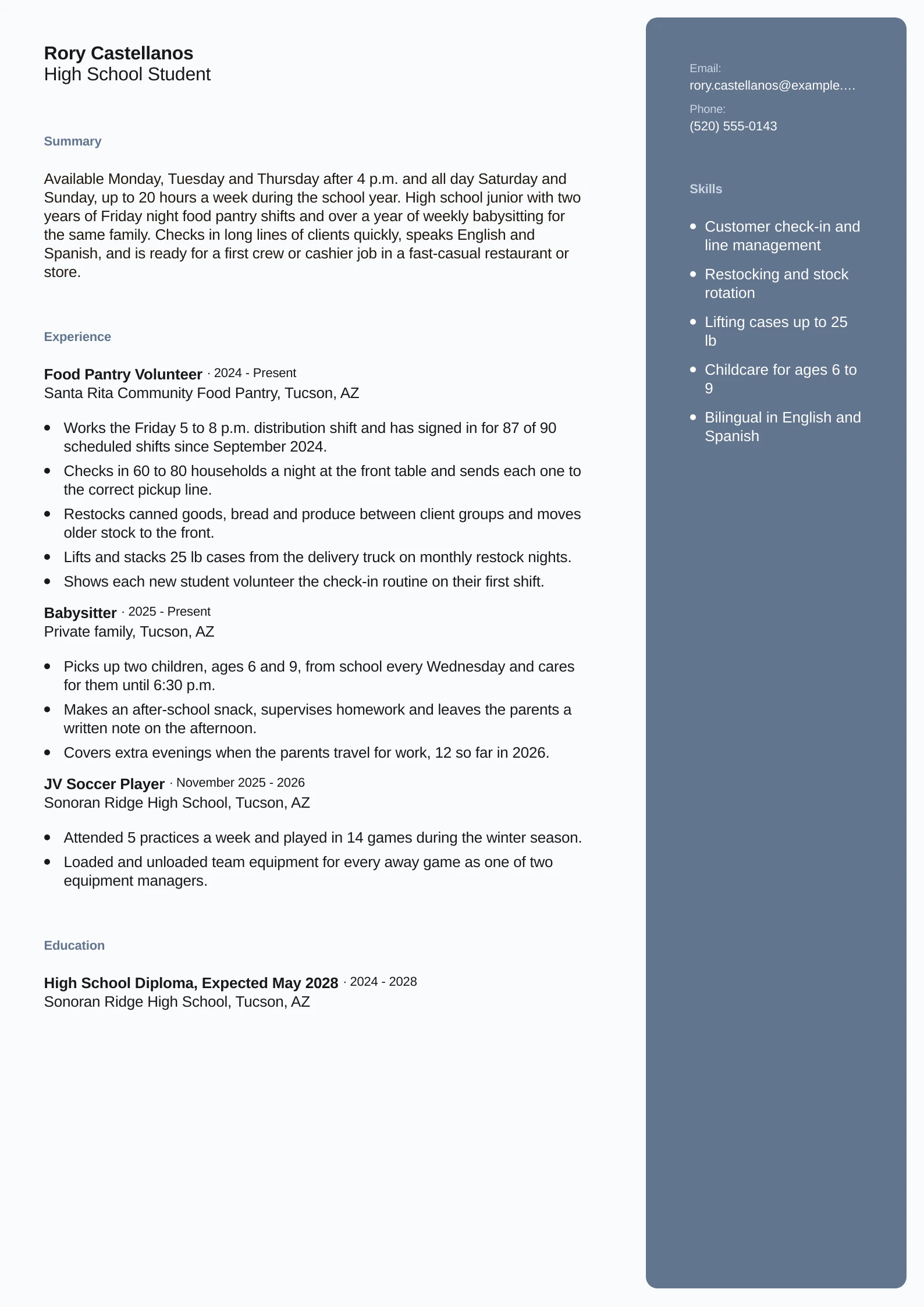
Army veteran applying as an uncertified trainee
Andre's resume is for a career changer applying to a department that hires uncertified trainees and sends them through fire academy and EMT school. With no fire or EMS cards to list, it shows what a trainee posting screens for: four years of military service and 18 college credit hours. His bullets cover heavy truck driving, pump repair, lockout/tagout and drills with a plant emergency response team.
Army truck driving and vehicle maintenance
College credit hours stated as a number
Plant emergency response team drills
Write each card the way the issuing agency prints it
Give every fire and EMS credential its own line with the exact title, the agency that issued it and a year or month. "Certified firefighter" tells a screener nothing, while "Basic Structure Fire Suppression, Texas Commission on Fire Protection, 2020" tells them you meet a Texas department's minimum.
Read the posting's minimum qualifications and list your cards in the same words, because the first screen is often a checklist against that list. If a card is in progress, write the course and the expected month, such as "EMT course, completing December 2026". Leave out cards that have lapsed unless the posting asks for prior certification.
Credential
Write it as
Issuer to name
Date to show
State fire certification
Your state's own title, such as Basic Structure Fire Suppression (Texas) or Firefighter Certificate of Compliance (Florida)
Texas Commission on Fire Protection, Florida Bureau of Fire Standards and Training, or your state's fire training agency
Year issued. A Florida certificate expires four years after issue unless renewed, so give the renewal year if you have one
Firefighter I and II
Firefighter I or Firefighter II, as the certificate reads
The state body that tested you, such as California State Fire Training
Year certified
EMT or paramedic
EMT or Paramedic exactly as your card reads, with the state
The state or county agency that issued the card. Put National Registry on its own line if you hold it
Year issued or last renewed. NREMT renews every two years
CPAT
Candidate Physical Ability Test (CPAT)
None needed. It is a pass/fail test, not a certification
Month and year passed
EVOC
Emergency Vehicle Operator Course, with its length, such as 16-hour
The training center that ran it
Year completed
Wildland qualification
NWCG Firefighter Type 2 (FFT2) or Type 1 (FFT1)
Your employing agency, which certifies the qualification and issues the card
Year of your current card
Count your medical runs instead of filing them under other duties
Most fire department calls are medical, so your bullets should show patient care in numbers next to fire suppression. LA County Fire reports that EMS 9-1-1 calls are nearly 85 percent of its responses, and a resume that lists "fire, rescue and medical emergencies" in one breath hides the work you do most.
On an engine or truck, give your yearly run count and the share that were medical, then name the calls a reviewer can picture: cardiac arrests, falls, overdoses, vehicle crashes. On an ambulance, add your role on the call, such as lead medic, and a skill count like 12-lead ECGs or STEMI alerts. Volunteers can count medical assists the same way, even at 30 a year.
Keep fire work equally specific. Name the company you ride, the seat you fill and the tools you use, such as hydraulic rescue tools on extrications or ground ladders on a truck company.
Medical work counted and named
Respond on Engine 4 to about 2,800 calls a year on 24-hour shifts. Roughly 70 percent are medical, including cardiac arrests, falls and vehicle crashes on I-35.
Medical work buried in a duty list
Responded to fire, rescue and medical emergencies as part of an engine company and provided patient care as needed.
Turn volunteer calls, fire seasons and military years into countable experience
Volunteer, seasonal and military experience all count toward a career application when you write them as numbers a recruiter can check. Volunteers are the largest group of firefighters in the US, and departments also hire from seasonal wildland crews and trainee programs that take people with no fire background.
If you volunteer, treat the department like an employer: your title, its name and town, your start month and a call count over that period, split by type. "About 140 calls in two years, mostly vehicle crashes, brush fires and medical assists" is specific. Name the scene tasks you handled, such as water supply, pulling supply line or changing SCBA bottles, and add drills and community work with a count, such as smoke alarms installed.
If you worked wildland seasons, list each crew with its months and keep hand crew and engine work as separate entries. Use terms a structural captain recognizes, such as progressive hose lays, pumping, structure defense and medical aids, and keep wildland terms like line construction and mop-up, because all-risk departments run brush fires too. Forest Grove Fire & Rescue in Oregon, for example, lists an NWCG Type 2 qualification as desirable and asks for a year of fire suppression or related emergency services experience.
If you are a paramedic or EMT moving to a fire department, give your months of full-time 9-1-1 work, because a paramedic trainee track such as LA County Fire's asks for 12 months of it along with a California paramedic license. Put your call volume and lead-medic role in the first bullet.
If you have no fire or EMS background, look for departments that hire uncertified trainees and certify them in their own academy. Houston's non-certified trainee track, for example, asks for 15 college hours or two years of military service, so state your credit hours as a number and your service dates in full. Then write bullets about the work a fire company does too: driving heavy vehicles, repairing pumps and engines, following lockout/tagout, working rotating 12- or 24-hour shifts.
Check whether your cards transfer before you apply across a state line
A fire or EMS card from another state may not meet a department's minimum, so list the cards you hold with their issuing state and add the in-state equivalent you are working toward. Departments hire on their own state's certification, and some do not accept the National Registry alone.
For EMS, name the state that issued your card and keep the National Registry on its own line. Palm Beach County Fire Rescue requires a Florida EMT or paramedic certification and does not accept NREMT alone. San Diego Fire-Rescue lets National Registry holders apply but needs a San Diego County EMT certificate or a California paramedic license by the hire date. If you have applied for the new state's card, write it with the month, such as "Florida EMT, application submitted August 2026".
For fire certification, write the issuing state beside the title. Florida's Certificate of Compliance needs the Minimum Standards Course or equivalent out-of-state training plus a passed state exam within 12 months, so a Firefighter II from another state should be listed as it is, with the month you applied for Florida equivalency. Houston's certified track hires on a TCFP certificate, which needs a commission-approved program and a passed state exam.
Add the driver's license class the posting names if you hold it, because some departments screen on it: San Diego asks for a California Class C and Palm Beach County for a Florida Class E. In Texas, firefighters who drive apparatus of 26,001 pounds or more need a Class A or B license even though they are exempt from a CDL, so list it if you drive. If you are moving, give the date you will hold the new state's license.