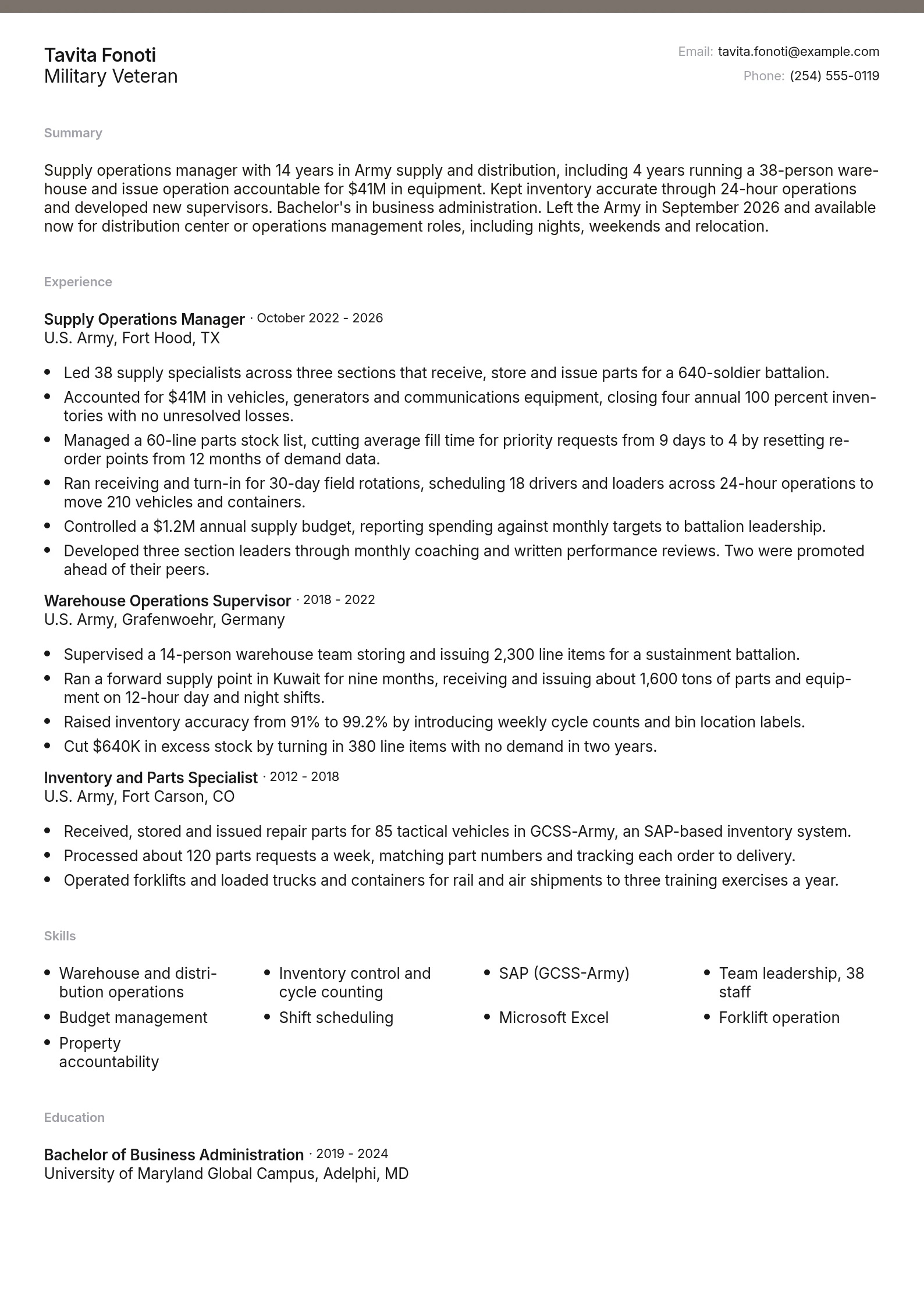
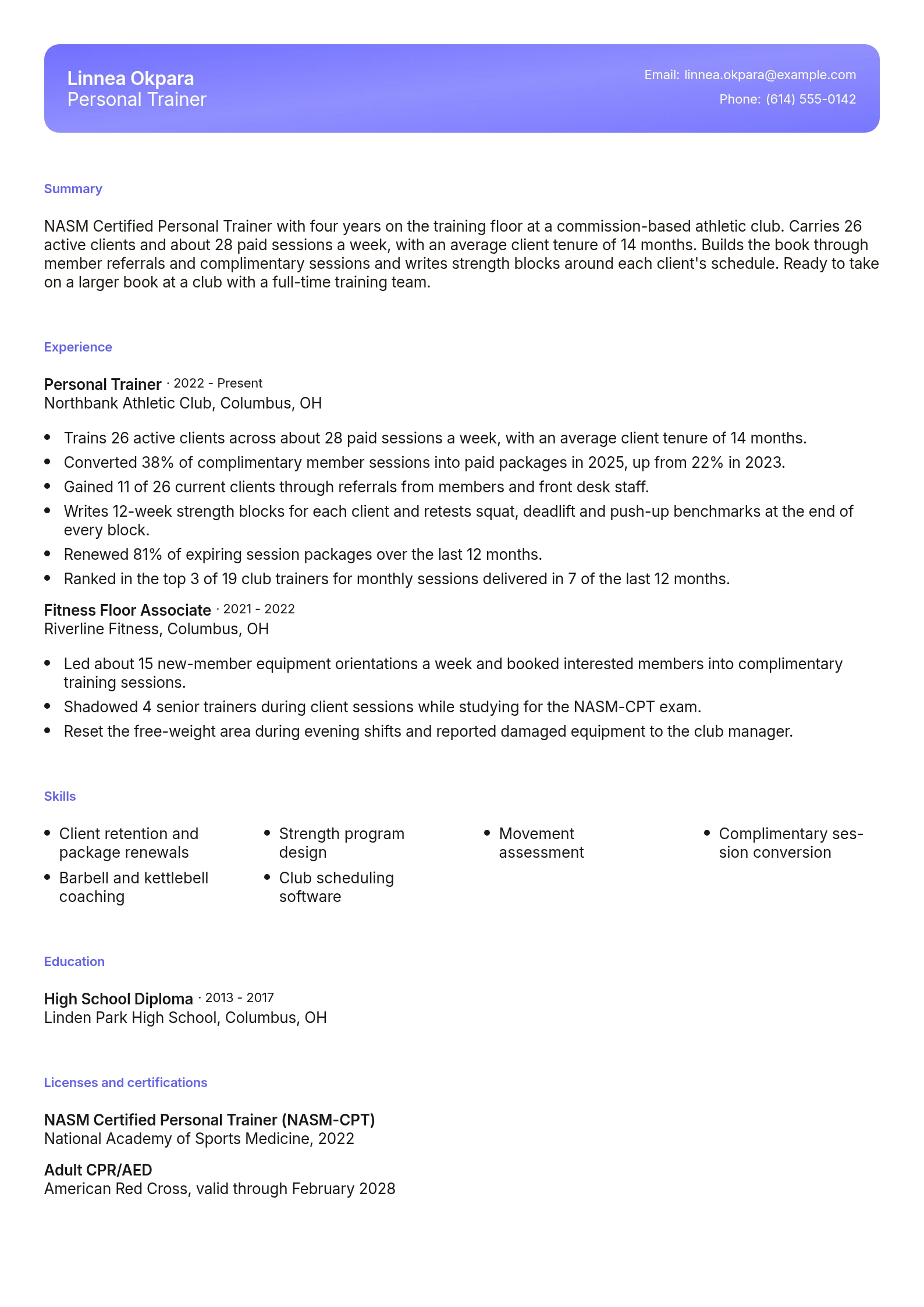
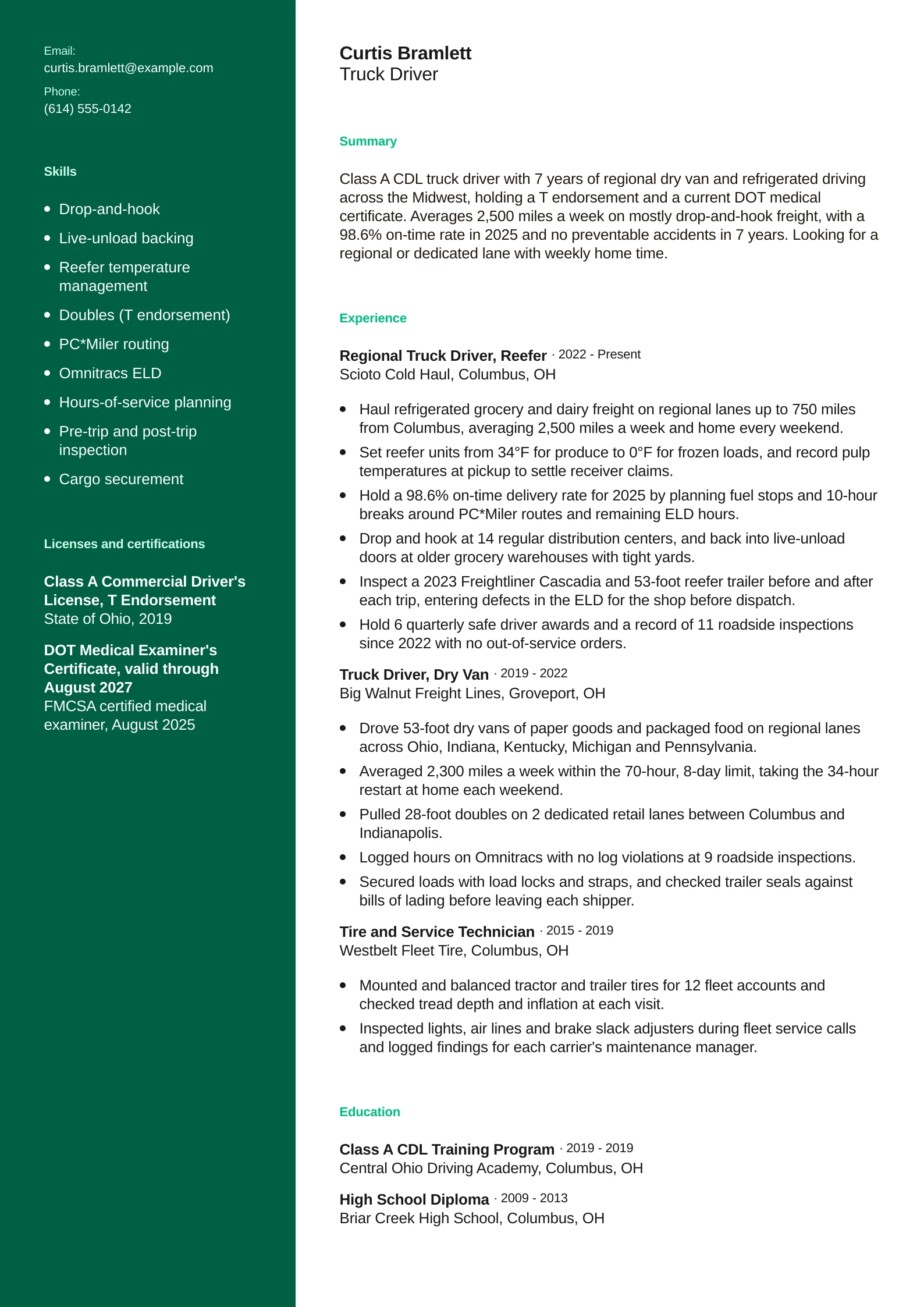
Student job ads screen on facts before experience: graduation date, GPA, weekly hours and work-study status. The examples differ by goal and by what each student can show, whether that's a club budget, course labs, a varsity season, a thesis or eight years of warehouse work.
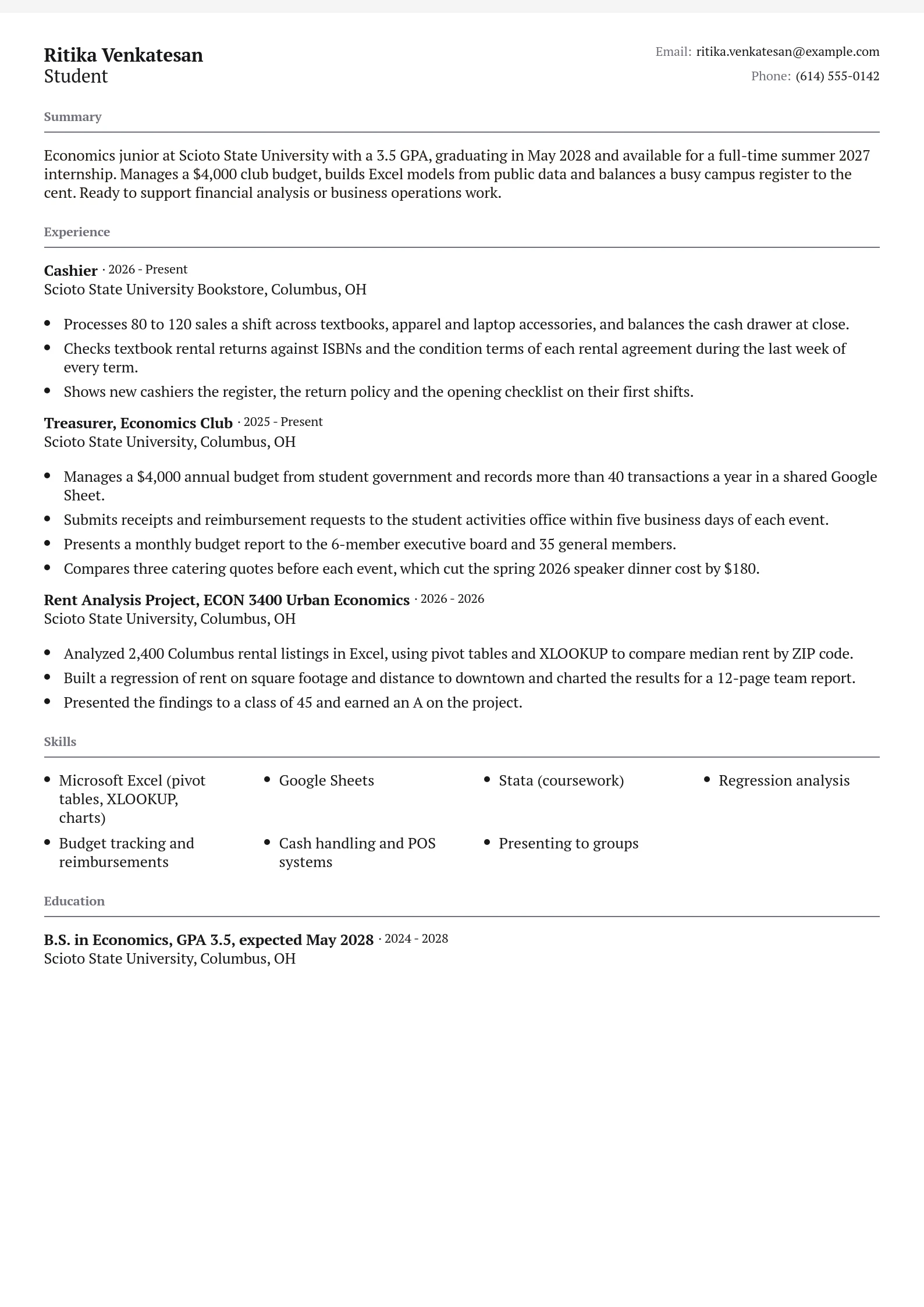
Ritika's summary opens with her 3.5 GPA and May 2028 graduation date, so a screener with a 3.0 cut-off and a graduation window confirms both in the first line. Her degree line repeats them.
With only eight months of paid work, she gives a club treasurer role and an Excel class project the same weight as her cashier job, each with a number a reader can check: a $4,000 budget, 2,400 rental listings and 80 to 120 register sales a shift. Use it if you're a sophomore or junior applying for a business, finance or operations internship.
Examples for other years, schedules and goals
Each example below puts a different screen first: weekly hours for a campus job, named techniques for a lab, free weeks for an athlete, enrollment for an assistantship and work history for a returning student.
First-year student with no paid work
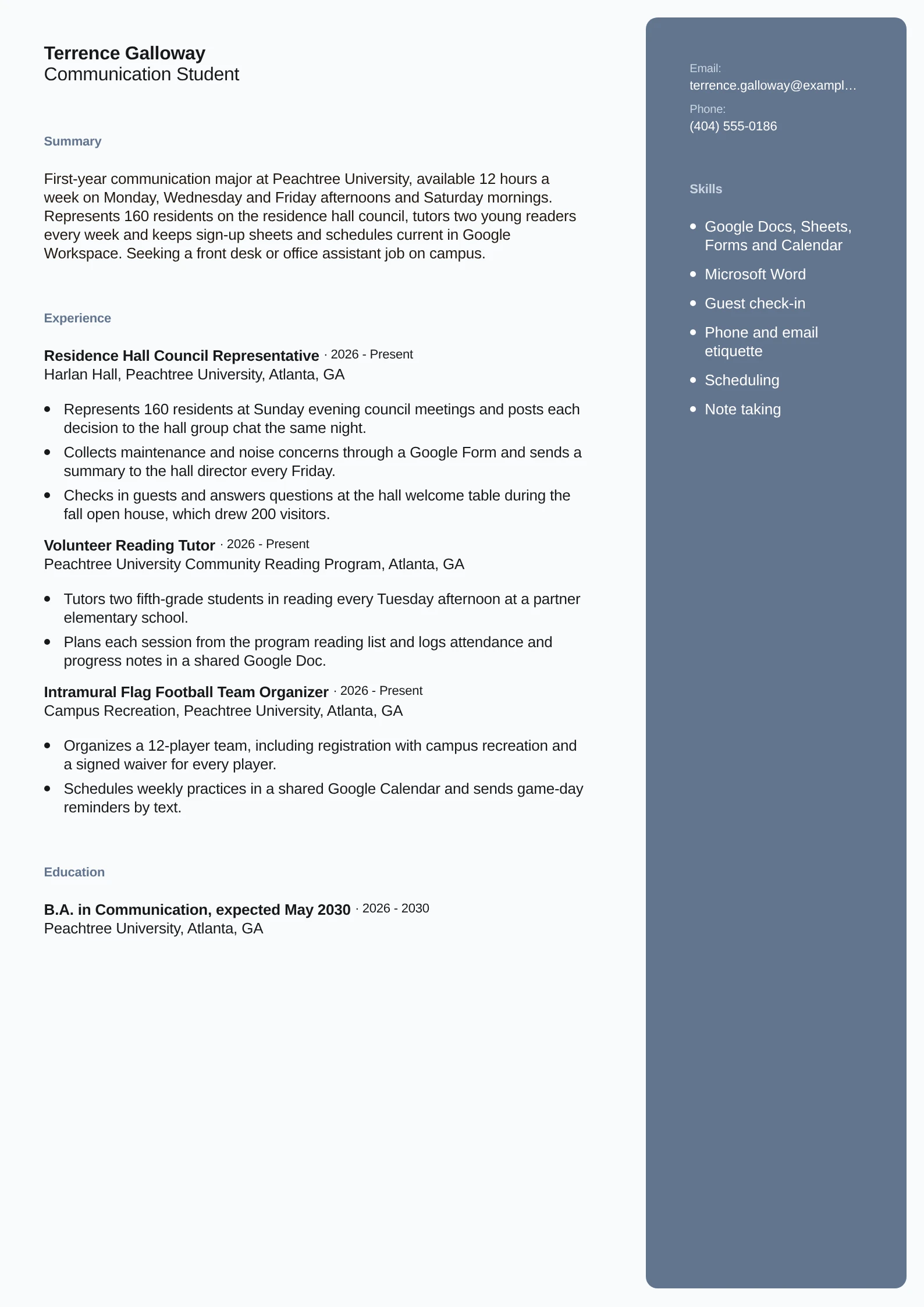
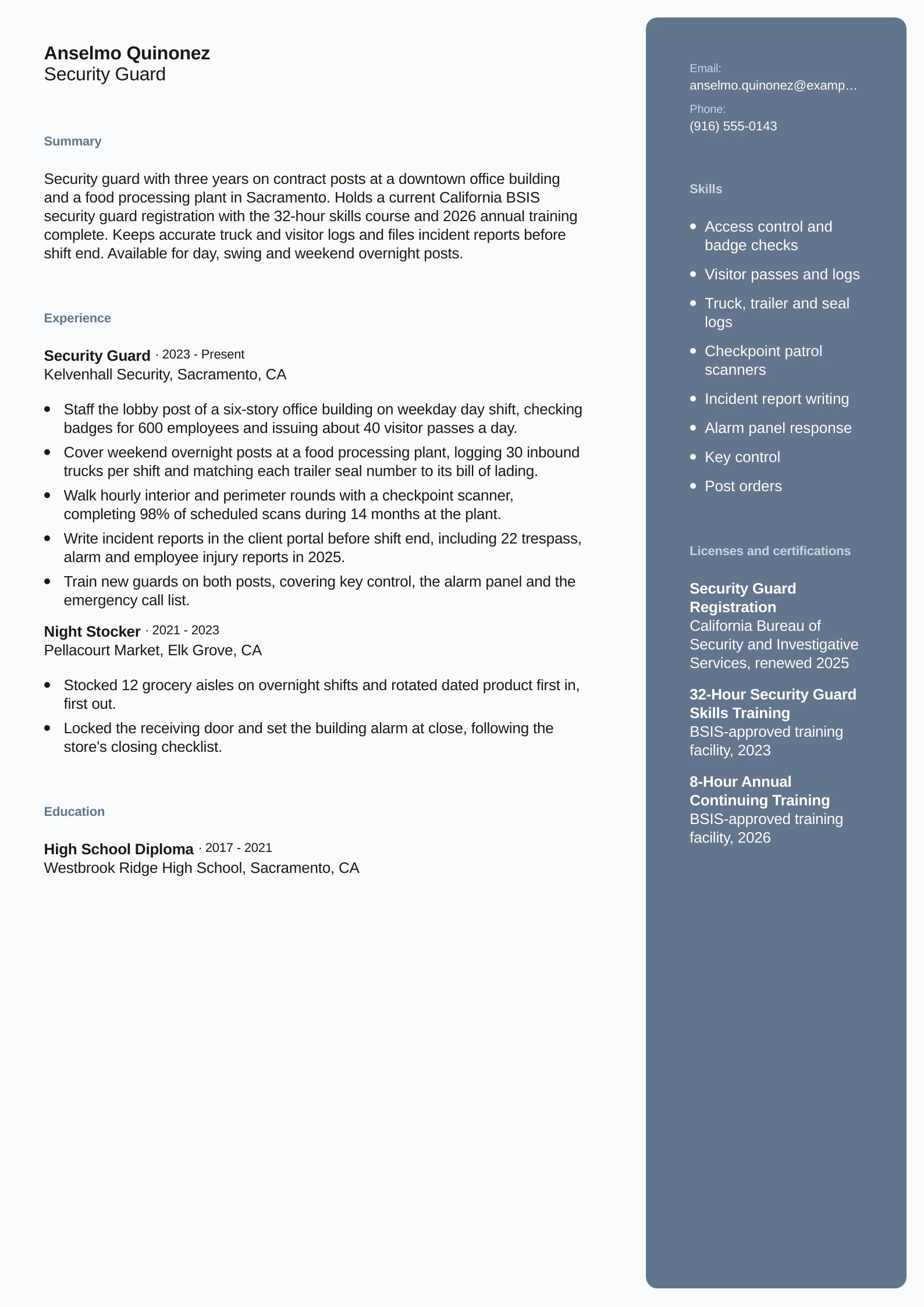
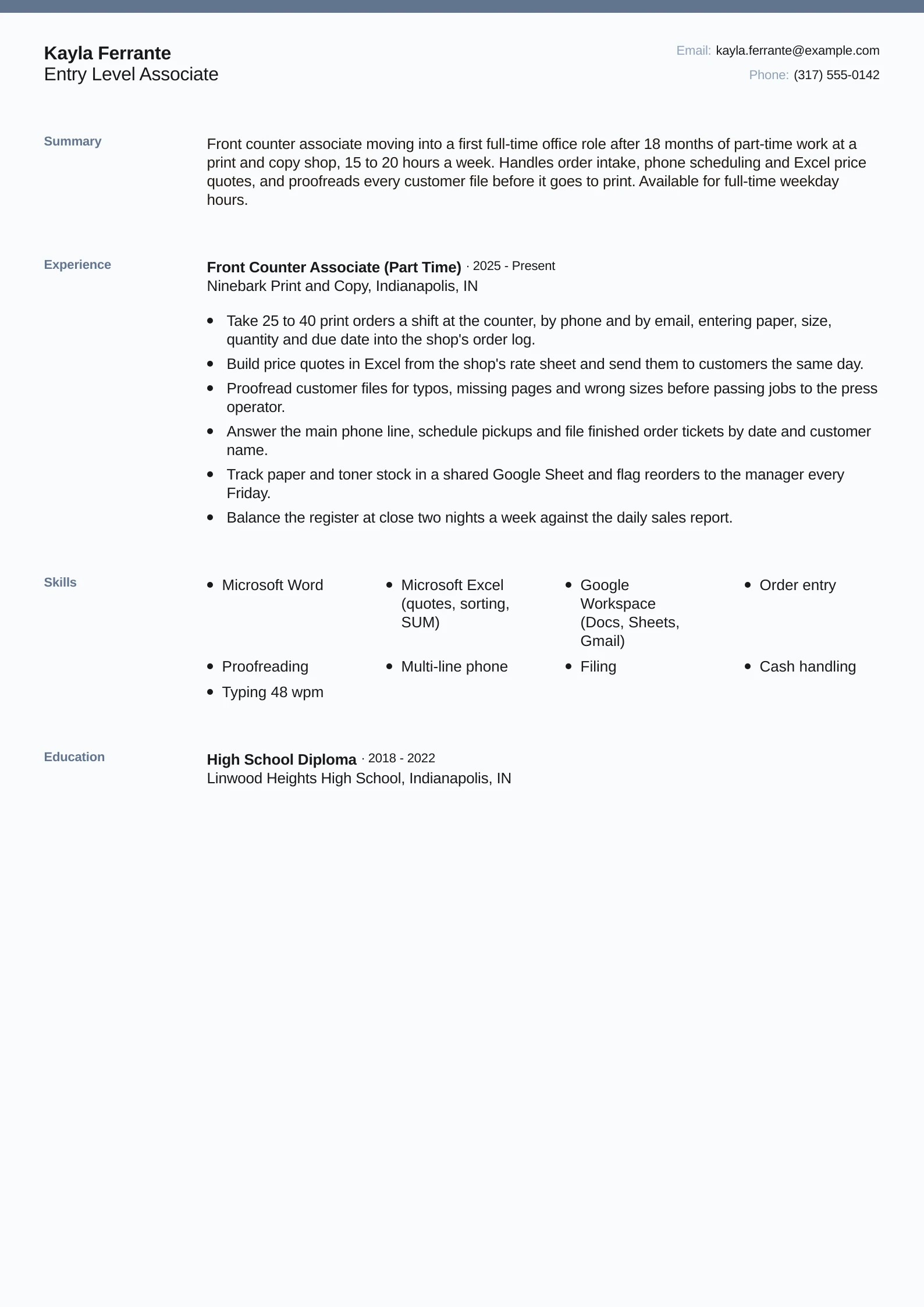
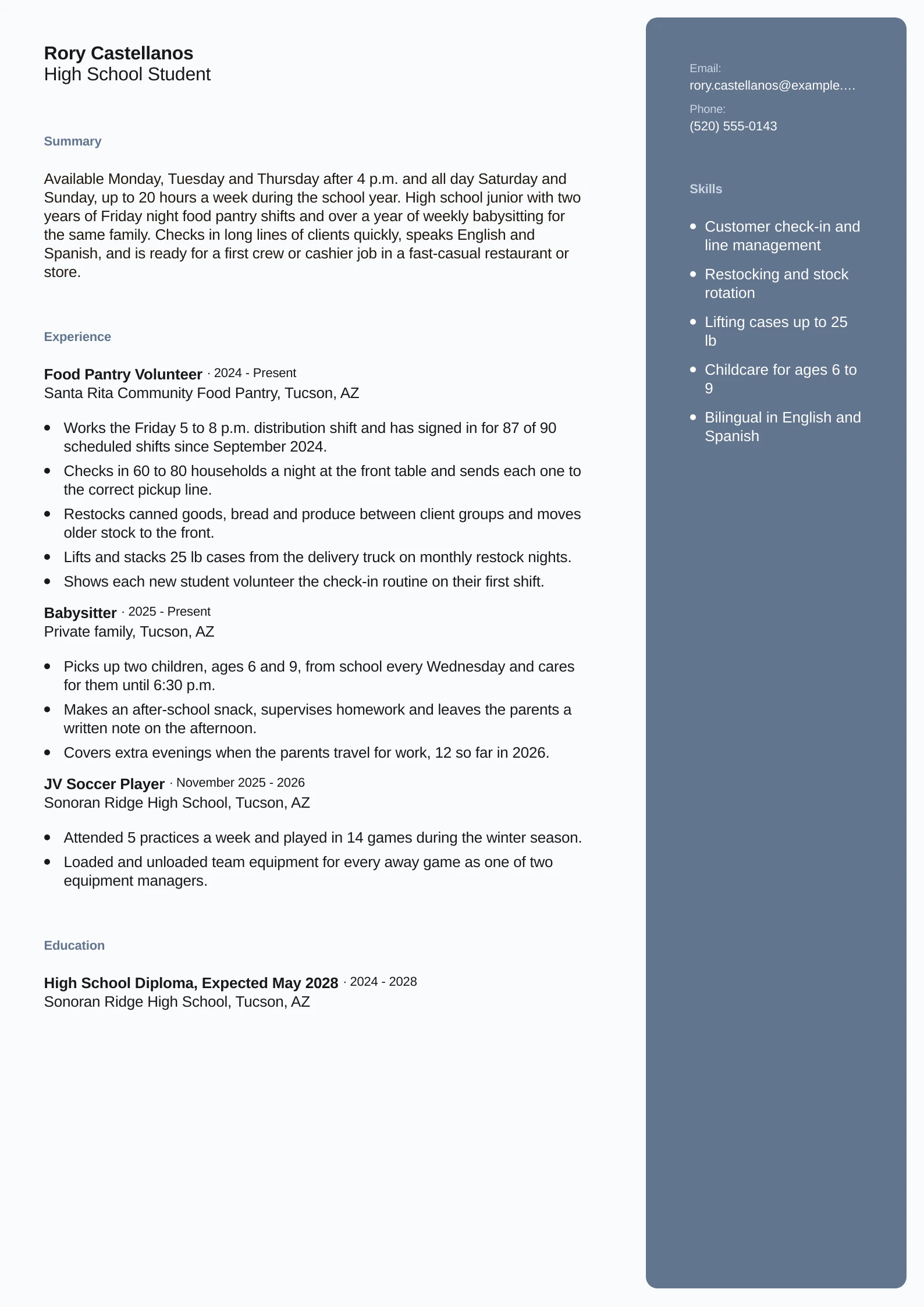
Terrence has no job history, so his experience section holds the three things he has done since arriving on campus: a residence hall council seat, weekly volunteer tutoring and an intramural team he organizes. His summary opens with 12 hours a week and the exact days, which is what a front desk supervisor schedules around. Use this if you're in your first year and applying for an office or desk job on campus.
Available days and hours in the first line of the summary
Activities written with counts: 160 residents, 12 players
Google Forms, Sheets and Calendar named for office work
Working student moving into an office or marketing role
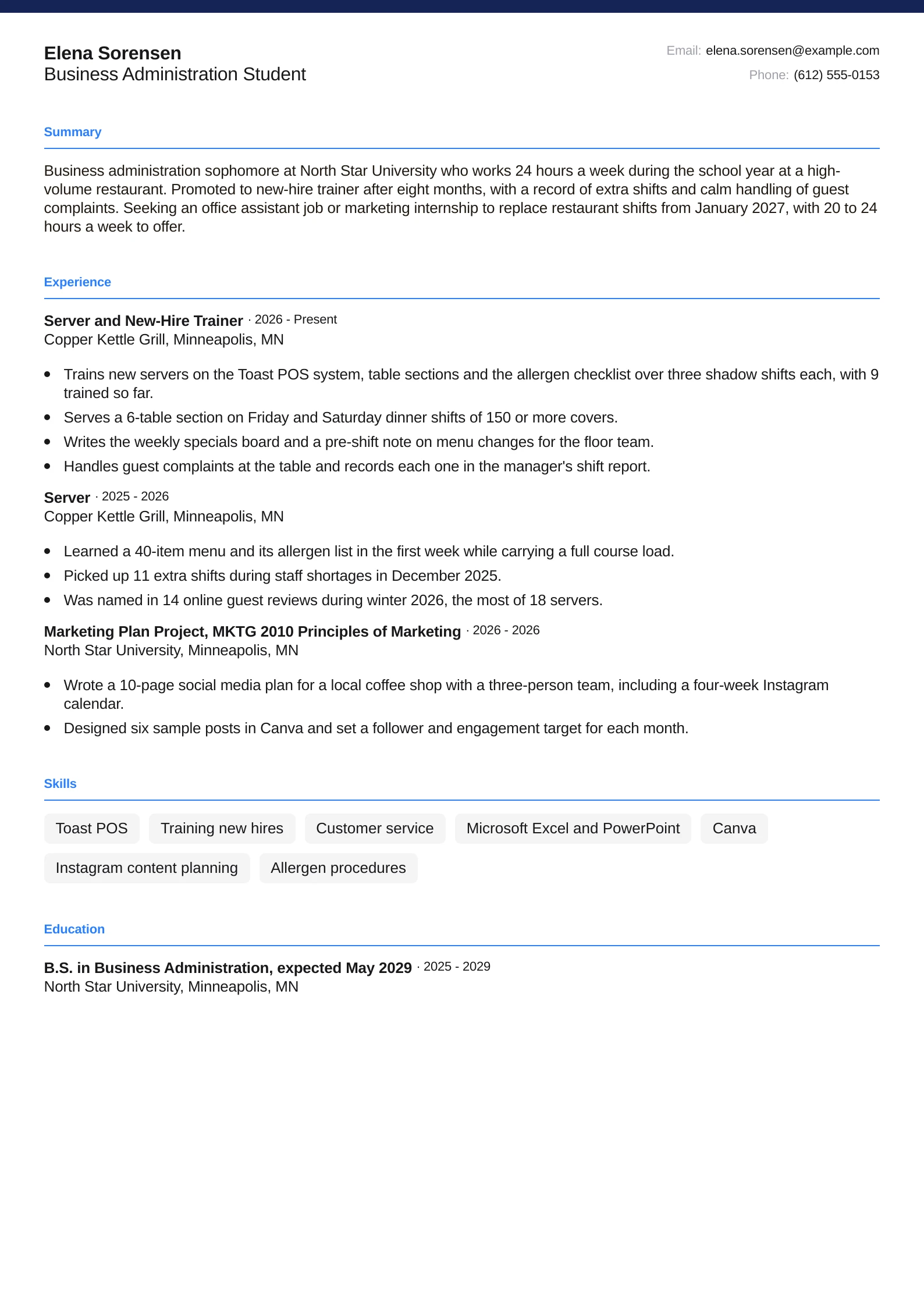
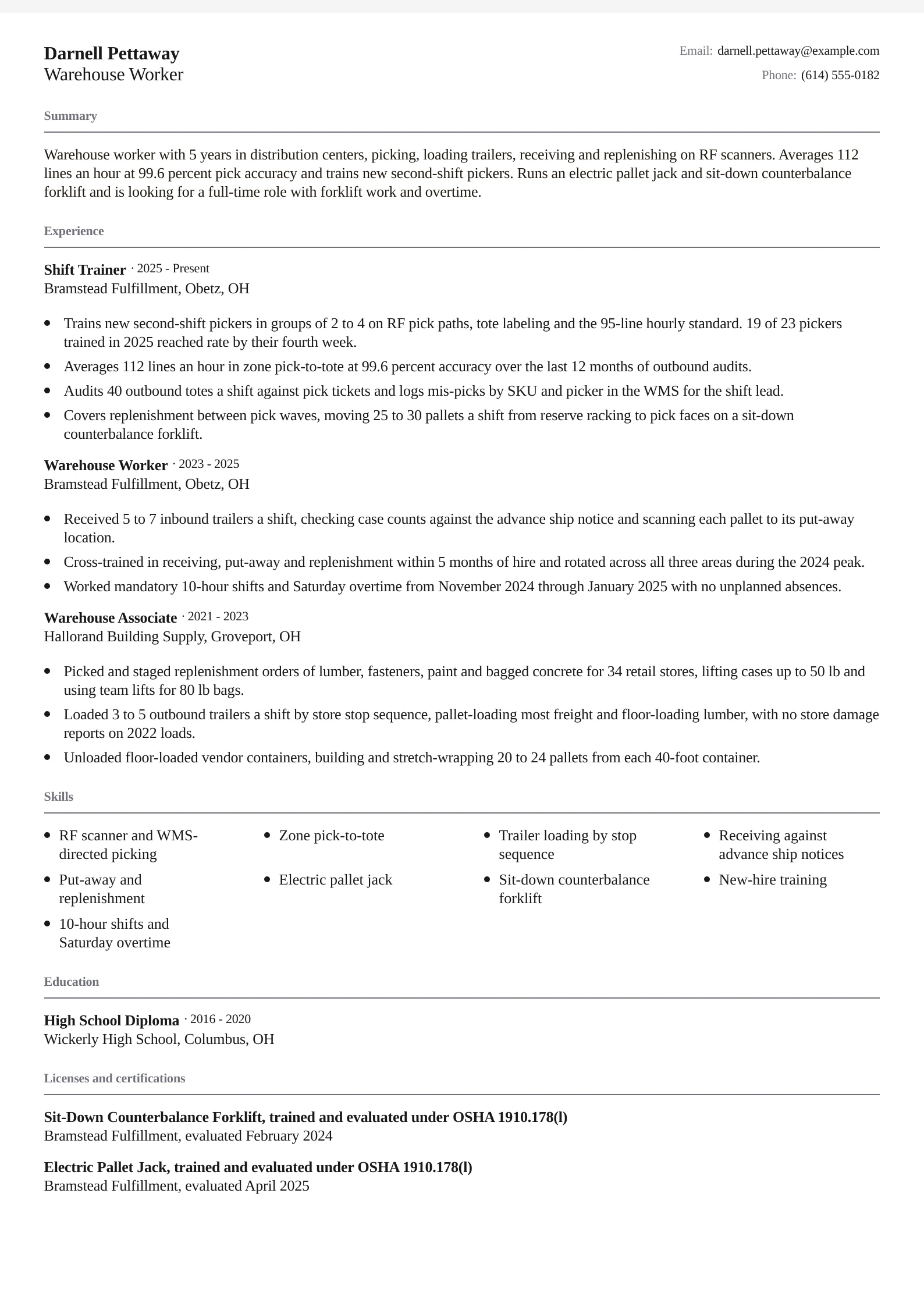
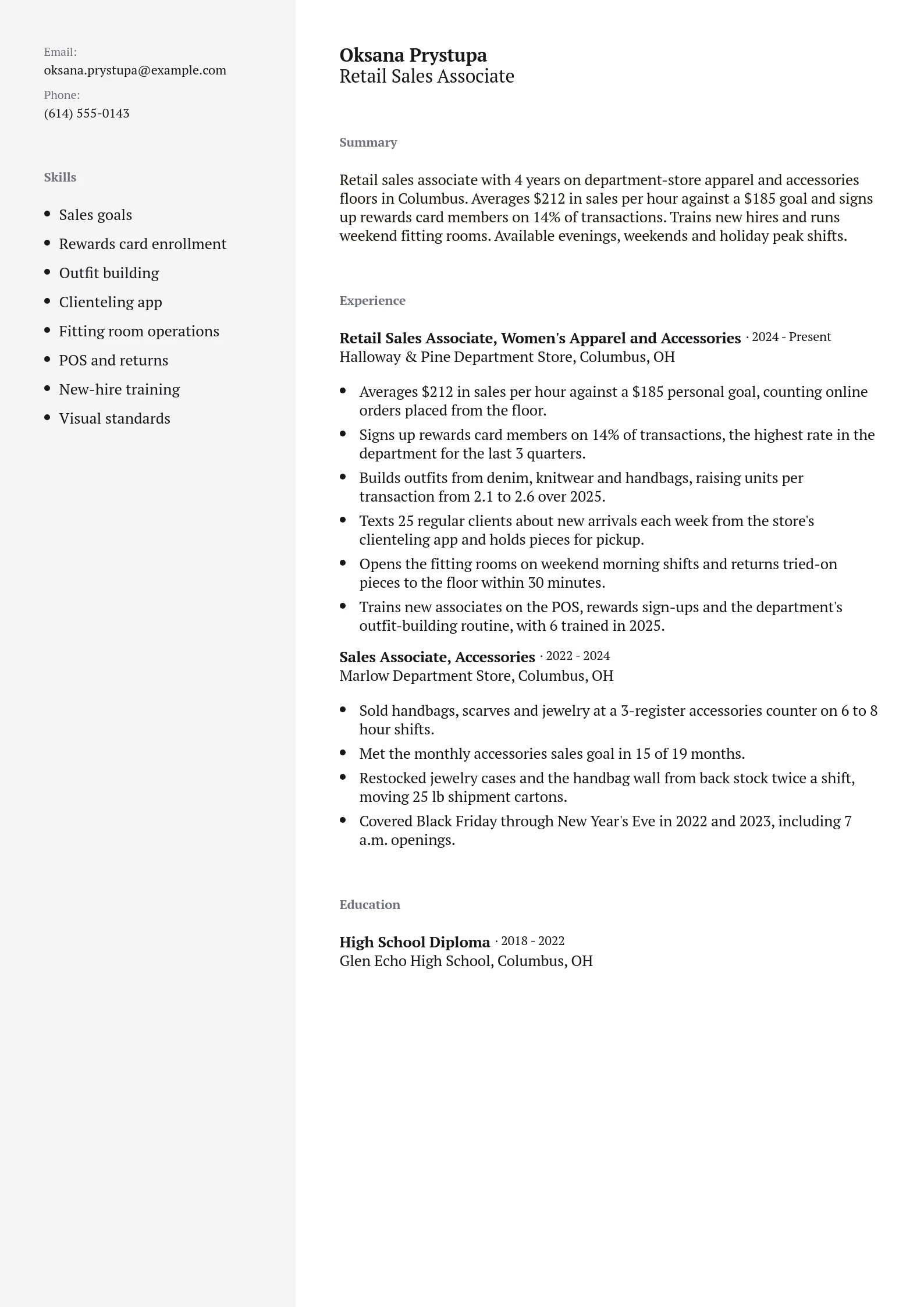
Elena works 24 hours a week at a restaurant while studying and wants to move those hours to an office or marketing job from January 2027. Her resume uses the restaurant to prove reliability: 14 months at one employer, a promotion to new-hire trainer and 11 extra shifts in one month. A class marketing plan with a four-week Instagram calendar backs the marketing application. Use this if you work in food service or retail and want a professional part-time role.
Promotion shown as two dated titles at one restaurant
Nine new servers trained
20 to 24 hours a week offered in place of restaurant shifts from January 2027
Science major applying to a research lab
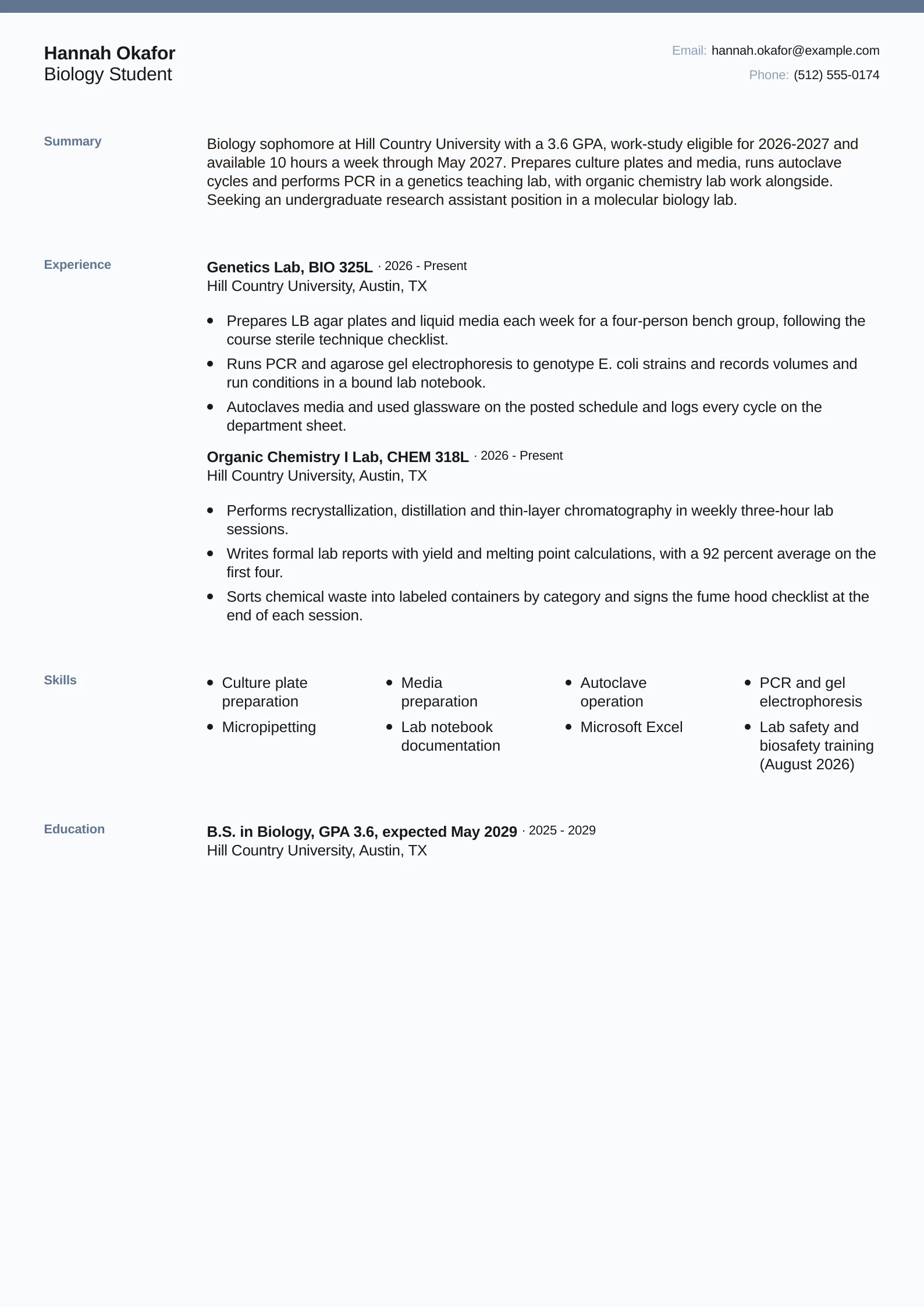
Hannah has no lab job yet, so her two course labs are written as experience, with the techniques a lab posting lists: culture plates, media prep, autoclaving and PCR. Her summary states work-study eligibility and 10 hours a week through May 2027, the two conditions a work-study lab sets, plus her 3.6 GPA. Use this if you're a science major applying for your first undergraduate research assistant job.
Techniques named the way lab postings list them
Work-study eligibility stated as a fact in the summary
Lab safety training dated in the skills list
Student athlete with an in-season schedule
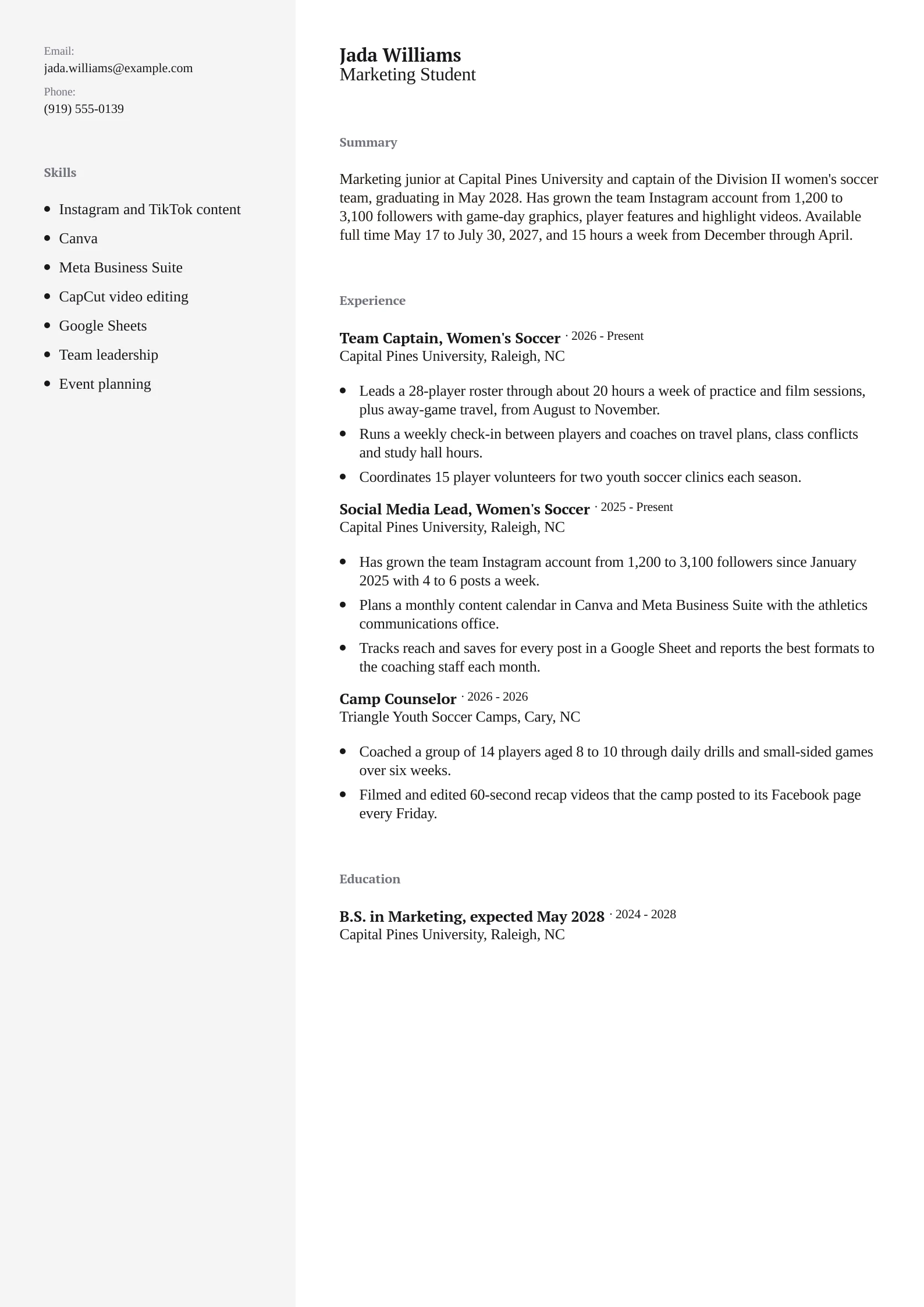
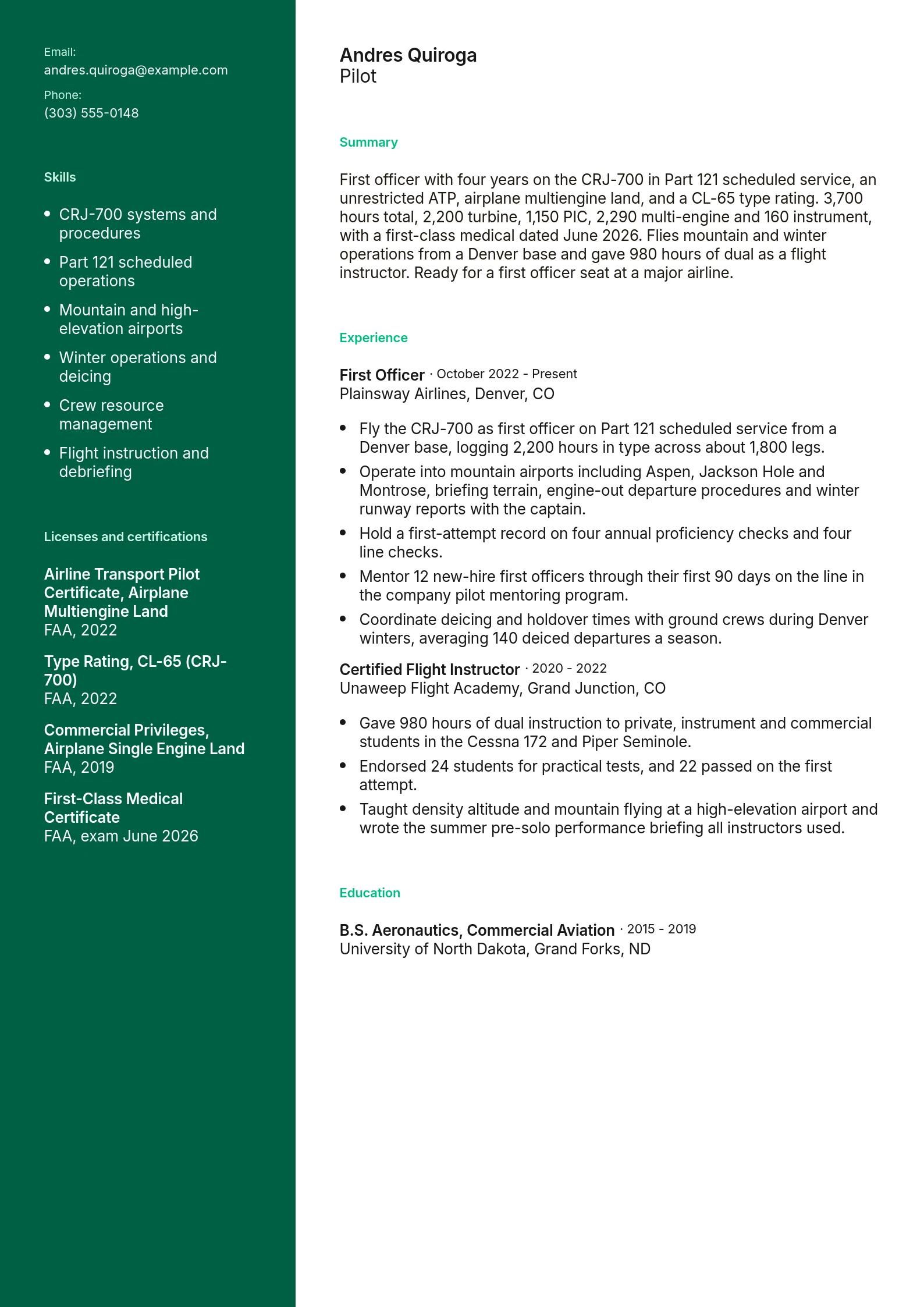
Jada's summary tells an employer exactly when she can work: full time from May 17 to July 30, 2027, and 15 hours a week from December through April. Her captaincy shows roster size and weekly hours, and the team Instagram account she runs gives a sports-marketing internship real numbers. Use this if a season, a performance schedule or another fixed commitment limits when you can work.
Free weeks listed outside the August to November season
Follower growth from 1,200 to 3,100
Captaincy with a 28-player roster and 20 hours a week
Senior applying for full-time entry-level jobs
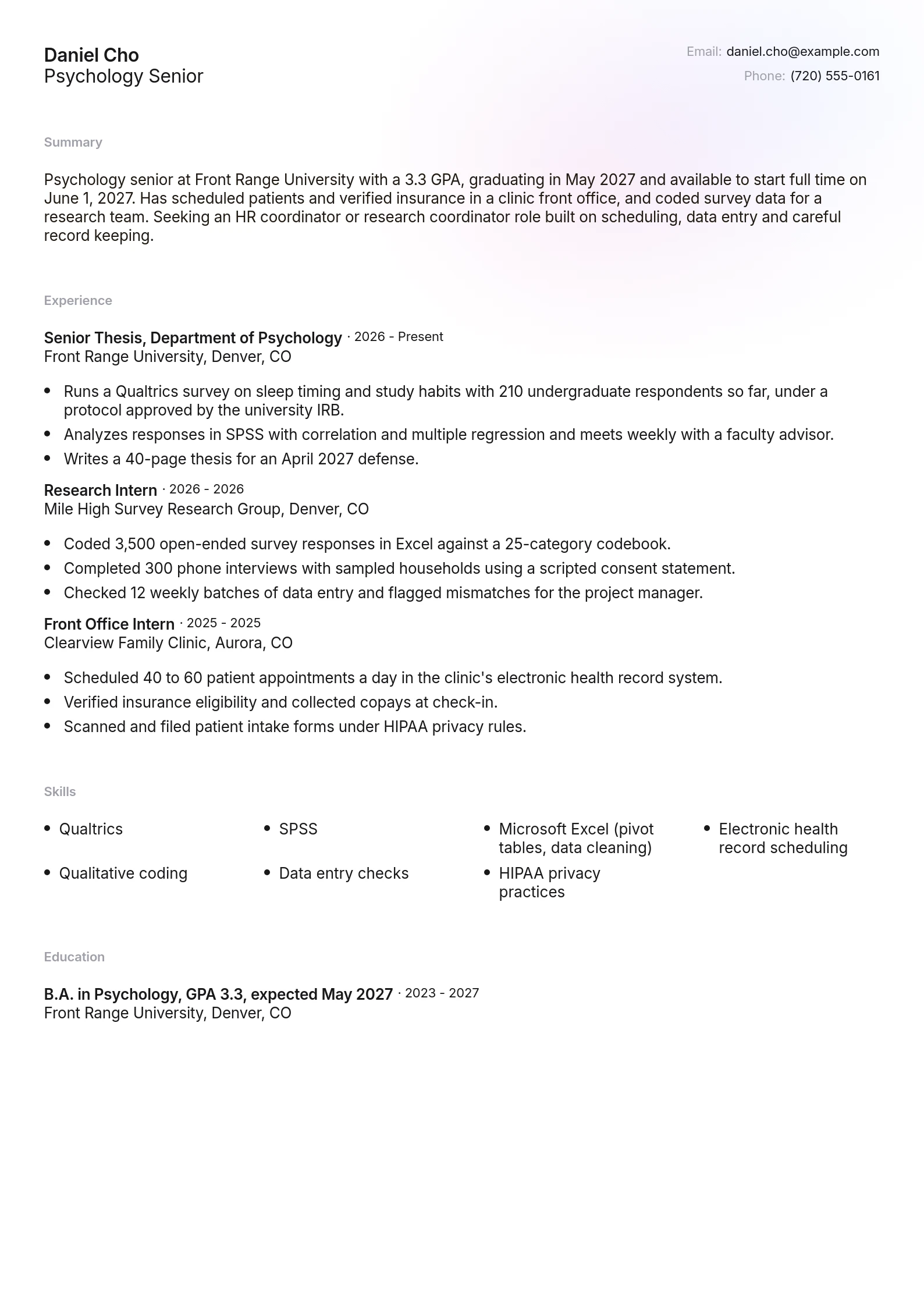
Daniel graduates in May 2027 and lists a June 1 start date beside it, so a hiring manager filling a coordinator job knows when he can begin. Two summer internships and a senior thesis are dated entries that name their tools: an electronic health record system, Excel, Qualtrics and SPSS. Use this if you're a senior or recent graduate applying for HR, research or office coordinator roles.
Start date next to the graduation month
Thesis written as a research project with 210 respondents
Both internships dated by summer
Master's student moving into consulting
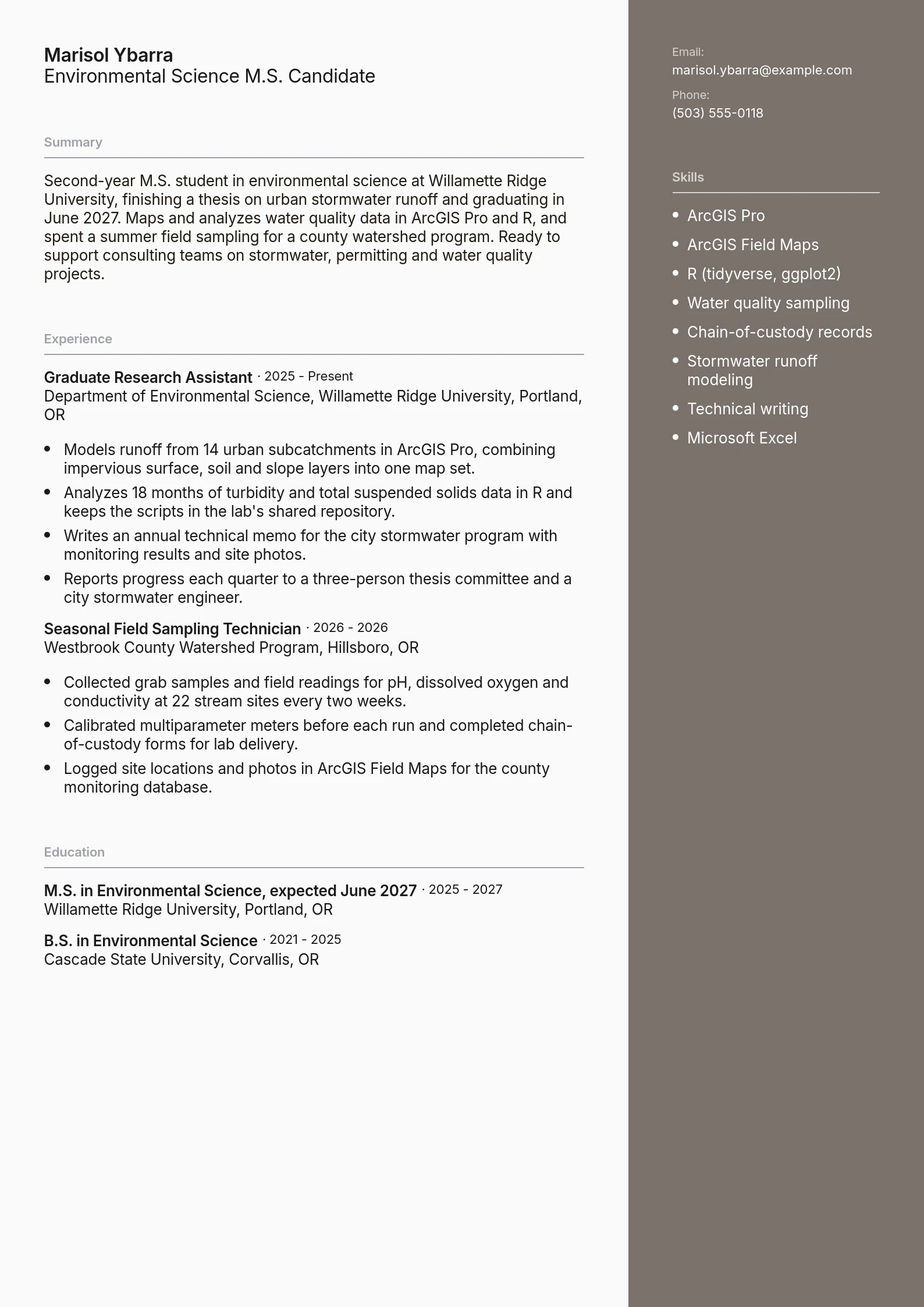
Marisol writes her thesis the way an environmental consulting firm describes project work: 14 subcatchments modeled, 22 stream sites sampled and an annual memo delivered to a city program. Software appears where she used it, ArcGIS Pro, Field Maps and R, and her summary ends with the kinds of projects she wants next. Use this if you're finishing a master's degree and applying for jobs outside academia.
Thesis described through deliverables and site counts
Field season with calibration and chain-of-custody steps
Graduation month in the summary and the degree line
Graduate student applying for an assistantship
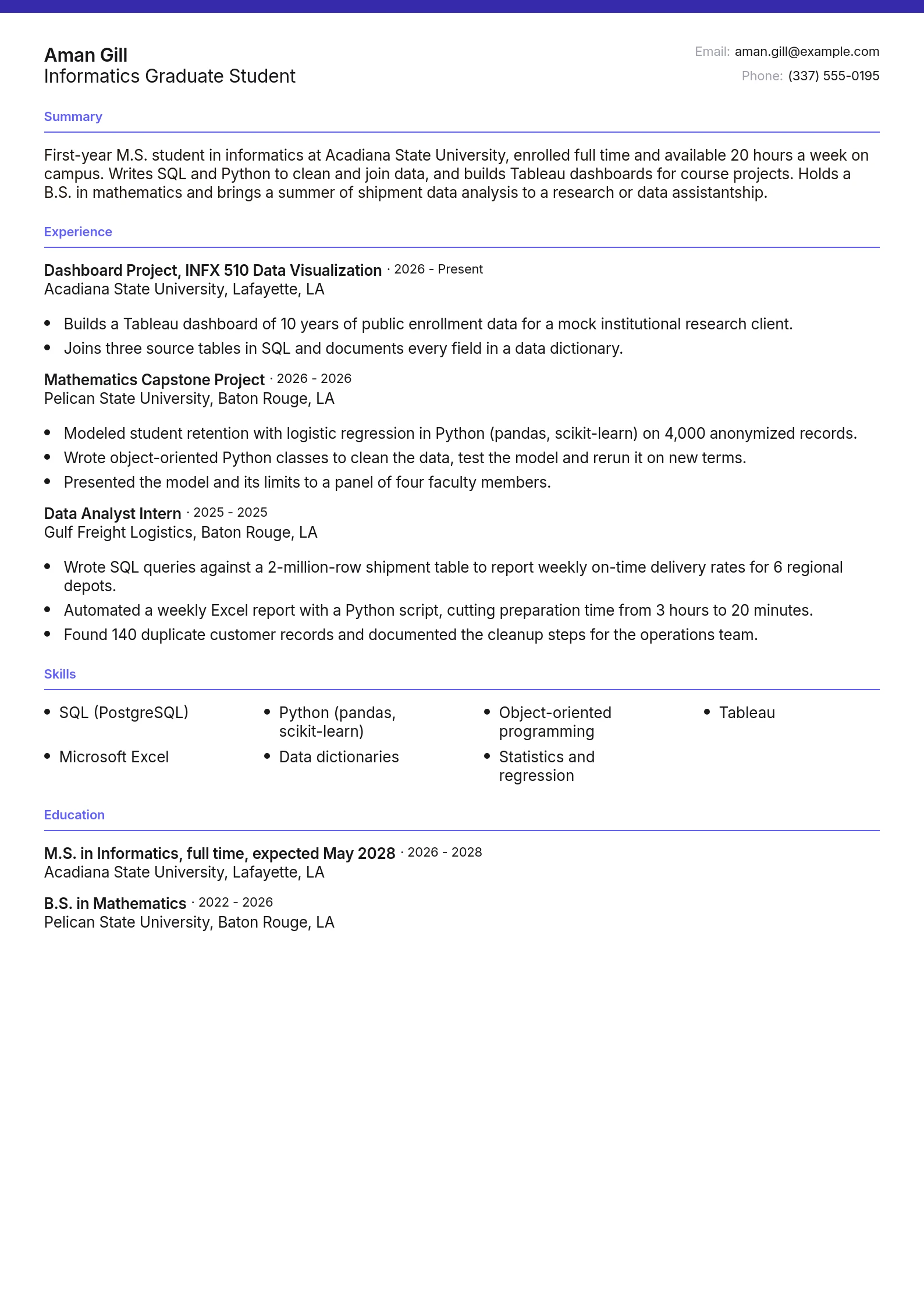
Aman's assistantship application includes a letter, so his resume stays on one page of degree status, tools and projects. The summary confirms full-time enrollment and 20 hours a week on campus, the two conditions the posting sets. Each project names its tool and the size of its data, such as SQL on a 2-million-row table. Use this for a research, data or institutional research assistantship.
Full-time enrollment in the summary and the degree line
SQL, Python and Tableau tied to specific projects
Undergraduate capstone kept as a dated entry
Transfer student with years of work history
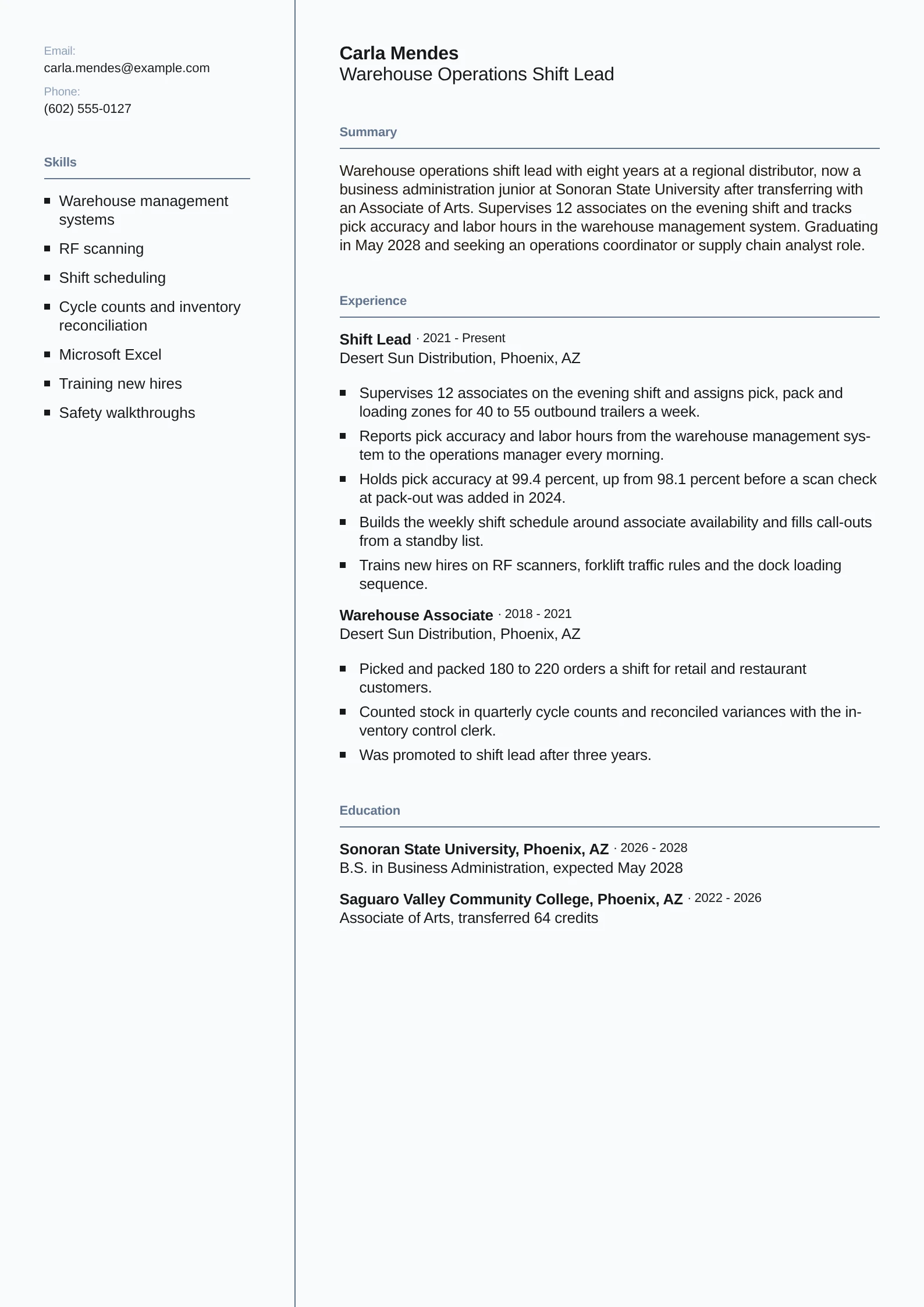
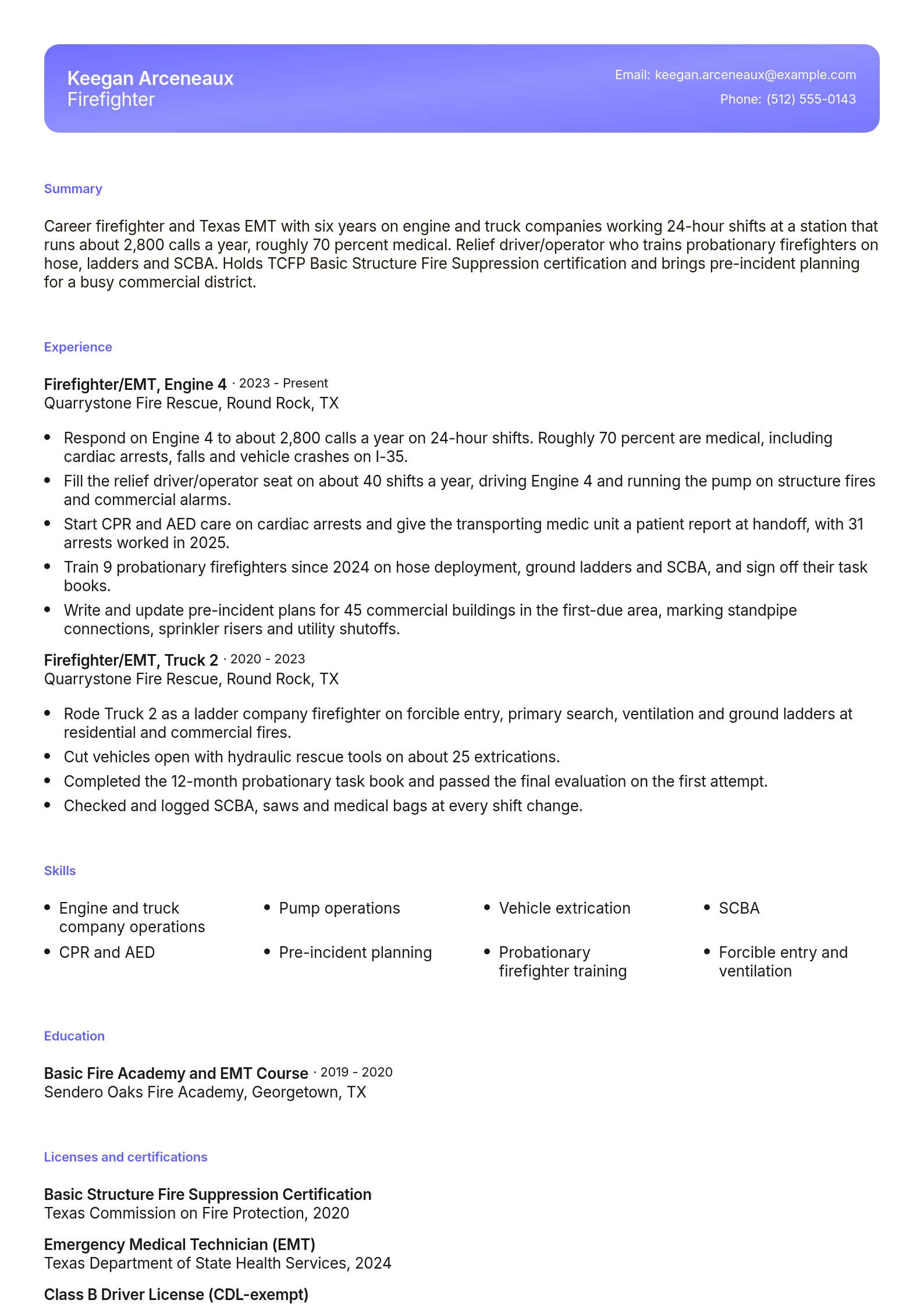
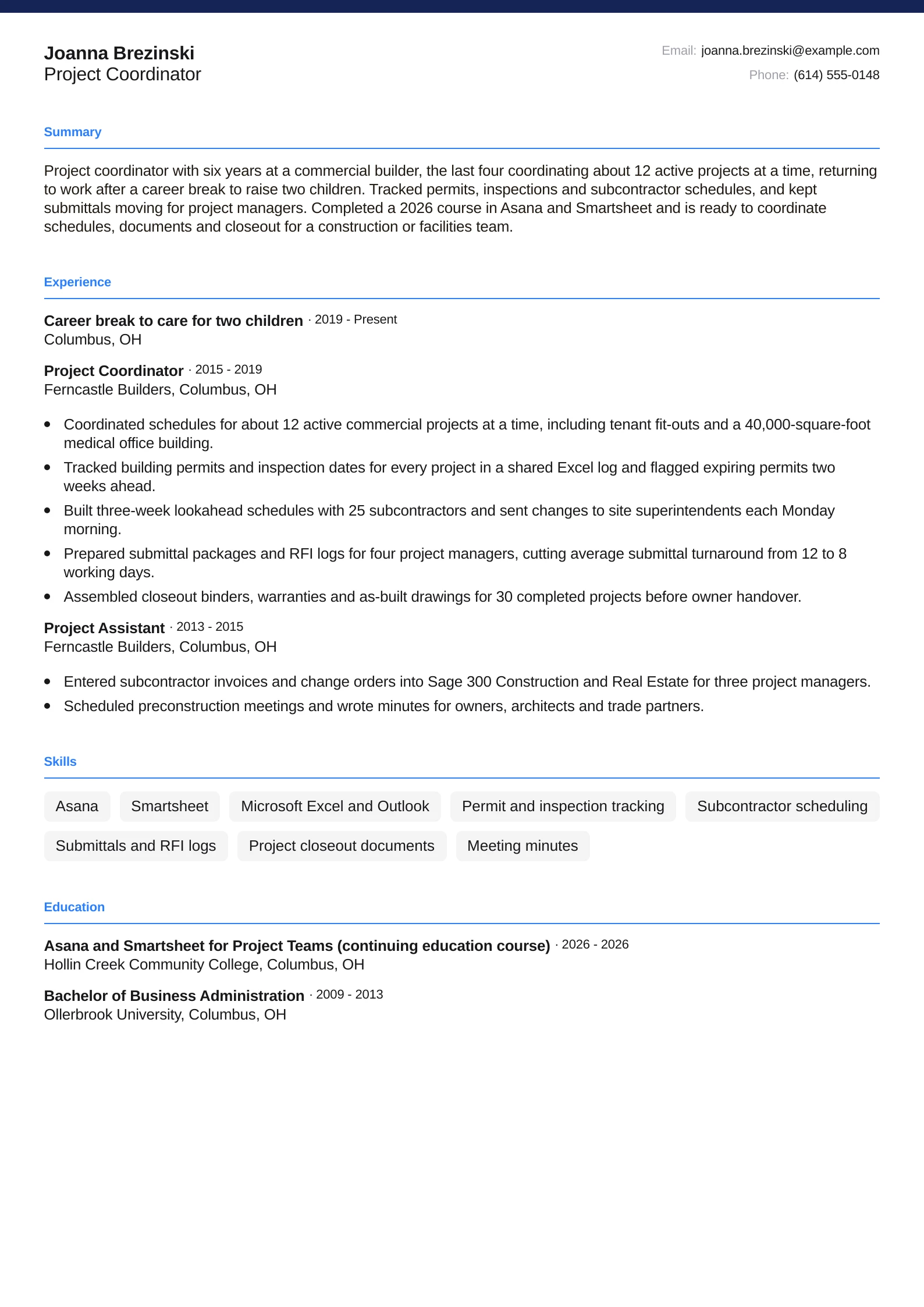
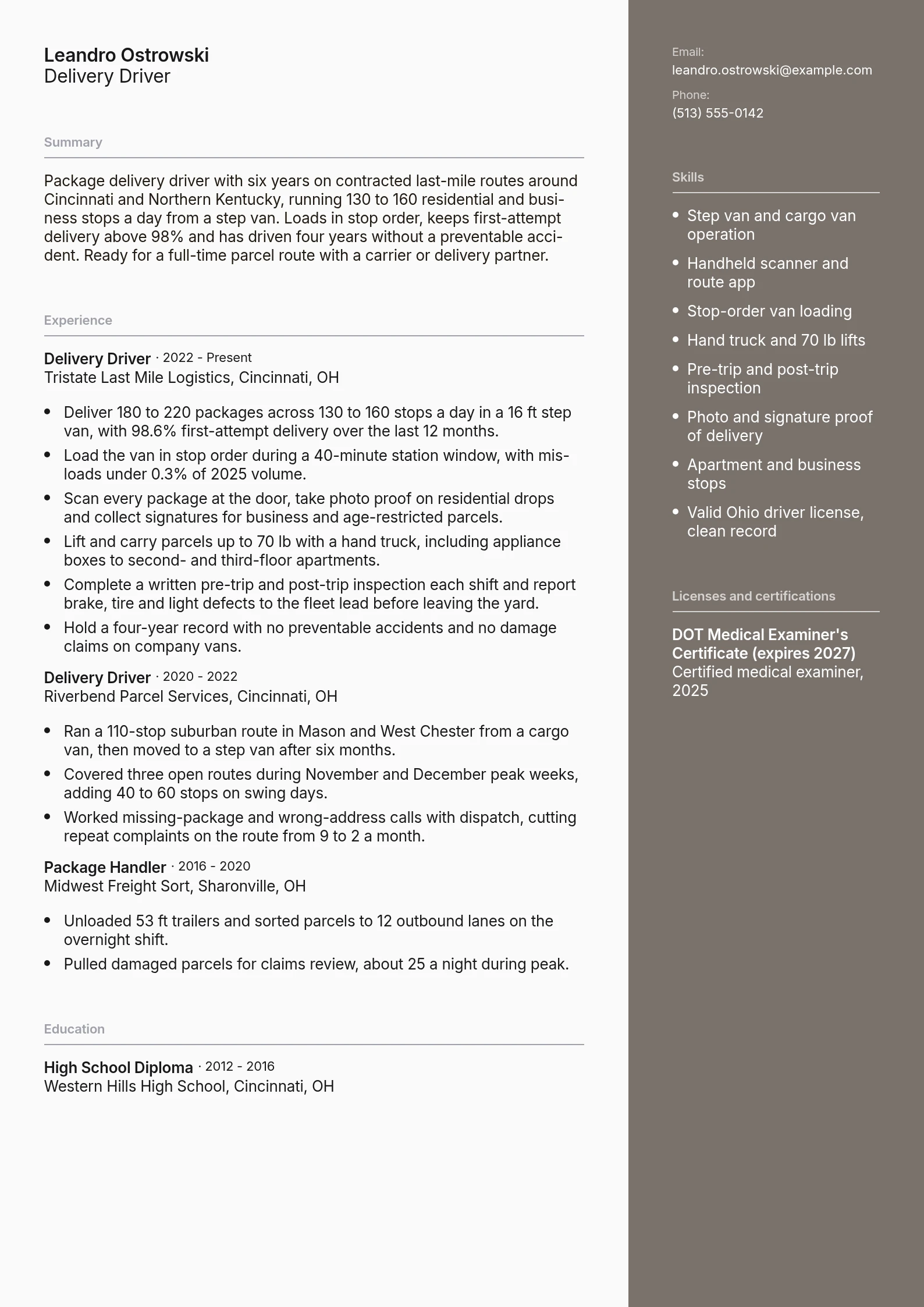
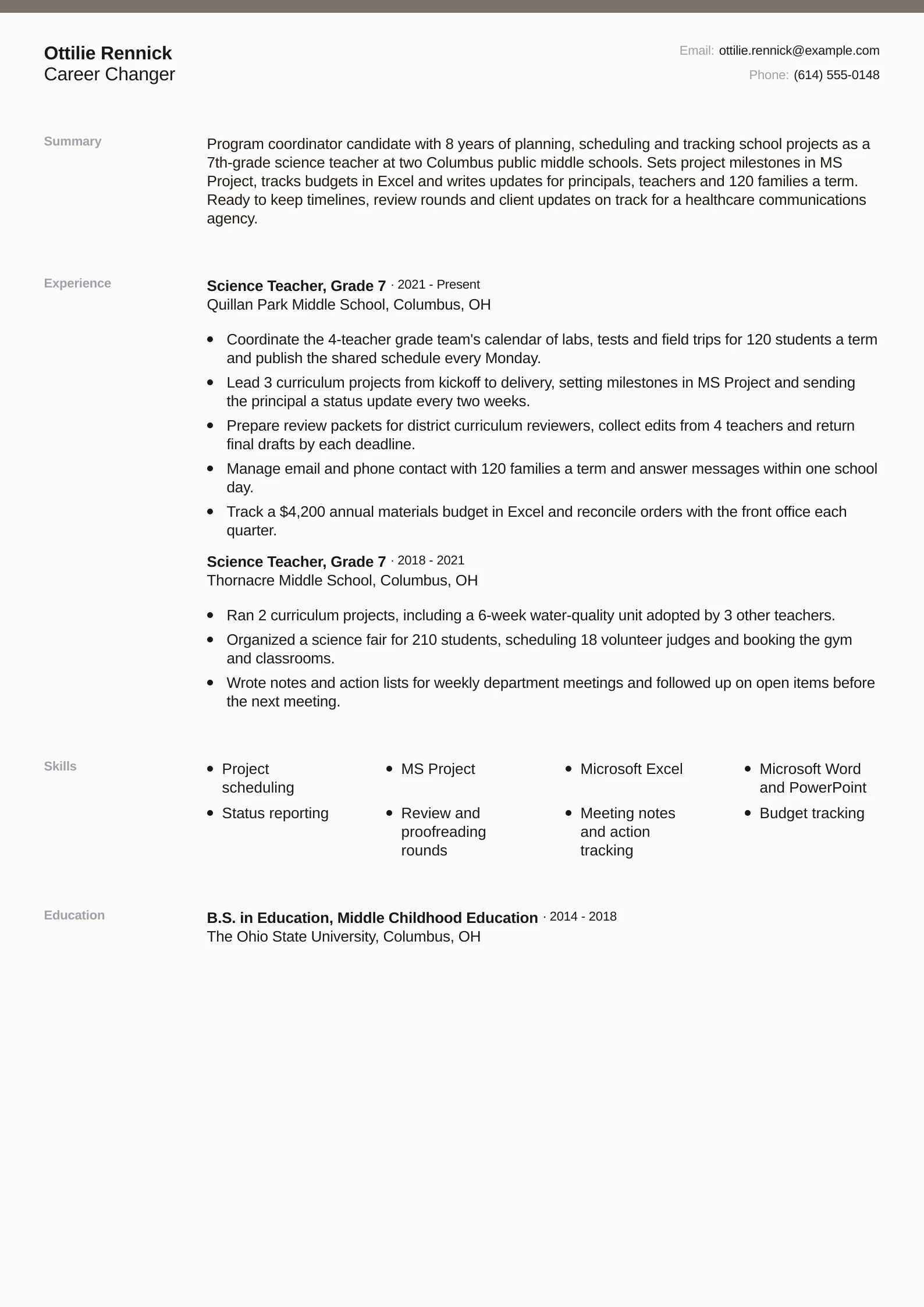
Carla has eight years in warehouse operations, so her summary opens with that job title and her education follows her work. Her shift lead role shows the scope an operations manager checks: 12 associates, 40 to 55 trailers a week and pick accuracy held at 99.4 percent. Education lists her transfer credits and a May 2028 graduation date. Use this if you're an adult student returning with a full work history.
Promotion from associate to shift lead with dates
Associate degree and 64 transfer credits listed
Target roles named in operations and supply chain
Put eligibility facts in your summary and degree line
Student job ads screen on eligibility before experience, so put each fact the ad names in the first line of your summary and repeat the dates in your degree line. A recruiter checking a 3.0 minimum or a 20-hour schedule should find the answer in a few seconds.
Include only the facts the ad asks about. A front desk job needs your hours, and an internship needs your graduation date and GPA.
Fact
Include it when
How to write it
Expected graduation
Always
"B.S. in Economics, expected May 2028" in education, and the month and year in your summary
GPA
The ad asks for it or sets a minimum, or yours is 3.0 or higher
"GPA 3.5" in the degree line, using your cumulative GPA
Weekly hours
The ad posts a schedule, such as 10 or 20 hours a week
"Available 12 hours a week on Monday, Wednesday and Friday afternoons"
Work-study
The job is work-study or the ad prefers it
"Work-study eligible for 2026-2027" in the summary, not in skills
Enrollment
The ad sets a credit load or full-time enrollment
"Enrolled full time" in the summary or degree line
Start date or free weeks
Internships, full-time jobs, and any schedule with a season
"Available to start June 1, 2027" or "available full time May 17 to July 30, 2027"
Work authorization
The ad asks whether you'll need visa sponsorship now or later
Answer it on the application form; a resume line is optional. If you add one, use both parts only if both are true: "Authorized to work in the US; no sponsorship required"
Leave GPA off below 3.0 unless the ad asks for it
Leave your GPA off when it's below 3.0 and the ad doesn't ask for it. Some campus job ads, such as an HR office assistant post, screen on credit load and weekly hours instead. If an ad or application asks for your GPA or sets a minimum, give it, whatever the number.
Show it when it's 3.0 or higher or when the ad asks. Write it in the degree line, "B.S. in Biology, GPA 3.6, expected May 2029", and use your cumulative GPA as your transcript shows it, because an unlabeled GPA is read as cumulative and an internship minimum may be stated as a "cumulative GPA of 3.0." Don't round up: write 2.96, not 3.0.
If your major GPA is higher, you can add it beside your cumulative GPA with a label: "Cumulative GPA 2.8, major GPA 3.4." Don't list the major GPA on its own when an ad asks for your GPA.
In your first term of college you have no college GPA yet, so leave the line off, as Terrence does. Marisol leaves hers off because the consulting jobs she targets don't ask for it.
Fill an empty experience section with roles you hold now
With no job history, use the experience section for anything you do on a schedule: a club office, volunteering, a team you organize, a class project or a course lab. Give each one a title, the organization and dates, just like a job, as Terrence does with his residence hall council seat.
Write bullets about the work the employer will pay you for. A front desk supervisor wants proof that you show up and deal with people, so write how many residents you represent, when you meet and what you do with the requests you collect. An office manager wants tools, so name Google Forms, Sheets or Calendar and what you kept in them.
Count what you can: residents, players, students tutored, hours a week, dollars managed, visitors checked in. "Organizes a 12-player team, including registration and a signed waiver for every player" tells a supervisor more than "Intramural team organizer."
Leave out one-day events such as a single volunteer shift. A role you've kept for weeks, with a regular day and time, shows the reliability a campus employer is hiring for.
Name the technique, the tool and the result in each class project
Write a course lab or class project as an experience entry when it ran for most of a term: the course number as the title, the school as the employer, and dates. Shorter assignments belong in your skills list.
Use the exact words from the ad. A lab assistant posting lists methods such as culture plate prep, media prep, autoclaving and molecular assays, and a data assistantship lists SQL, Python and object-oriented programming. If you've done them in a course, write those words in your bullets.
For a science lab, name the organism or sample, the method and how you recorded results. For a data or business project, give the size of the dataset, the tool and who saw the result, such as "2,400 rental listings in Excel, presented to a class of 45."
Coursework written as experience
Runs PCR and agarose gel electrophoresis to genotype E. coli strains and records volumes and run conditions in a bound lab notebook.
Coursework listed as a fact
Took a genetics lab and learned many lab techniques.
Reorder your summary and bullets for each kind of student job
Yes. Keep the same entries, but change which facts open your summary and which bullet comes first in each entry, because each type of job screens on something different.
A returning student with years of work keeps that job first for all three, as Carla does, and adds transfer credits and a graduation date to education. An athlete adds free weeks to the summary for any of them.
What to change
Internship
Campus job
Graduate assistantship
Screened first
Graduation date, GPA minimum, major
Credit load, weekly hours, work-study status
Full-time enrollment, 20 hours a week on campus, degree program
Open your summary with
Year, major, GPA and graduation month
The hours and days you can work
Degree, enrollment status and the tools the posting names
Strongest entries
Class projects, club offices and any related job
Any role you've held on a fixed schedule
Research, data or teaching projects with named tools
Tools to name
Excel and any software the ad lists
Google Workspace, Excel, phone and check-in systems
SQL, Python, R, Tableau or the lab methods in the posting
What you send
A resume, sometimes followed by a skills assessment