A carrier recruiter checks a truck driver resume for license class, endorsements, months of recent Class A driving and a record their insurer will accept, and then verifies the dates. Each example below is written for a different haul: regional reefer, a new CDL graduate, local LTL pickup and delivery, and Gulf Coast fuel and chemical tanker work.
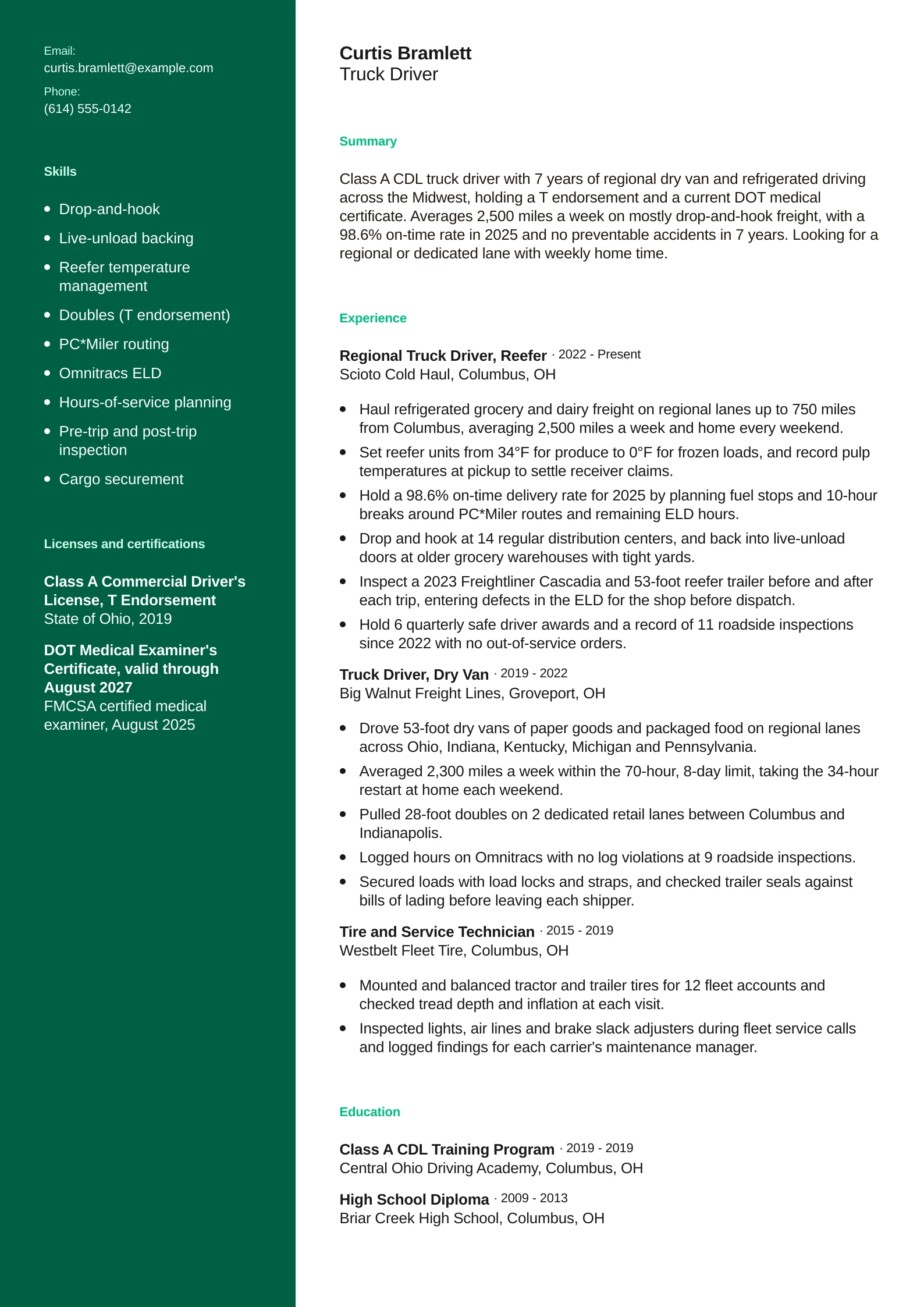
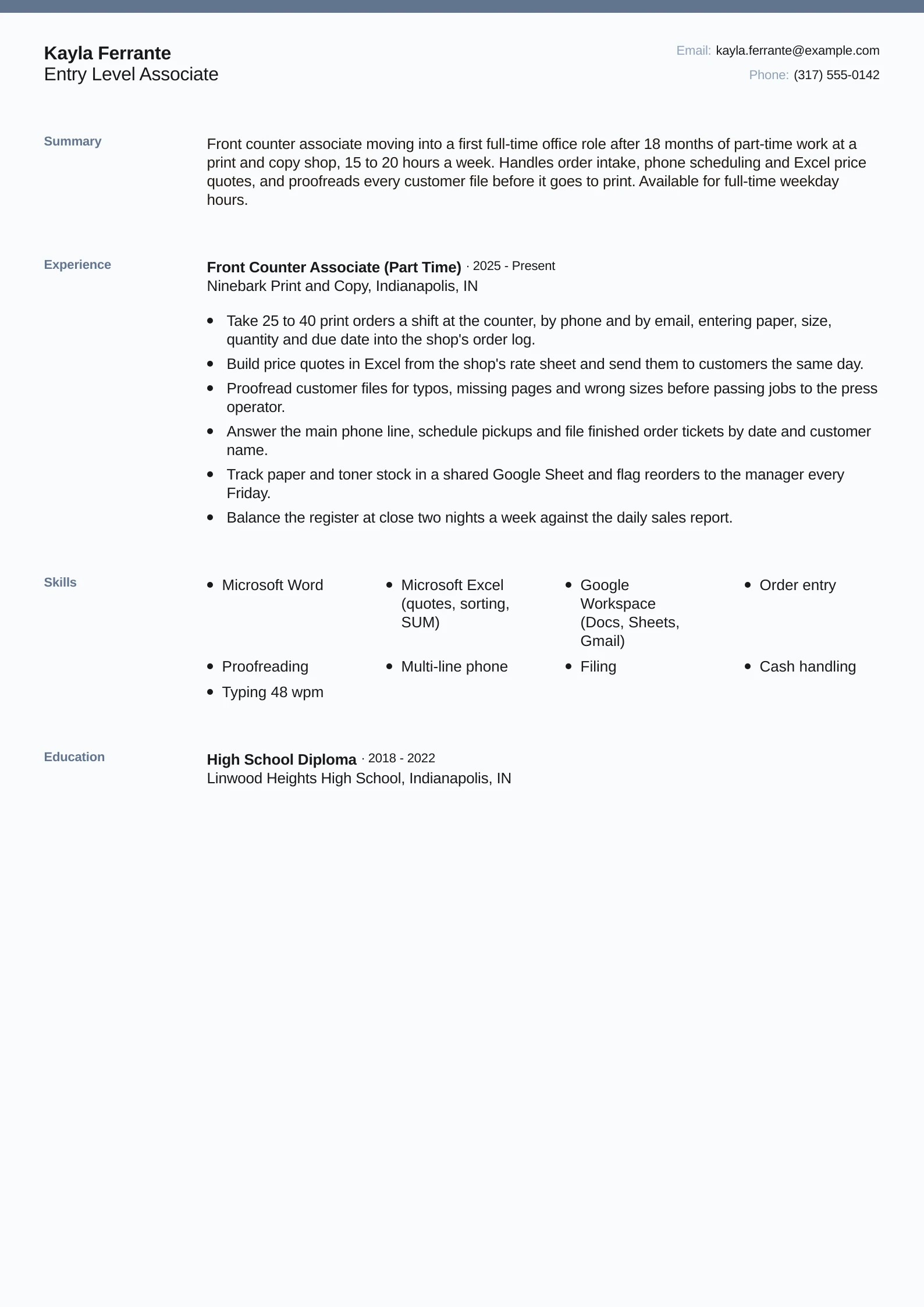
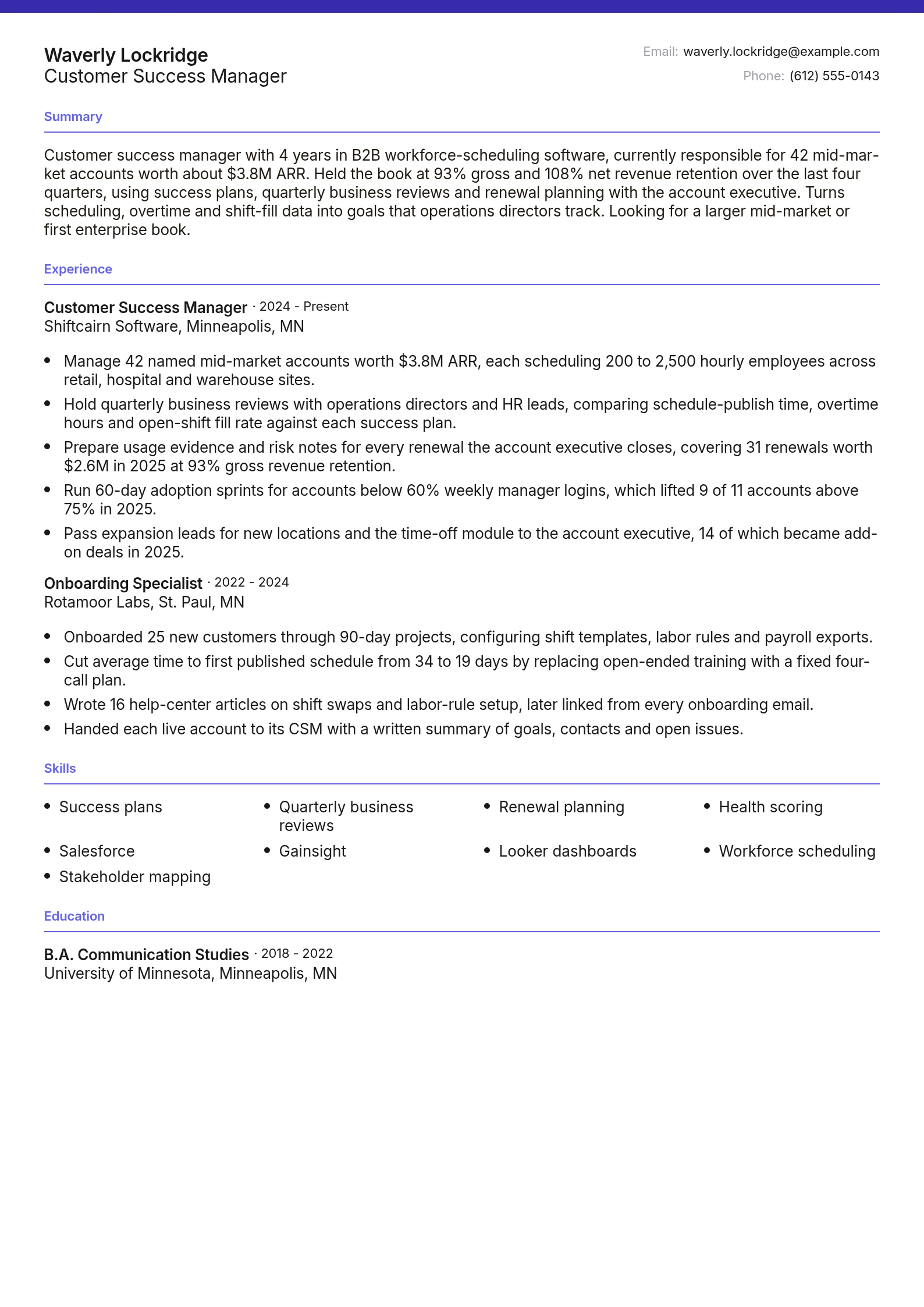
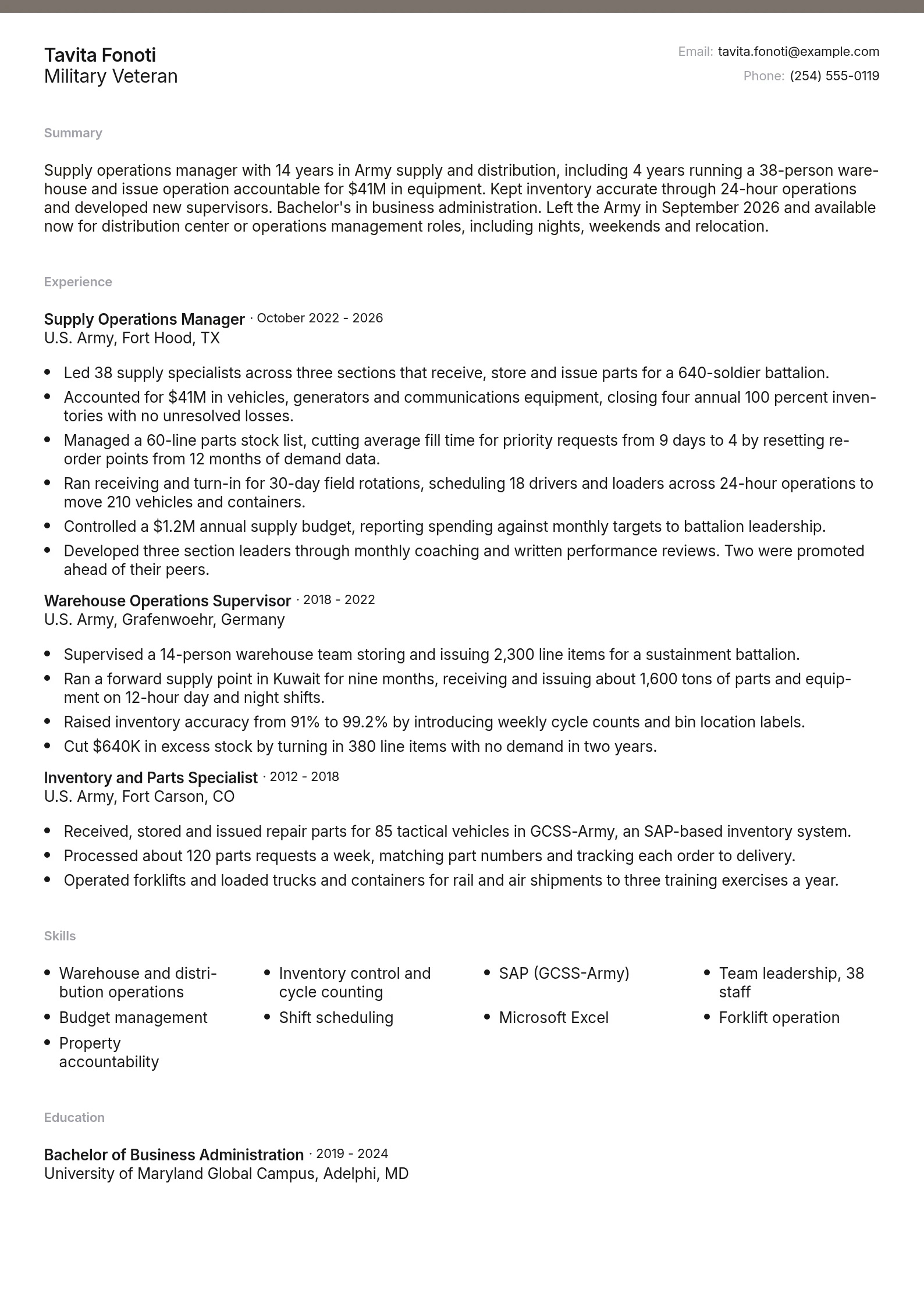
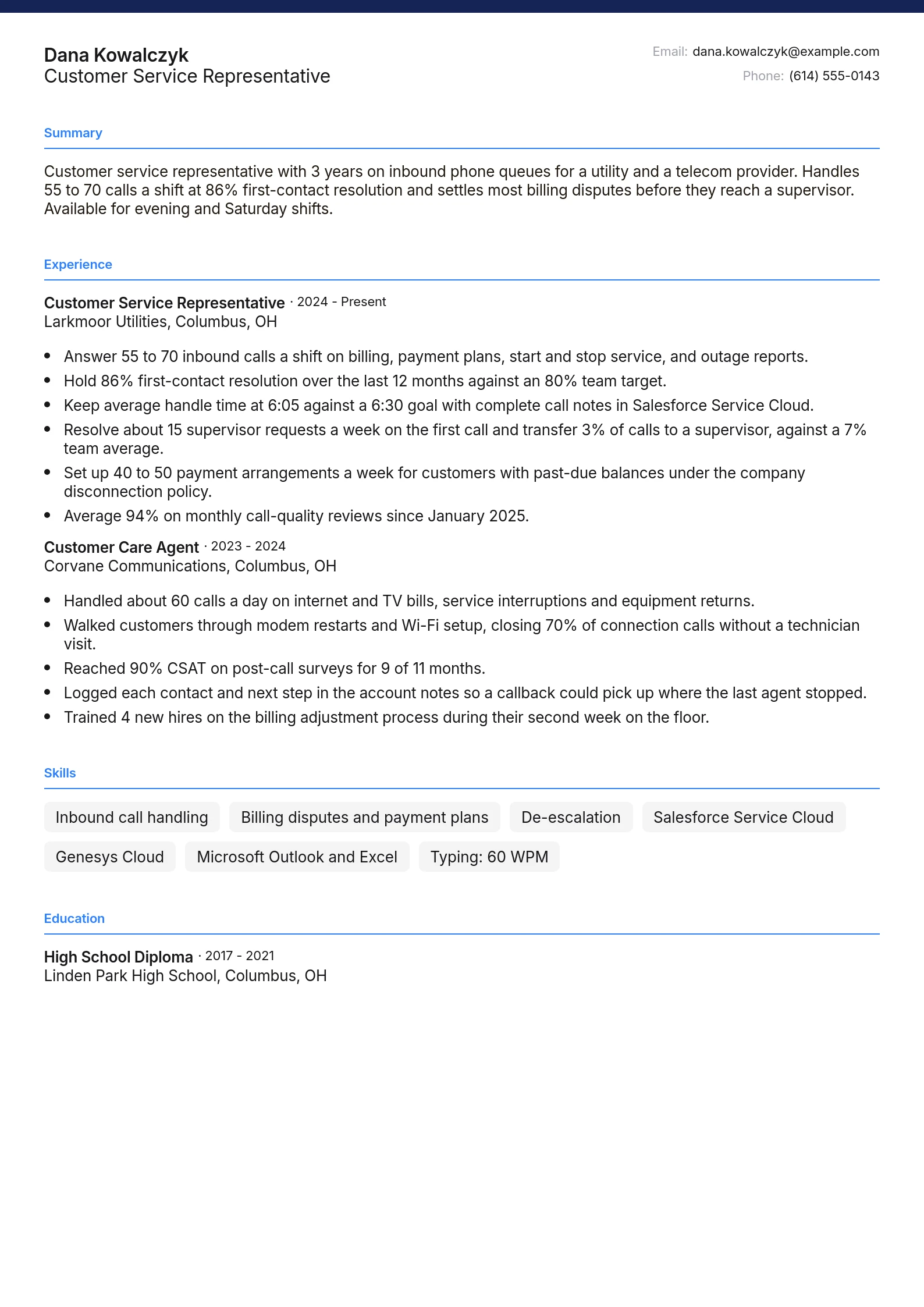
Curtis Bramlett's summary opens with his Class A license, T endorsement and seven years of regional driving, then gives his weekly miles and his 2025 on-time rate. A recruiter filling a regional or dedicated seat can confirm the fit before reaching the first job.
Both driving jobs name the lanes, the freight and the trailer, and the reefer role adds the temperature range he runs. His safety bullet gives a count and a start year instead of an adjective. Copy this layout if you have several years with one or two carriers and want weekly home time.
Pick the example that matches your haul and home time
Each resume changes the summary, the numbers in the bullets and the skills list to fit a different kind of Class A work. Start from the one closest to the job you're applying for, then swap in your own lanes, equipment and dates.
New CDL-A graduate with yard and forklift experience
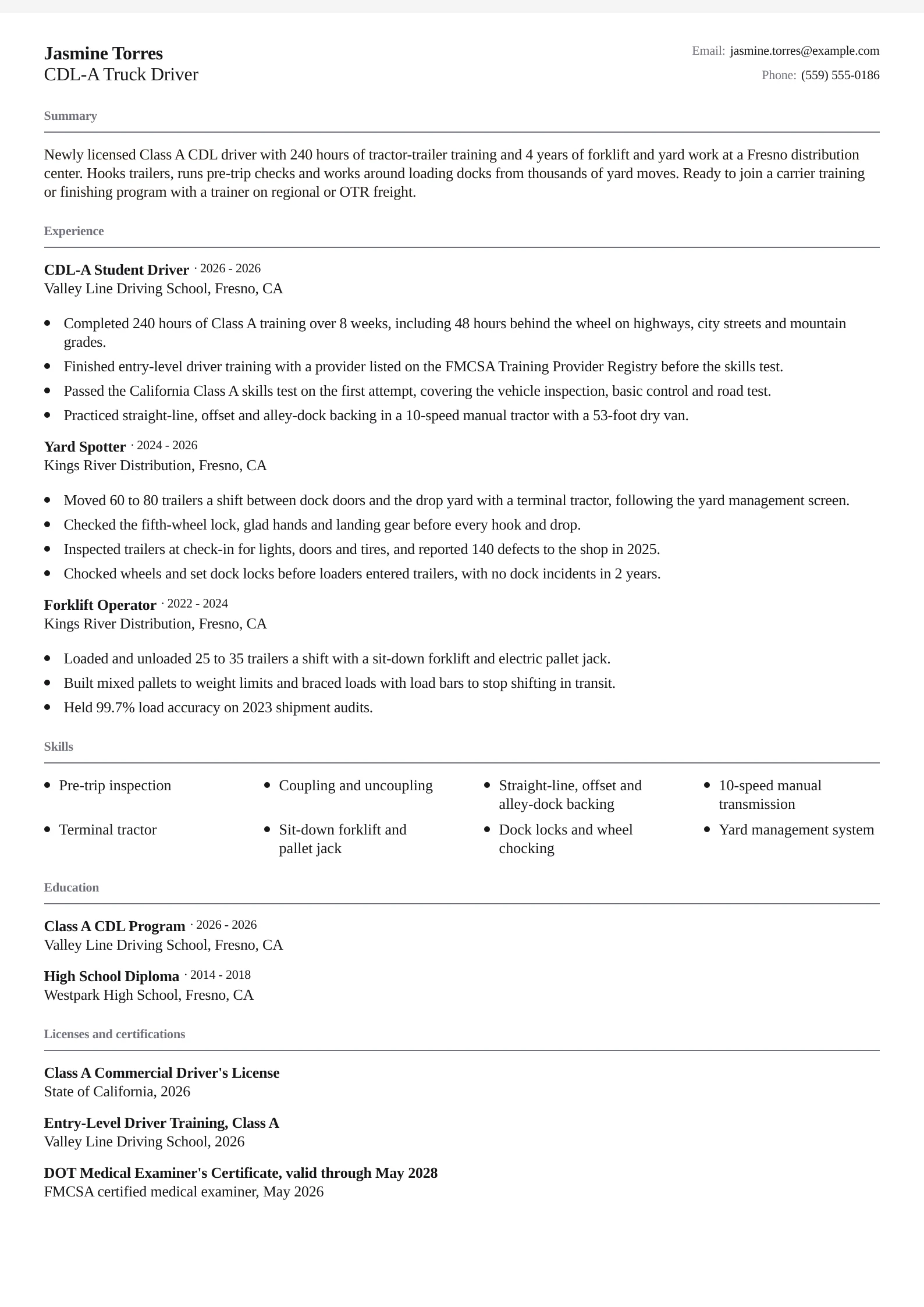
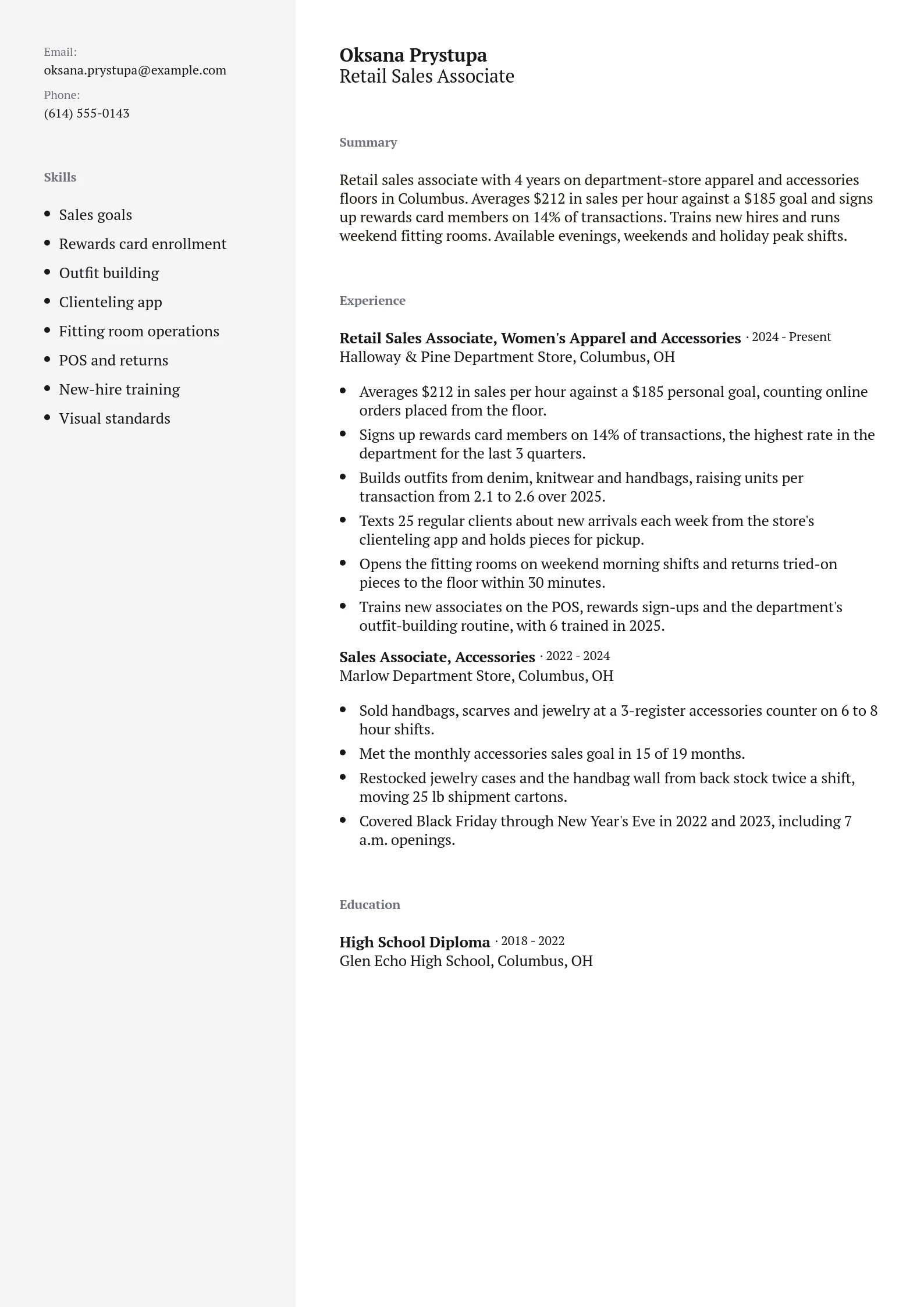
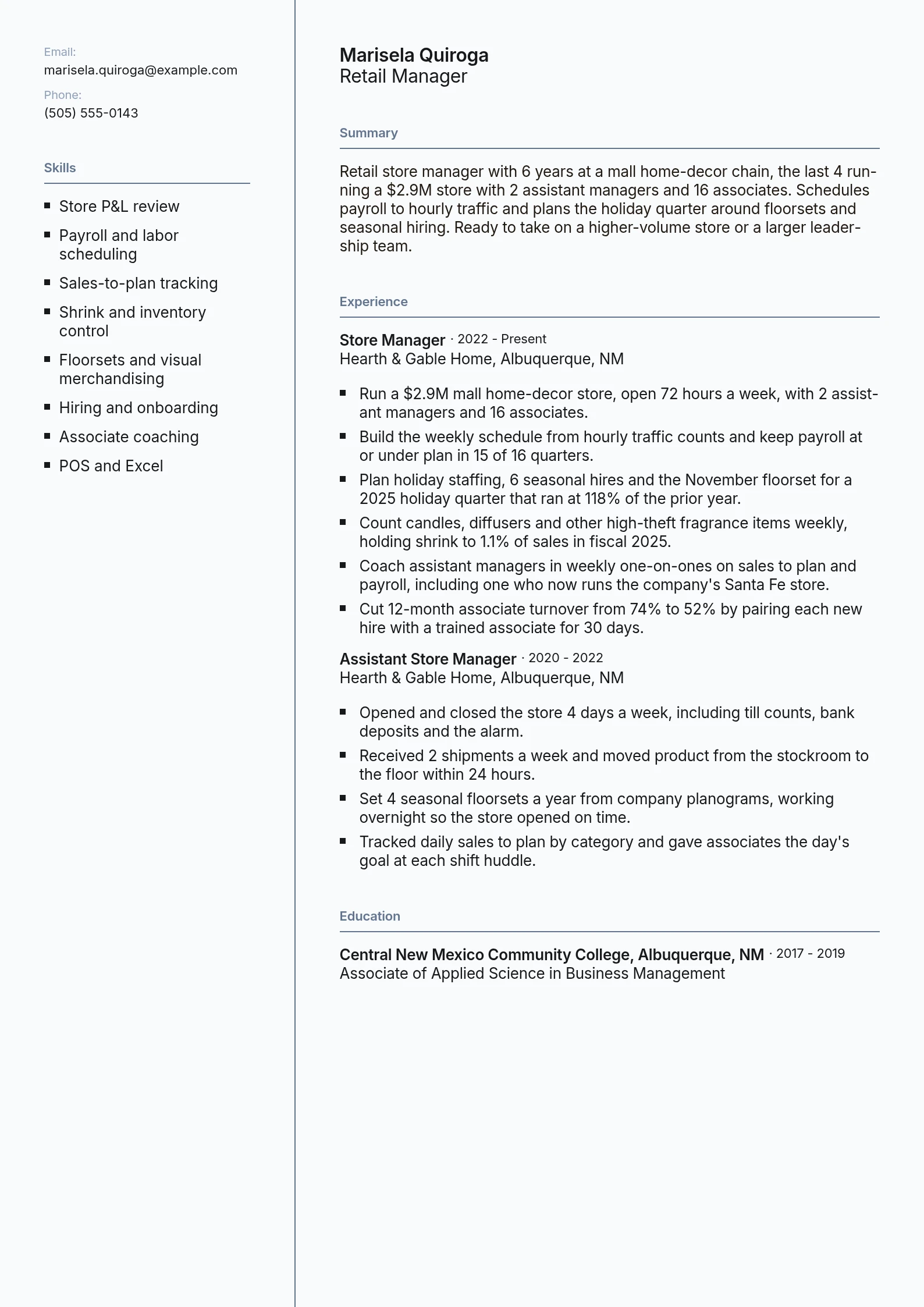
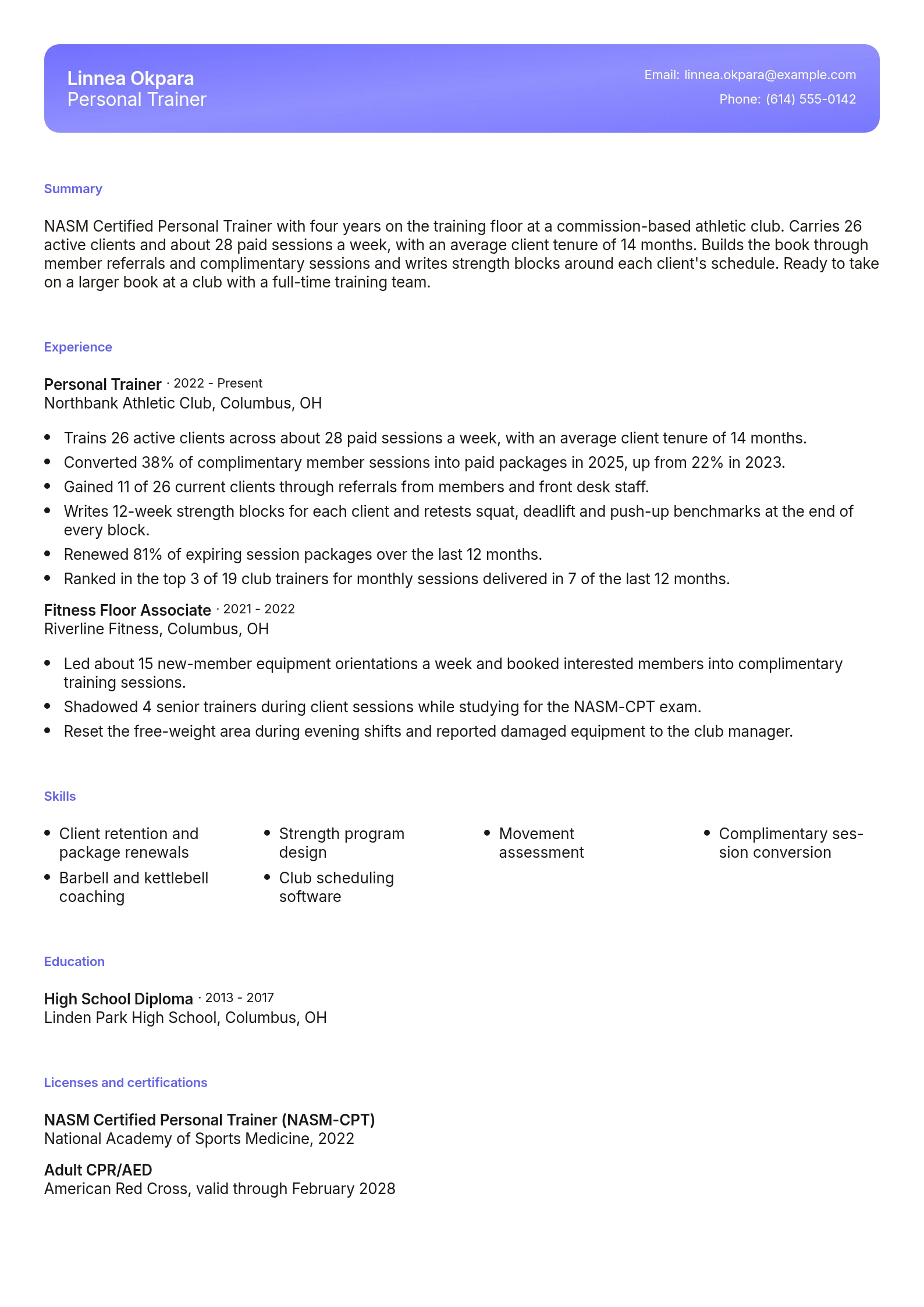
Jasmine Torres has a new Class A license and no road miles, so her resume leads with training: 240 program hours with the behind-the-wheel share stated, entry-level driver training from a registered provider and a first-attempt skills test. Her four years as a yard spotter and forklift operator follow, written as trailer hookups, inspections and dock safety. Use it if you're applying to carrier training or new-graduate programs.
Training hours with behind-the-wheel hours split out
ELDT provider and first-attempt skills test
Yard tractor and forklift work written in driving terms
Local LTL pickup and delivery driver, home nightly
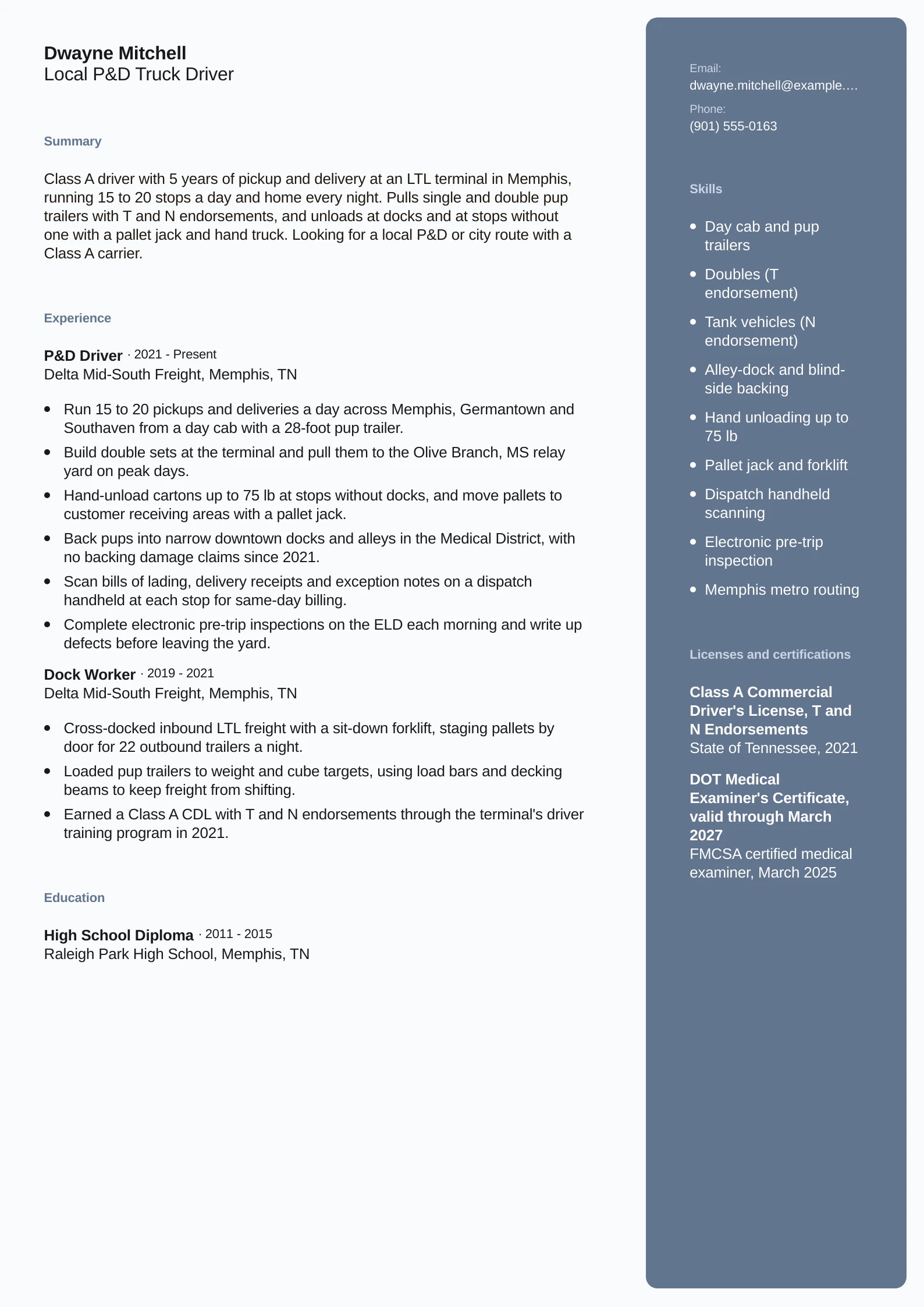
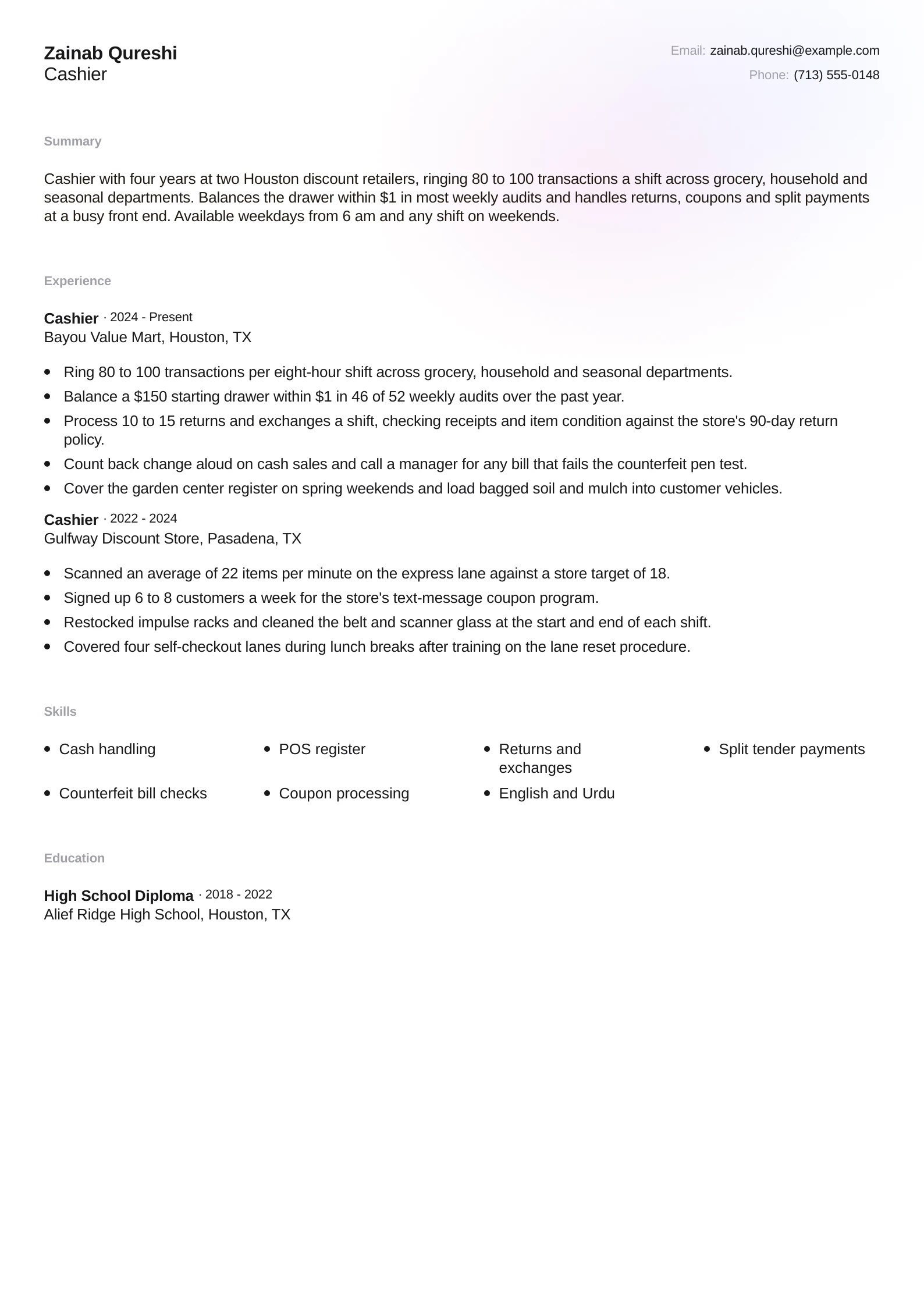
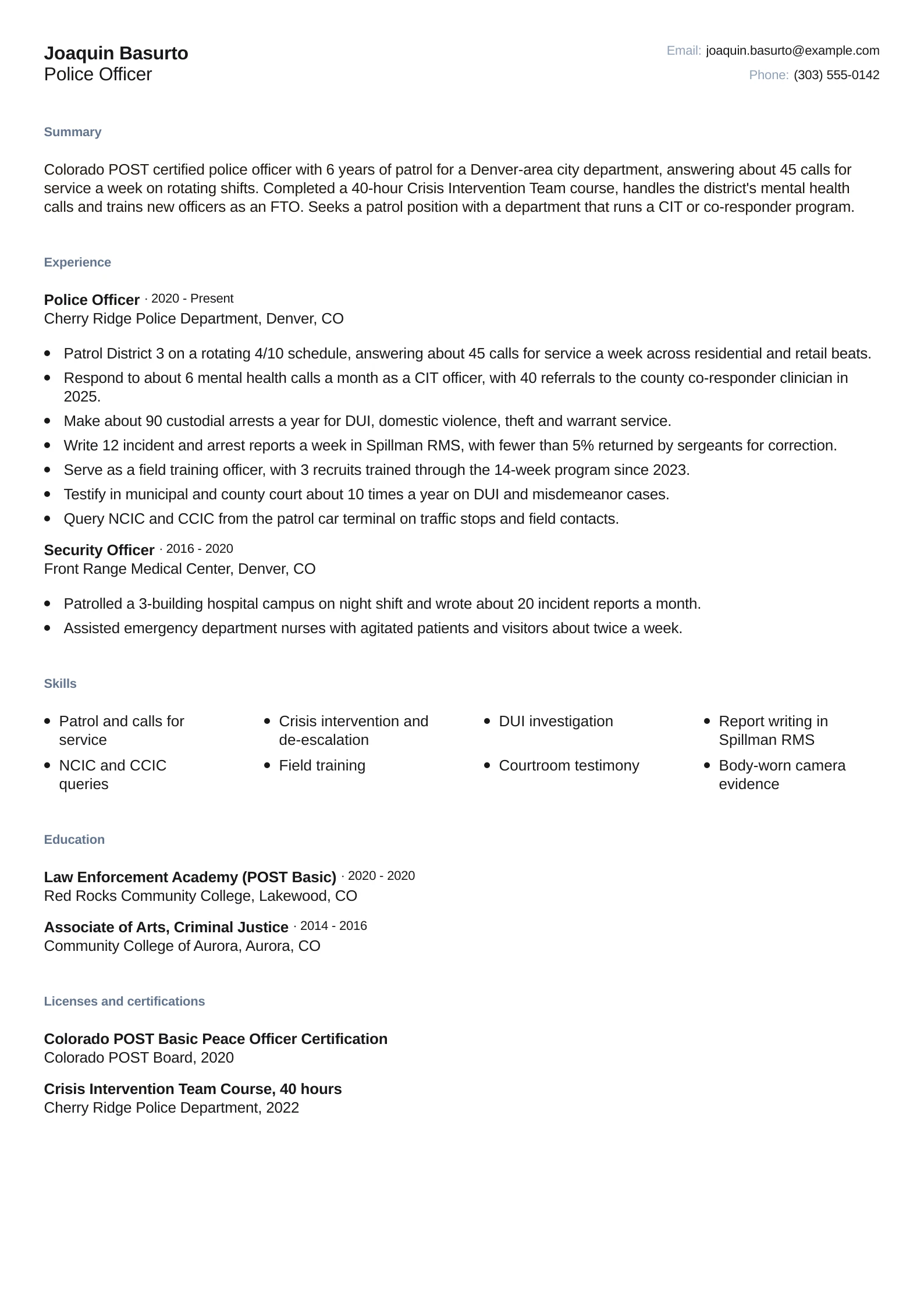
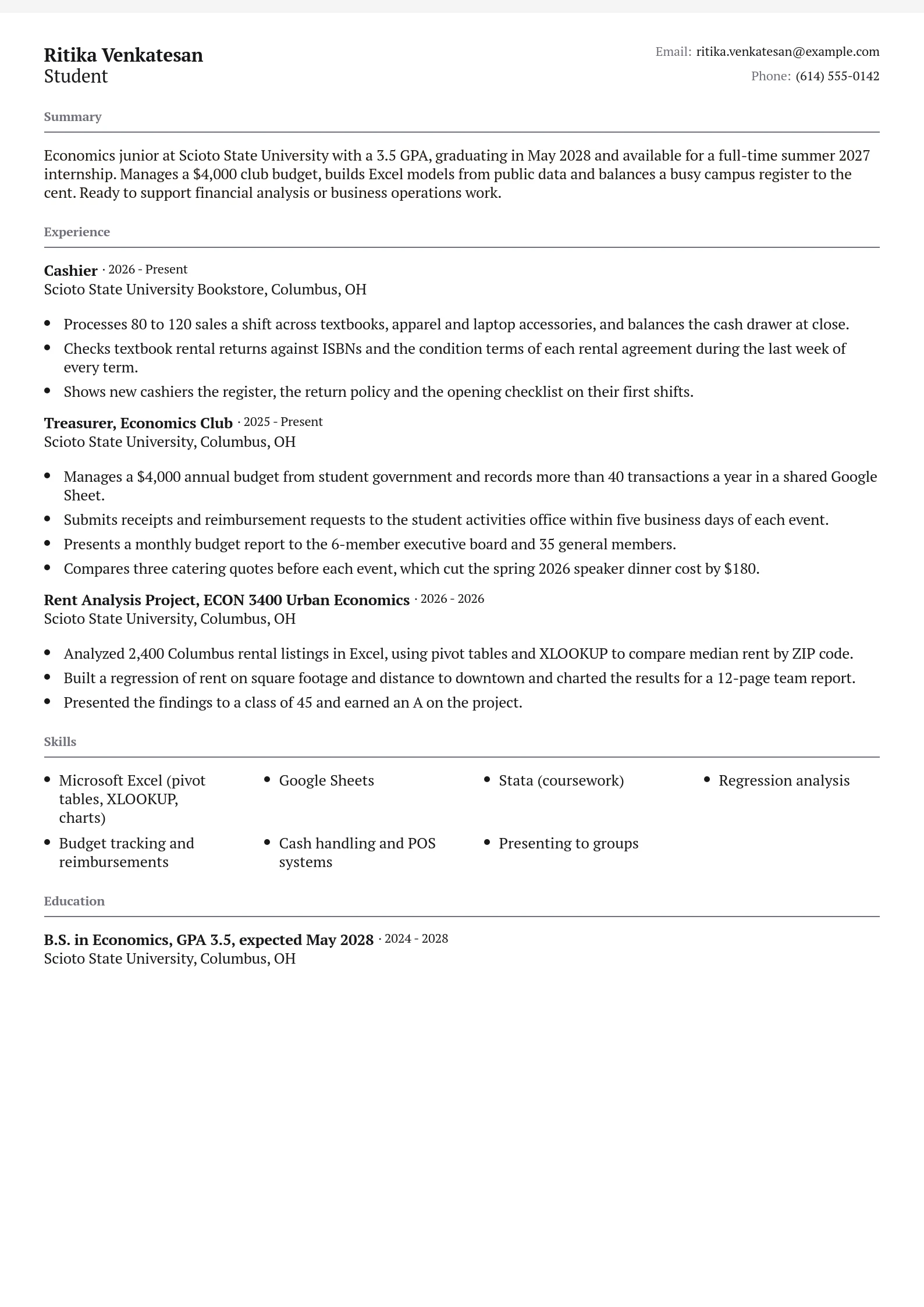
Dwayne Mitchell runs pickup and delivery out of an LTL terminal and sleeps at home every night. His bullets count stops per day, name the day cab and 28-foot pups, and show the hand unloading and pallet jack work that local recruiters ask about. His T and N endorsements sit on the license line, and the dock job before driving explains how he earned the CDL. Use it for terminal P&D or city routes.
15 to 20 stops a day, home nightly
Hand unloading up to 75 lb
Dock job that led to a company-trained CDL
Fuel and chemical tanker driver with an X endorsement
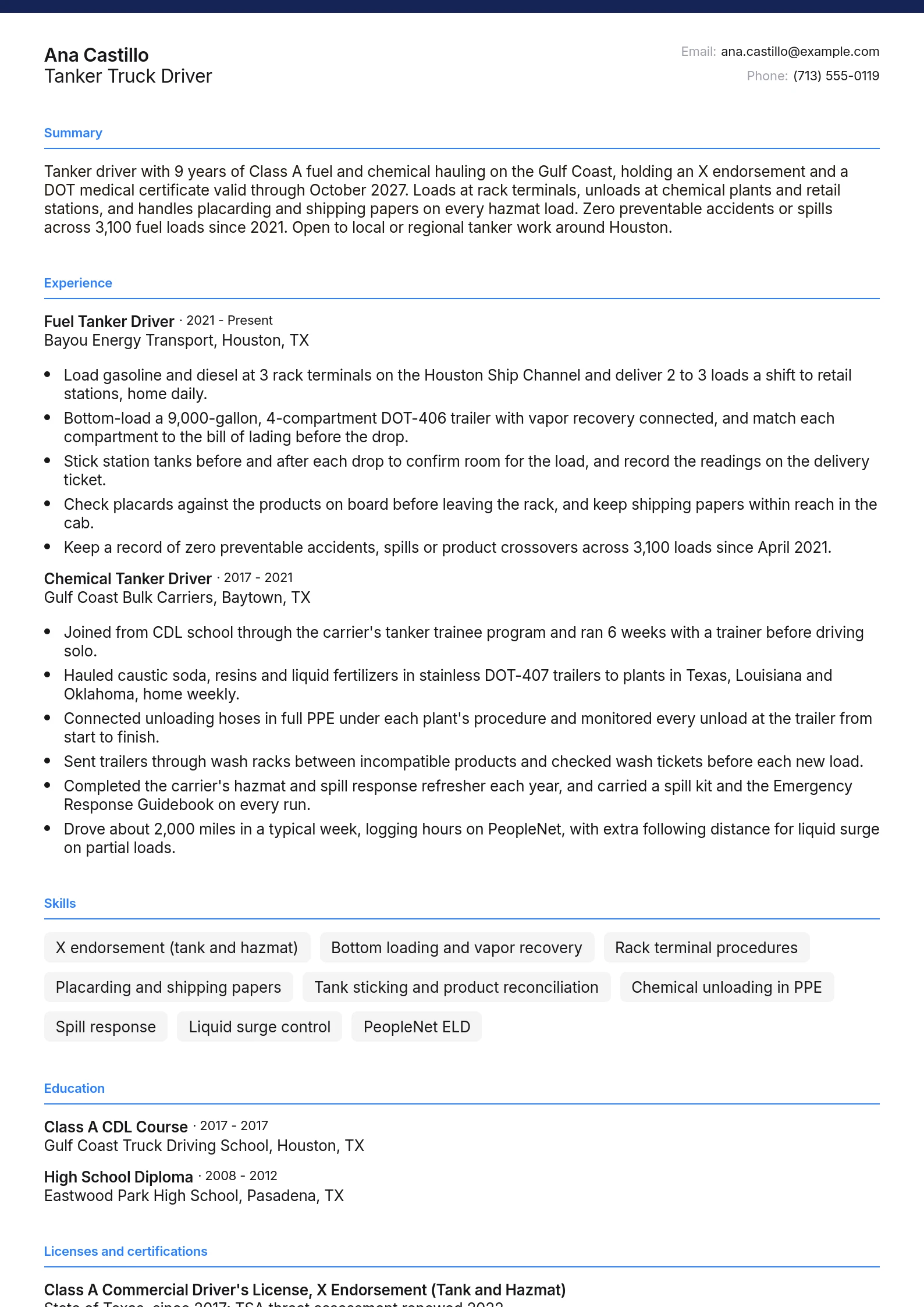
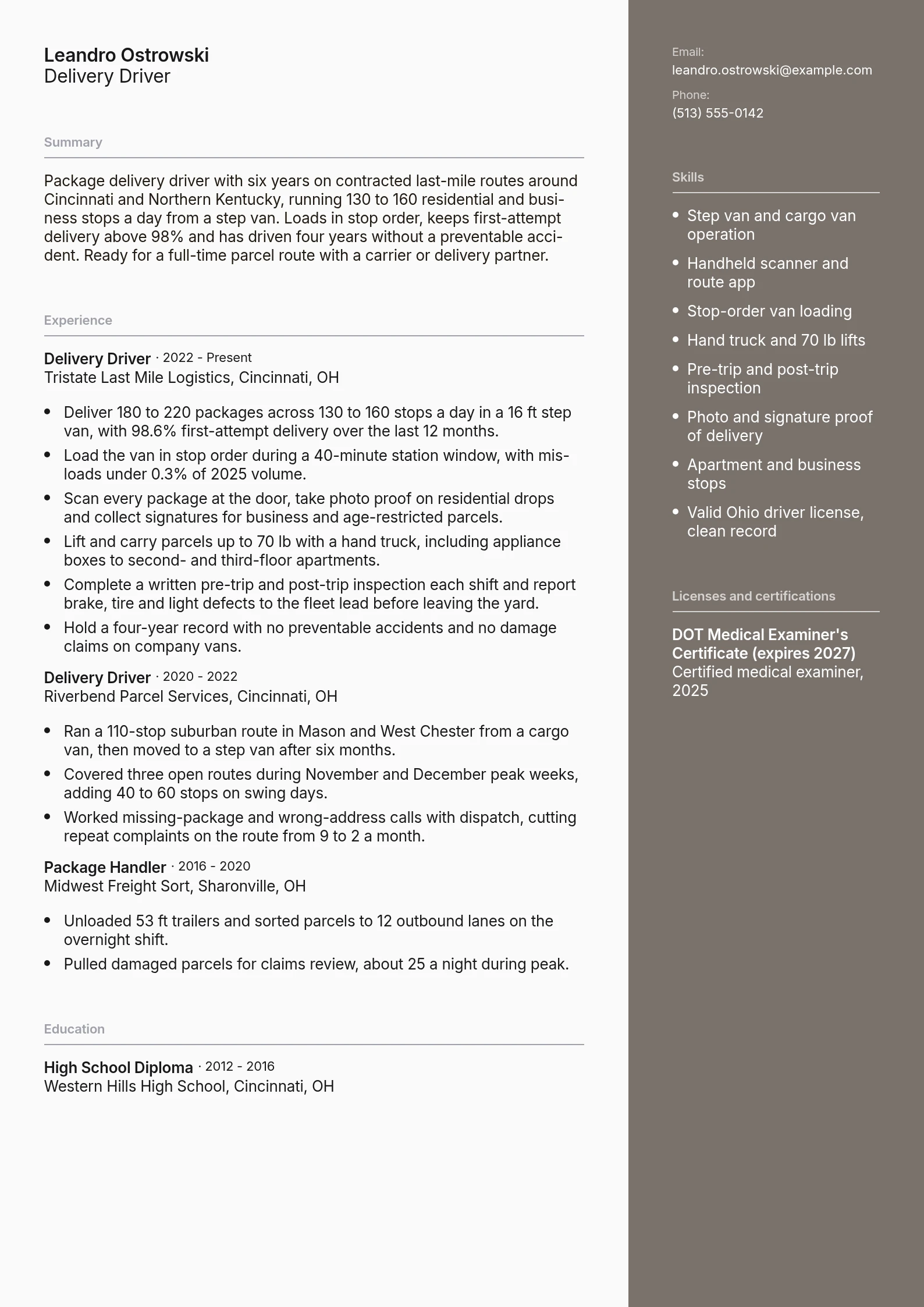
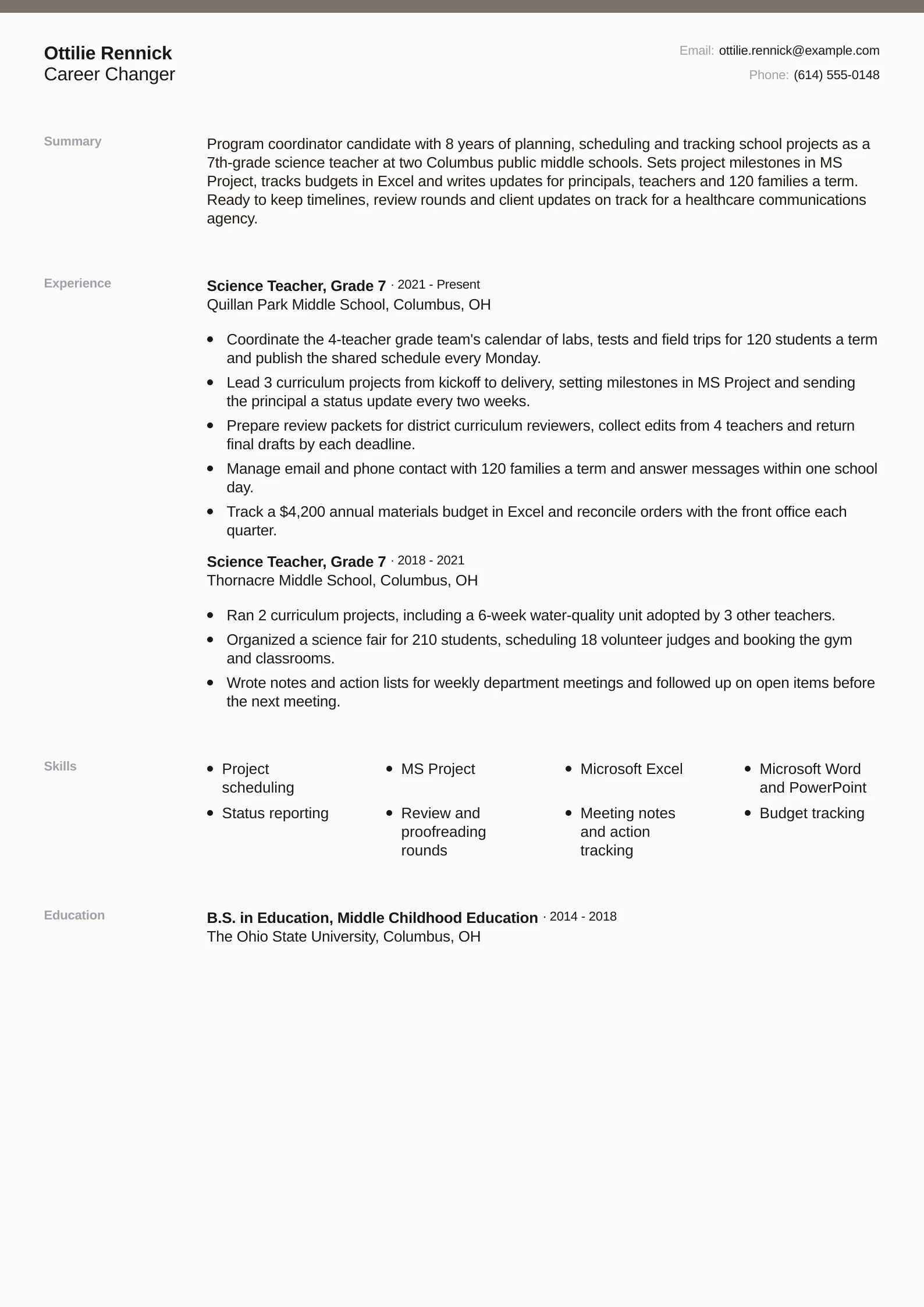
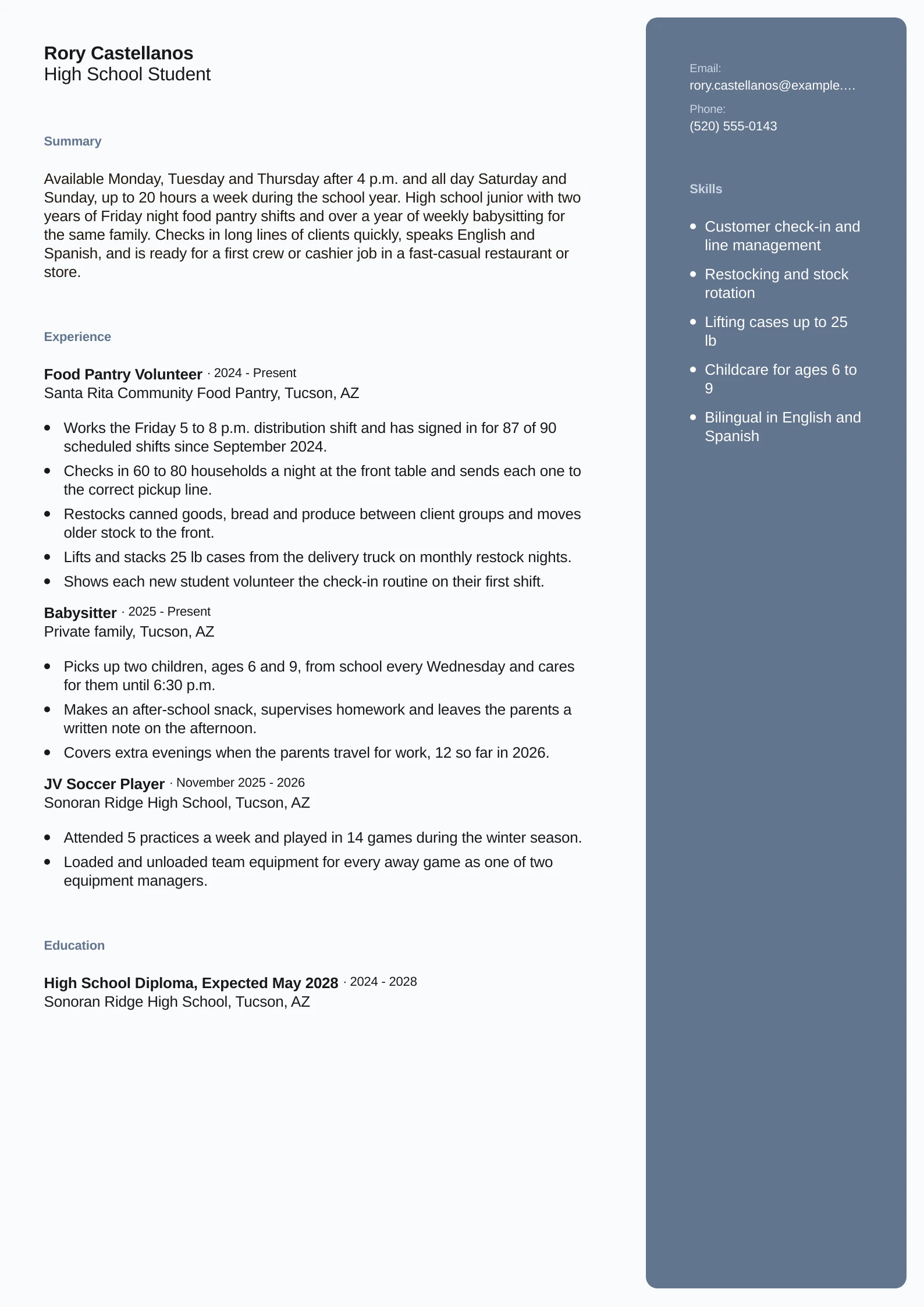
Ana Castillo has nine years of fuel and chemical tanker work, and her summary leads with the X endorsement. Each role names the trailer spec, the products, and the rack or plant procedure she follows before a drop. Her safety line counts loads with no preventable accidents, spills or crossovers since a stated month. Use it if you hold H, N or X and haul fuel, chemicals or other bulk liquids.
X endorsement in the first line
Rack loading, tank sticking and placarding
3,100 loads with no preventable accidents or spills
Put your class and endorsement letters in the first lines
Write your license as one line near the top: class, issuing state, endorsement letters and the year you earned it, such as "Class A CDL, Ohio, T endorsement, since 2019." Recruiters screen on those letters before anything else, so repeat them in your summary and list the license again under credentials.
Say what each letter lets you haul the first time you use it, because the first reader is often a general recruiter, not a driver manager. If you hold X, list X alone, since it covers both N and H.
Endorsement
What it covers
What adding it takes
Jobs that ask for it
T
Doubles and triples
A knowledge test
LTL carriers that pull pup trailers, including many local P&D and line haul jobs
N
Tank vehicles carrying liquids or gases
A knowledge test
Fuel, milk and liquid bulk carriers, and LTL carriers that require it of every driver
H
Hazardous materials that need placards
A knowledge test, a TSA security threat assessment repeated at least every 5 years and, for a first H, entry-level training from a registered provider
Chemical haulers, and OTR van fleets that list it as preferred
X
Everything N and H cover, including hazardous materials in a tank
Everything required for N and H
Fuel tanker and chemical bulk jobs
List the trailers, freight handling and systems you use
Carriers screen skills by the haul, so your skills list should name equipment, freight handling and systems, not personal traits. "Reefer temperature checks, drop-and-hook, PC*Miler" tells a dedicated reefer recruiter more than "reliable and safety-minded."
Name every trailer you have pulled: 53-foot dry van, reefer, flatbed, pups or tanker. A flatbed driver adds securement terms such as chains, binders, straps and tarping. A reefer driver adds setting and recording temperatures, and a tanker driver adds liquid surge and bottom loading.
For local and dedicated jobs, list the physical work: hand unloading, pallet jack, forklift and the heaviest weight you handle regularly. Some local Class A ads ask drivers to lift 40 to 60 lb regularly and up to 100, so a line such as "hand-unload cartons up to 75 lb" answers that before the phone screen.
Add the systems you log and route with by name: your ELD, PC*Miler, a dispatch handheld or electronic inspection reports. Write backing skills as the move, such as alley dock, blind-side back or tight downtown docks.
If your work is box trucks, straight trucks or package routes under a Class B or no CDL, our delivery driver resume examples fit your job better than these.
Open the summary with license, months and home time
A good truck driver summary answers four screening questions in three or four lines: license and endorsements, how long you've driven Class A, the kind of haul, and the home time you want.
State experience in years or months, never "extensive" or "seasoned." Carriers set minimums such as 3 or 12 months of recent Class A driving, and a recruiter can only count what you write. Add one or two numbers the next carrier cares about: miles a week for OTR and regional drivers, stops a day for local drivers, loads without a spill for tanker drivers.
End with the lane and home time you want, such as "regional, home weekly" or "local, home daily," so the recruiter sends you to the right fleet. New graduates swap the experience line for training hours and the type of program they want to join.
Truck driver summary to adapt
Class A CDL driver with [years] of [regional / OTR / local] [dry van / reefer / flatbed / tanker] experience and [letters] endorsements. Runs about [miles a week or stops a day] on [drop-and-hook / live unload / hand unload] freight, with [one safety or on-time figure and its period]. Holds a DOT medical certificate current through [month and year]. Looking for a [lane type] position with [home time].
Write each driving job as lane, freight, equipment and volume
Describe each driving job by its lane, freight, equipment and volume, because those four facts tell a recruiter which fleet you fit. "Delivered freight safely and on time" is true of every driver they will read today.
Lane is the area and home time: regional within a set distance of a terminal, such as 750 miles, OTR across the lower 48, or local within one metro. Freight is what you hauled and how it came off the trailer: drop-and-hook, live unload or hand unload. Equipment is the tractor and trailer type, and volume is miles a week for OTR and regional drivers, stops a day for local drivers and loads a shift for tanker drivers.
Pull every number from your ELD reports, trip sheets or settlement statements. The carrier will compare them with your application and your past employers, and a figure that doesn't match does more harm than a smaller true one.
Lane, freight, equipment and volume
Haul refrigerated grocery loads within 750 miles of Columbus in a 2023 Cascadia with a 53-foot reefer. Average 2,500 miles a week, mostly drop-and-hook, home every weekend.
Duty list
Responsible for safely delivering freight to customers on time. Completed logs and inspections as required.
Back safety claims with a period and a count
Write your safety record as a number over a stated period, such as "no preventable accidents in 7 years" or "3,100 loads with no spills since April 2021." A period and a count can be confirmed. "Perfect safety record" can't, and recruiters skip past it.
Use the word "preventable" only when your carrier's safety department classified an incident that way, because that is the carrier's finding after review. Other checkable lines include roadside inspections with no out-of-service orders, quarterly or annual safe driver awards with a count, and a million-mile award with the year you received it.
Write "clean MVR" only if your motor vehicle record has nothing on it, because the carrier must pull that record from every state that licensed you in the last 3 years. If it has a ticket, state the safe period you can support and leave the ticket for the application.
New CDL holders have no road record yet, so show safety habits from earlier work: dock locks and wheel chocks with no incidents, forklift audits passed, or defects you reported during inspections.
Date every job by month so the application matches
Give every job a start and end month, because the driver application asks for the same history with dates and the carrier checks it with past employers. The application covers every employer for the last 3 years and, for the 7 years before that, every employer you drove a CDL-class vehicle for, so include those on your resume too.
Use the employer name a safety department would recognize and the terminal city, not a dispatch nickname or a customer you were dedicated to. If you drove as a leased owner-operator, name the carrier you were leased to.
Give any gap of a month or more its own dated line: "CDL training, Valley Line Driving School, Fresno, CA, Jul 2026 to Sep 2026" or "Family care, Columbus, OH." A dated line answers the question before a recruiter has to call about it.
Several carriers in a short span is common in trucking. List each one separately with real dates instead of merging them, and save reasons for leaving for the application, which asks for them.
Turn CDL school hours and yard work into a first resume
With no road experience, your CDL training is your experience, so list it first with the school, total hours, behind-the-wheel hours and the date you passed the skills test. "Completed 240 hours, including 48 behind the wheel" gives a recruiter something to compare between graduates.
Name your entry-level driver training provider. First-time Class A applicants must complete that training with a provider on the FMCSA Training Provider Registry before the skills test, so one line naming it answers a question the recruiter has to ask.
Then translate earlier work into driving terms. Yard spotters write trailer moves and hookup checks, warehouse workers write forklift work and dock safety, diesel technicians write inspections and brake checks, and military drivers write the vehicle they drove and the miles.
Describe training as hours and practice, never as road miles for a carrier. Say in your summary that you're looking for a carrier training or finishing program with a trainer, because those are the jobs that hire new graduates.