Recruiters outside the military hire for scope they can picture: the people you led, the equipment and money you answered for, and the hours the work ran. The three examples take different routes out, into corporate operations, a cleared defense contractor and a federal job through USAJOBS.
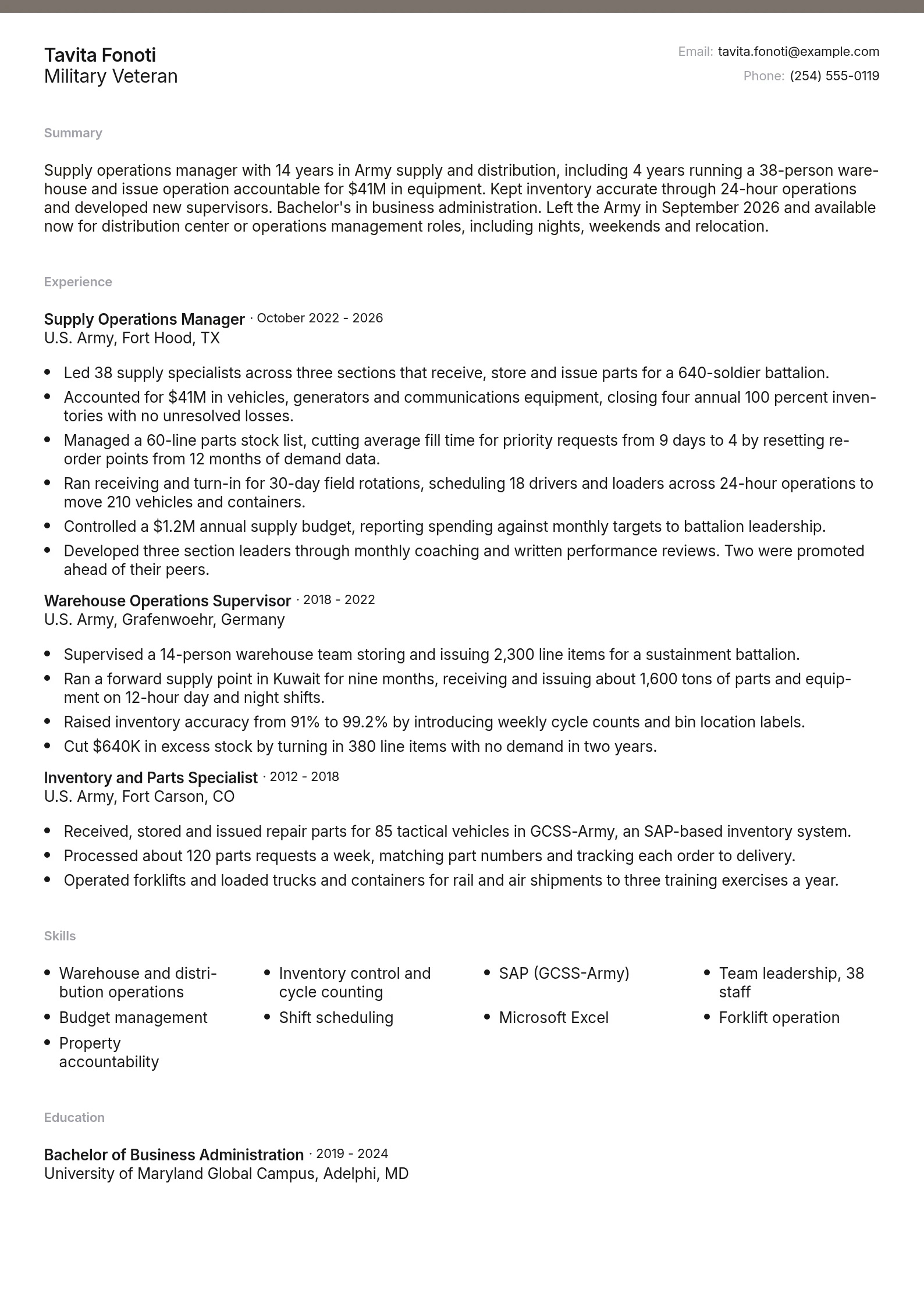
Army supply leader rewritten for operations management
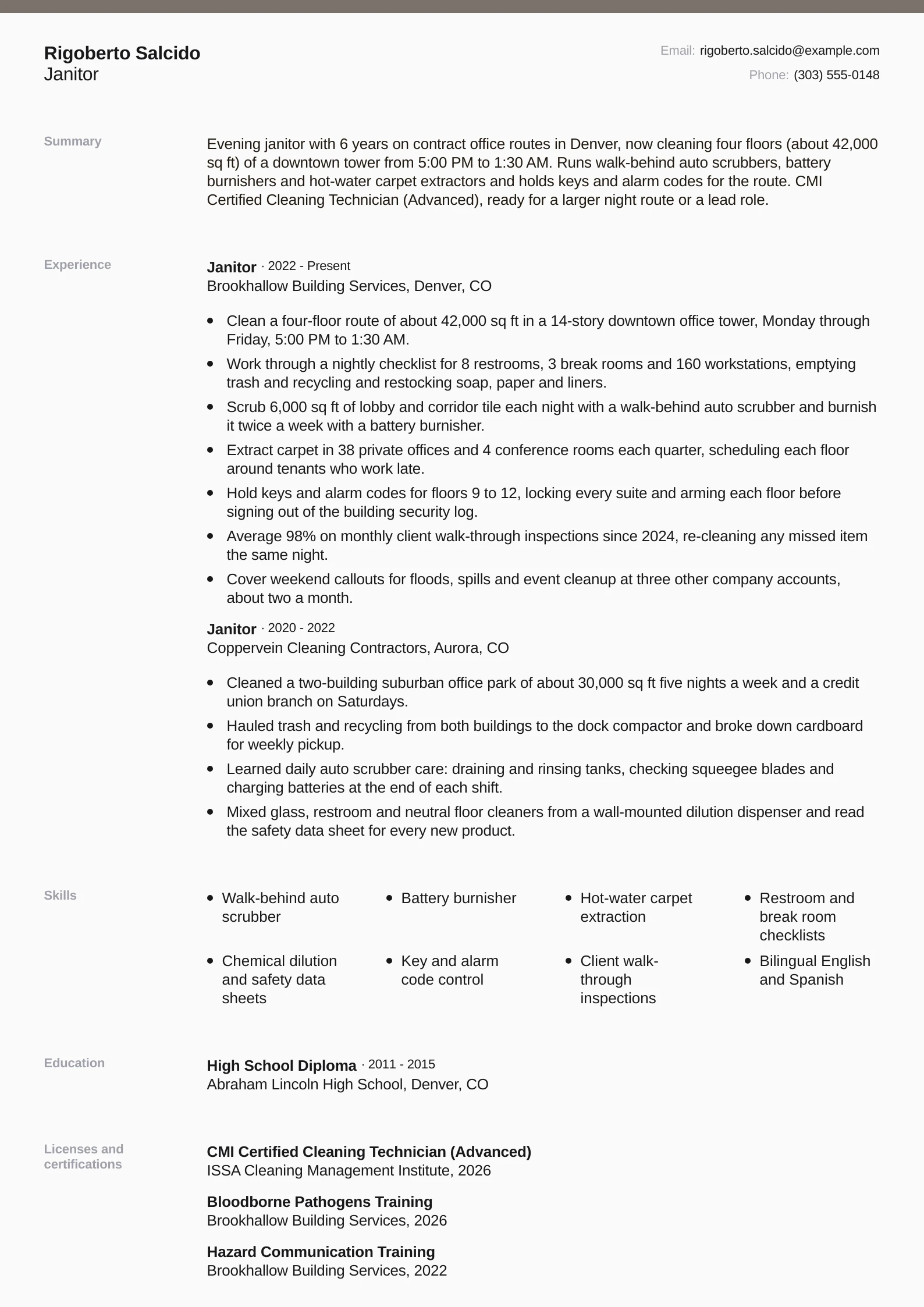
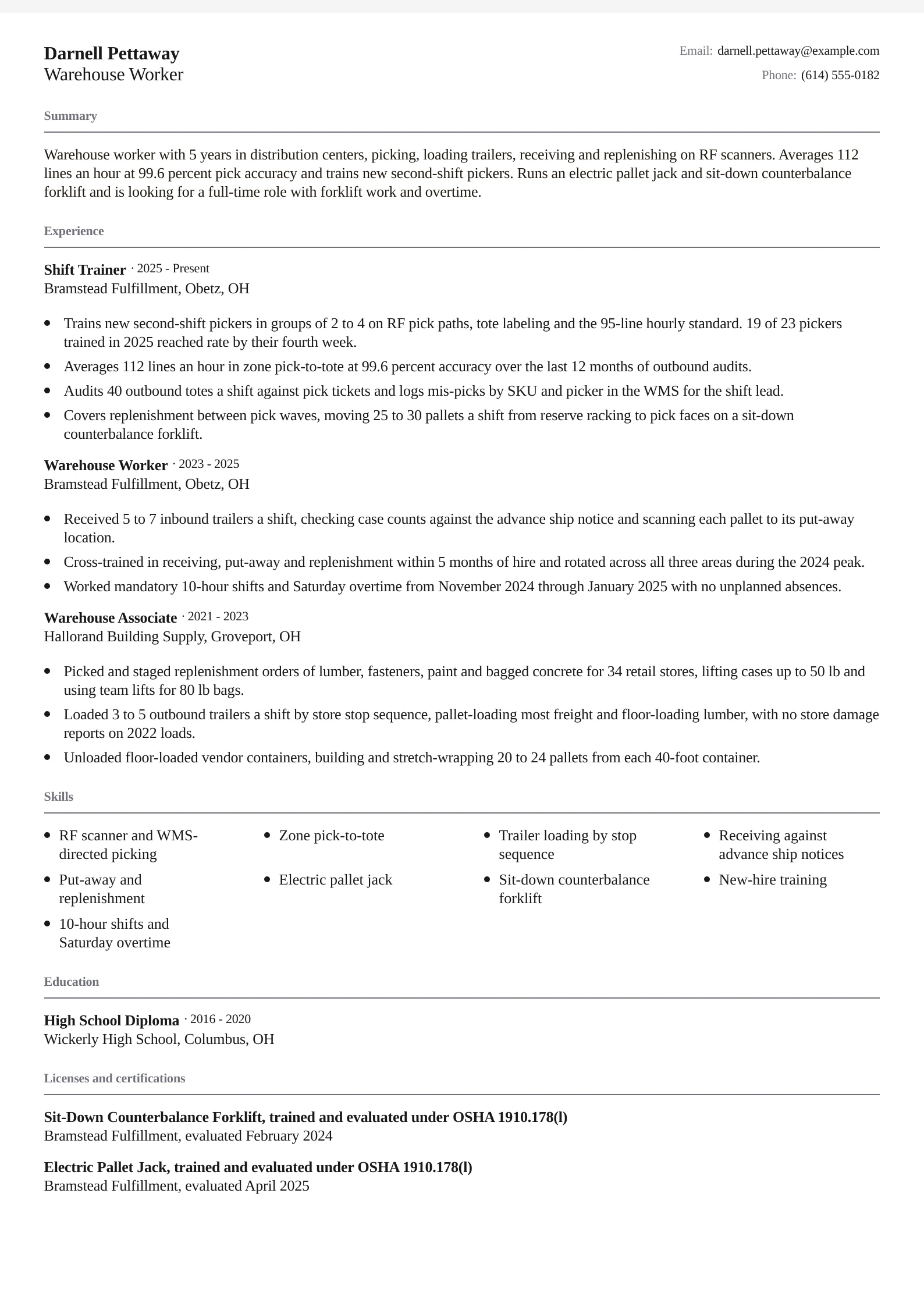
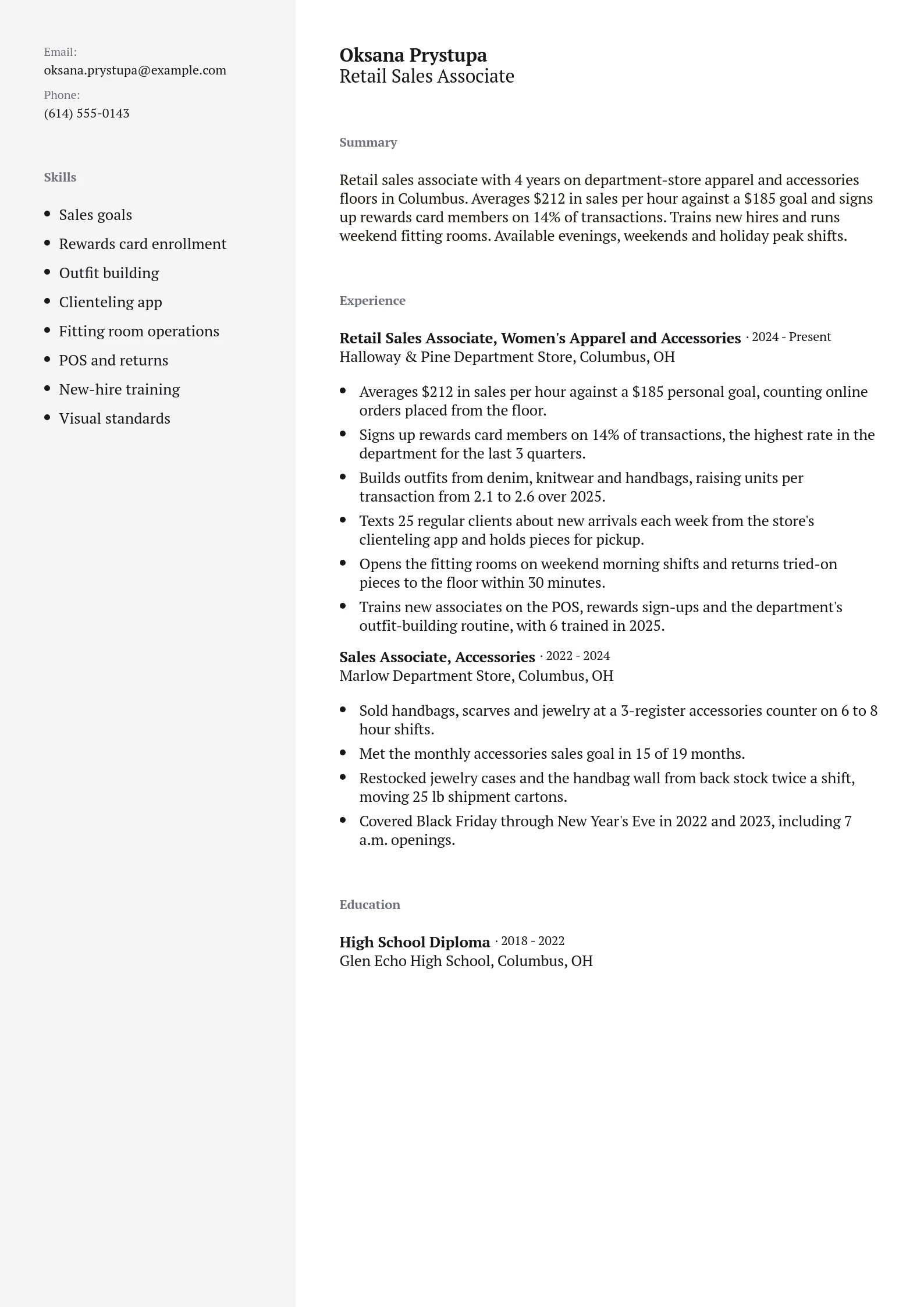
Tavita Fonoti left the Army in September 2026 after 14 years in supply and is aiming for distribution center and operations management jobs. Each job title is the civilian version of her work, so a recruiter reads Supply Operations Manager instead of a rank and a code. Every role opens with its scope: 38 people, $41M in equipment, a 640-soldier battalion as the customer.
Copy this layout if you're an NCO or junior officer heading into warehouse, logistics or operations work. Her summary says she can start now and offers nights, weekends and relocation, which operations recruiters ask about early. The bachelor's she finished while serving is listed with its school and years, because large operations employers often require a degree.
Cleared IT and federal logistics versions
The next two change what sits at the top of the page. One leads with a clearance and certification for defense contractors, the other with the citizenship, preference and per-job detail a federal application asks for.
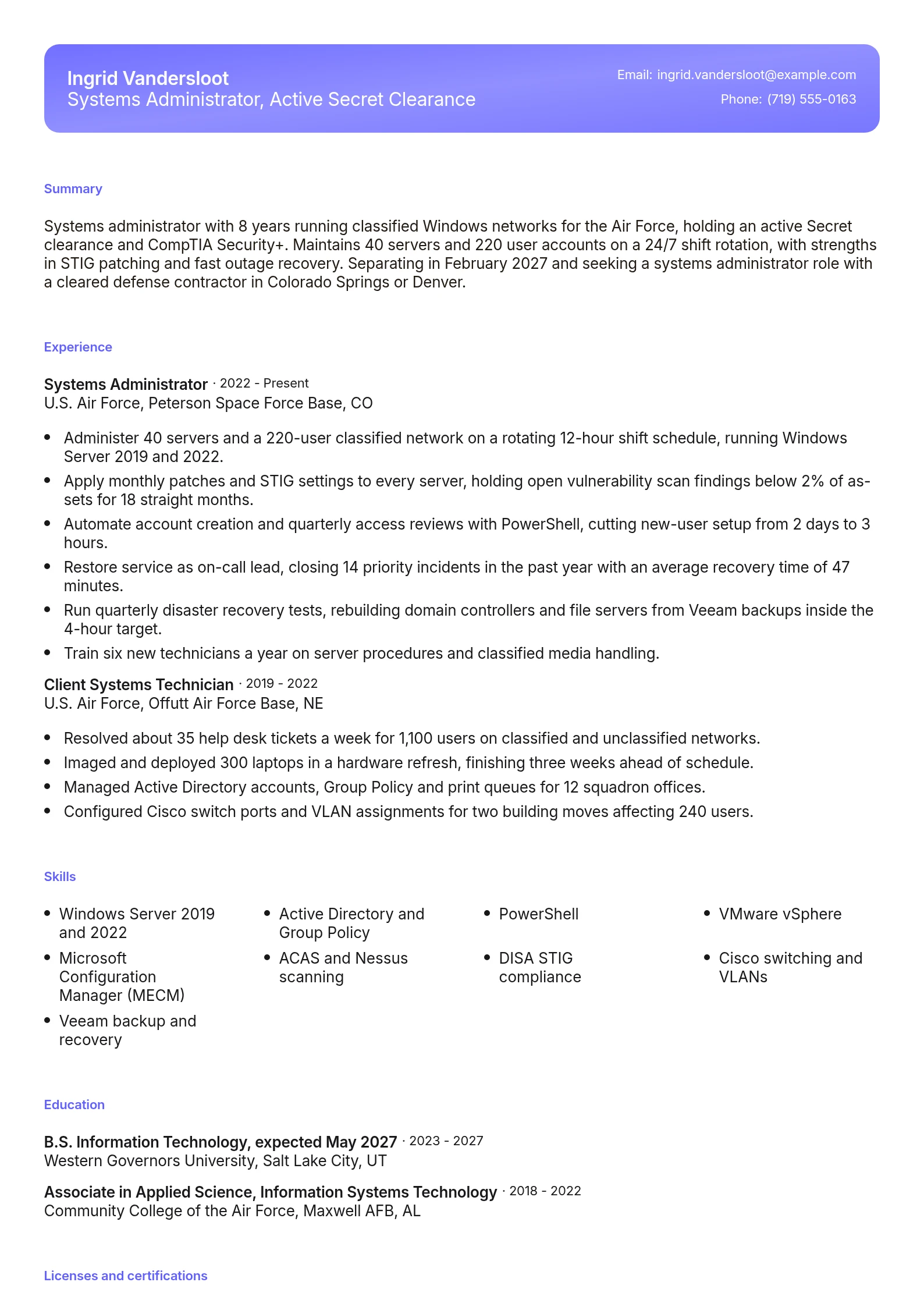
Air Force systems administrator moving to a cleared contractor
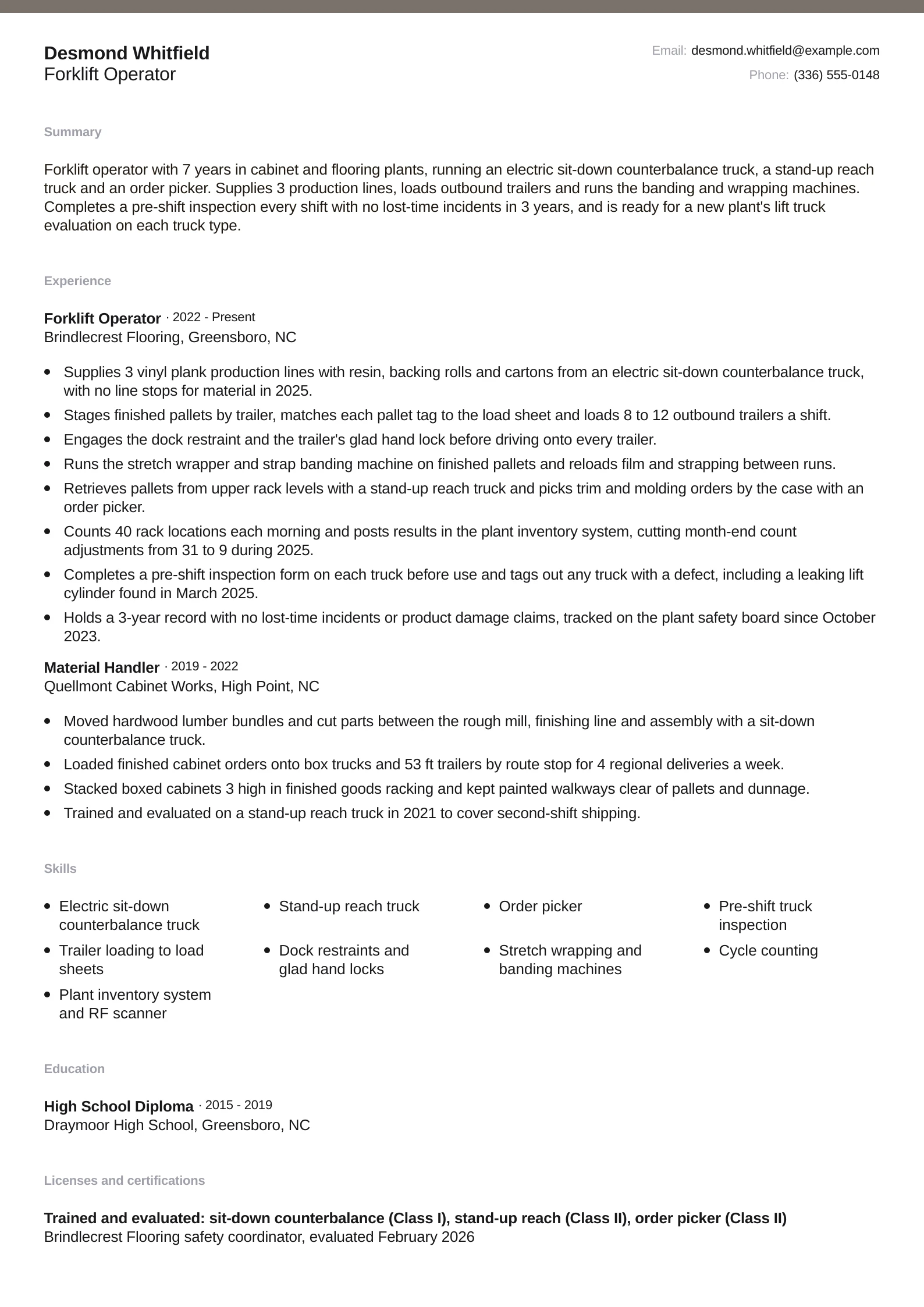
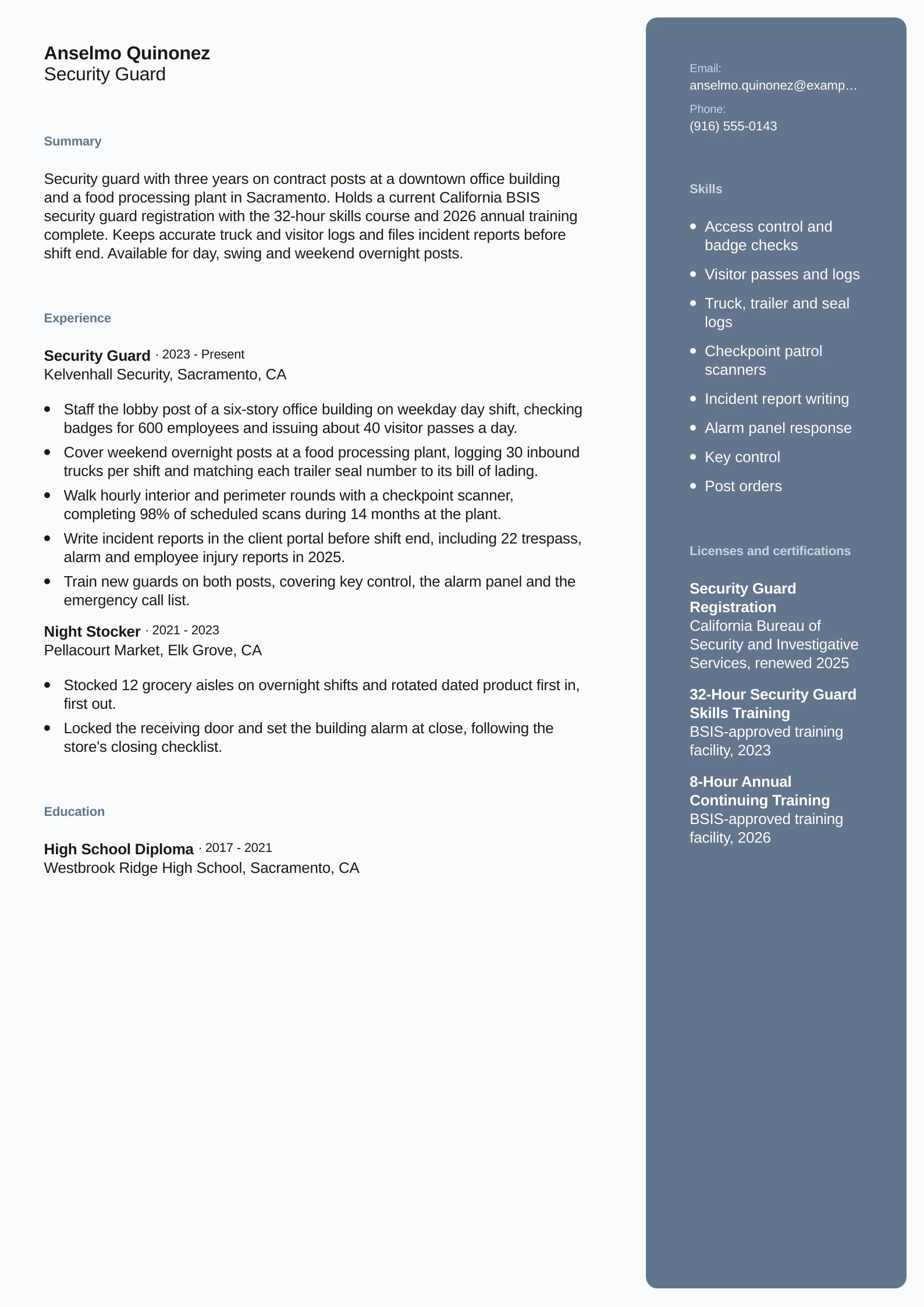
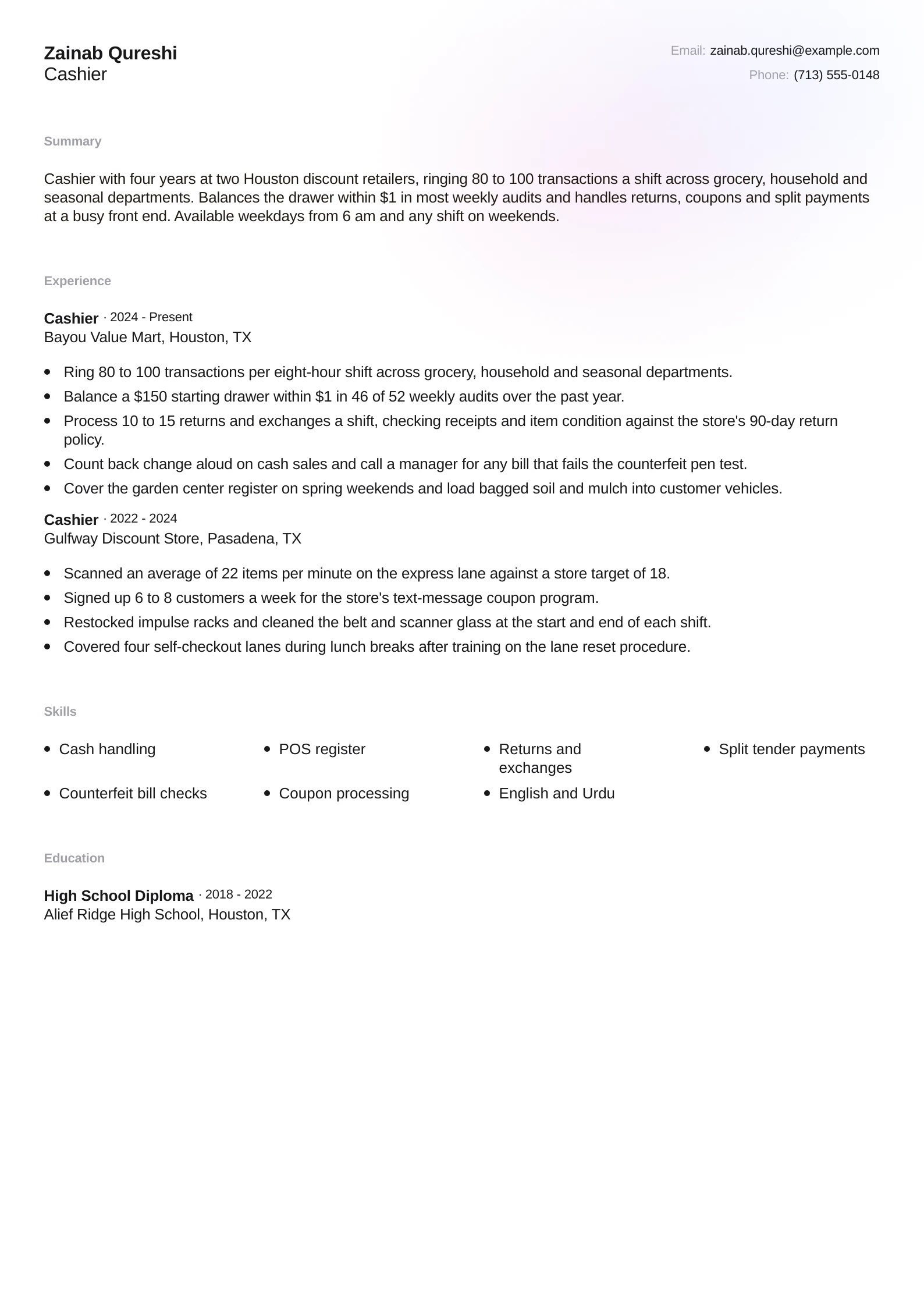
Ingrid Vandersloot's header reads Systems Administrator, Active Secret Clearance, because contractor recruiters filter on clearance before they read experience. CompTIA Security+ sits in her credentials beside the clearance, with the year she passed. Her bullets name the tools contractor ads list, such as Windows Server, PowerShell and STIG settings, and give server counts and recovery times. Use it if you're a cleared technician still in uniform aiming at systems administration or network jobs.
Clearance level and status in the header
Security+ listed with the year earned
Patch compliance and outage recovery time in numbers
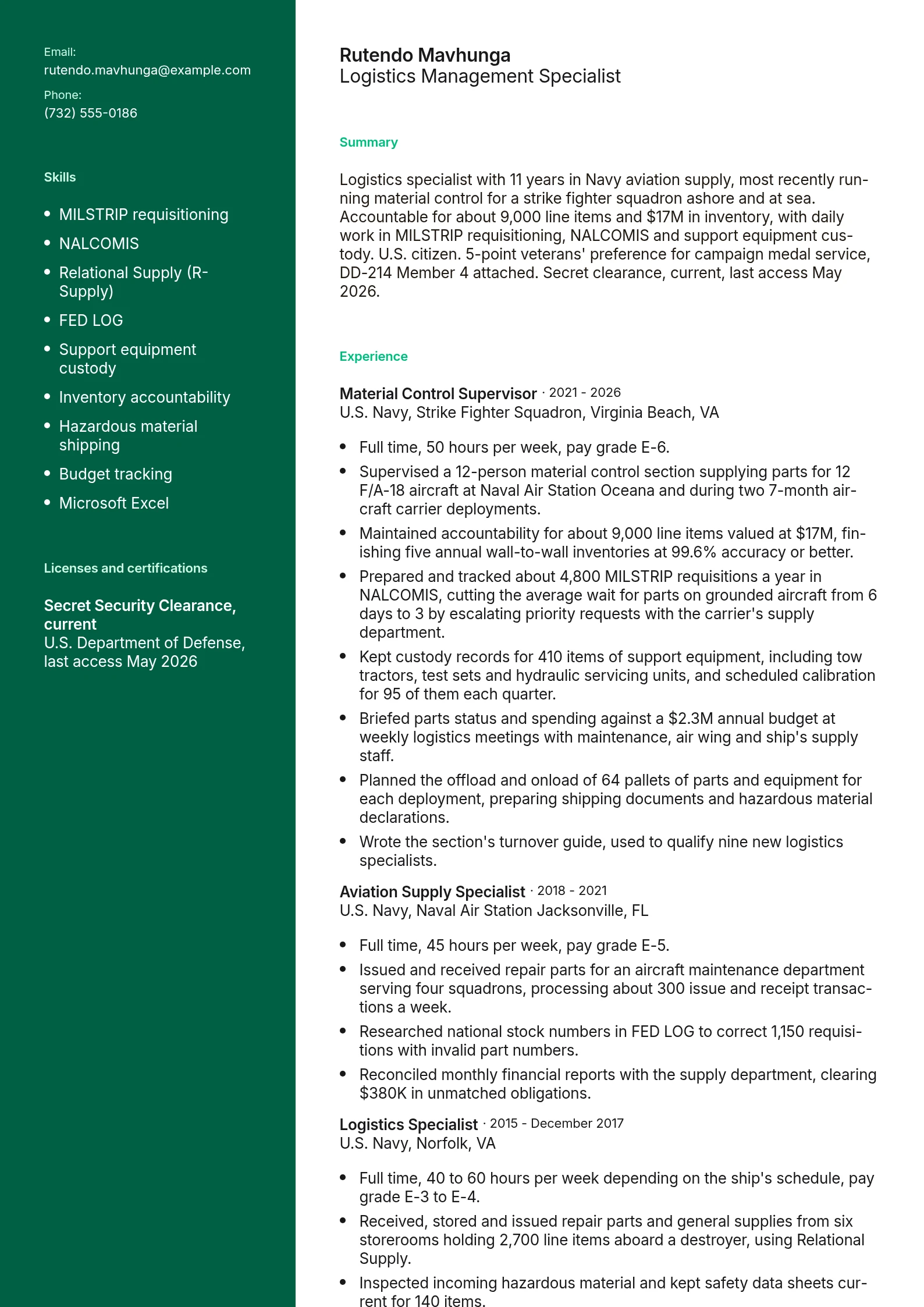
Navy logistics specialist applying on USAJOBS
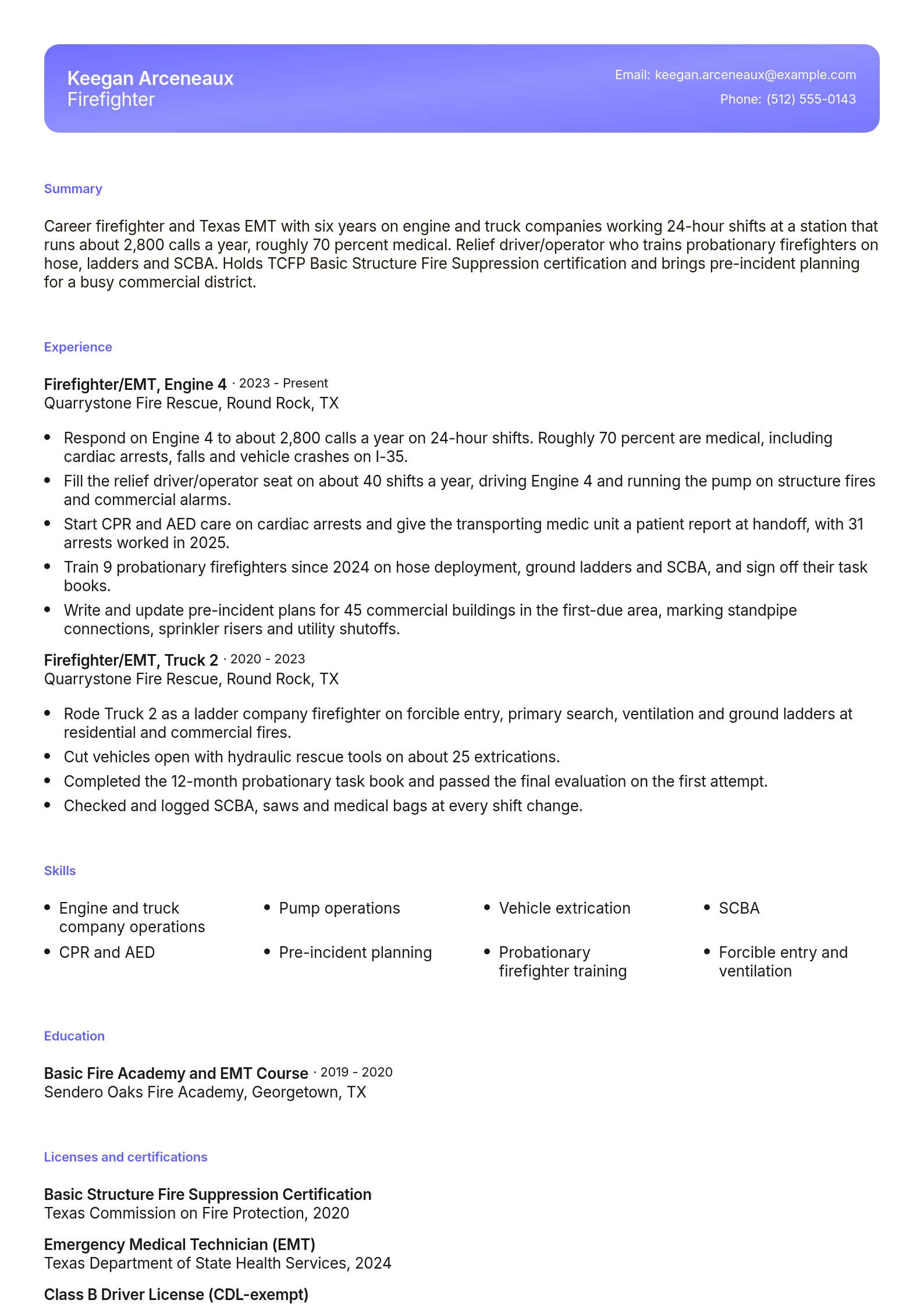
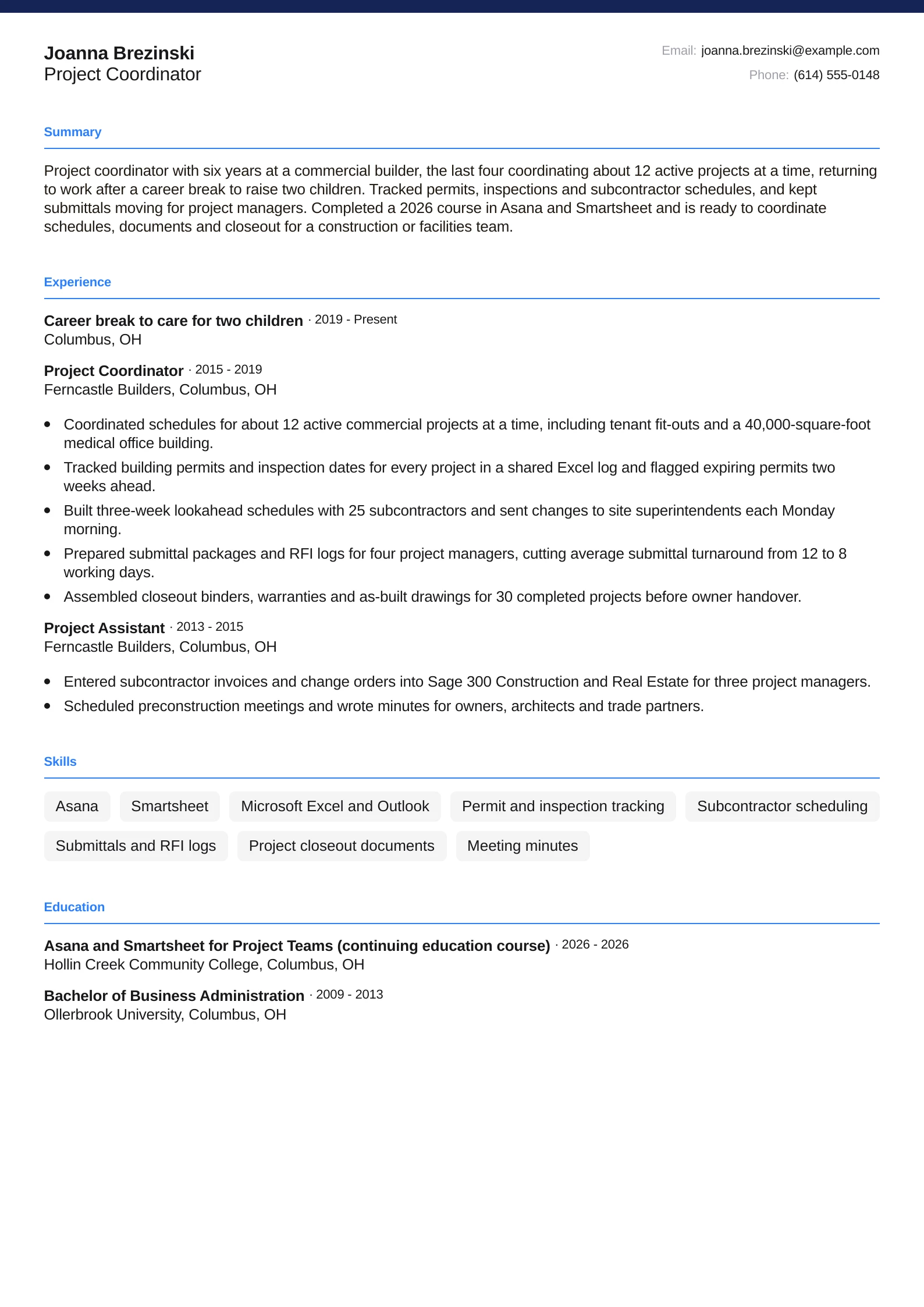
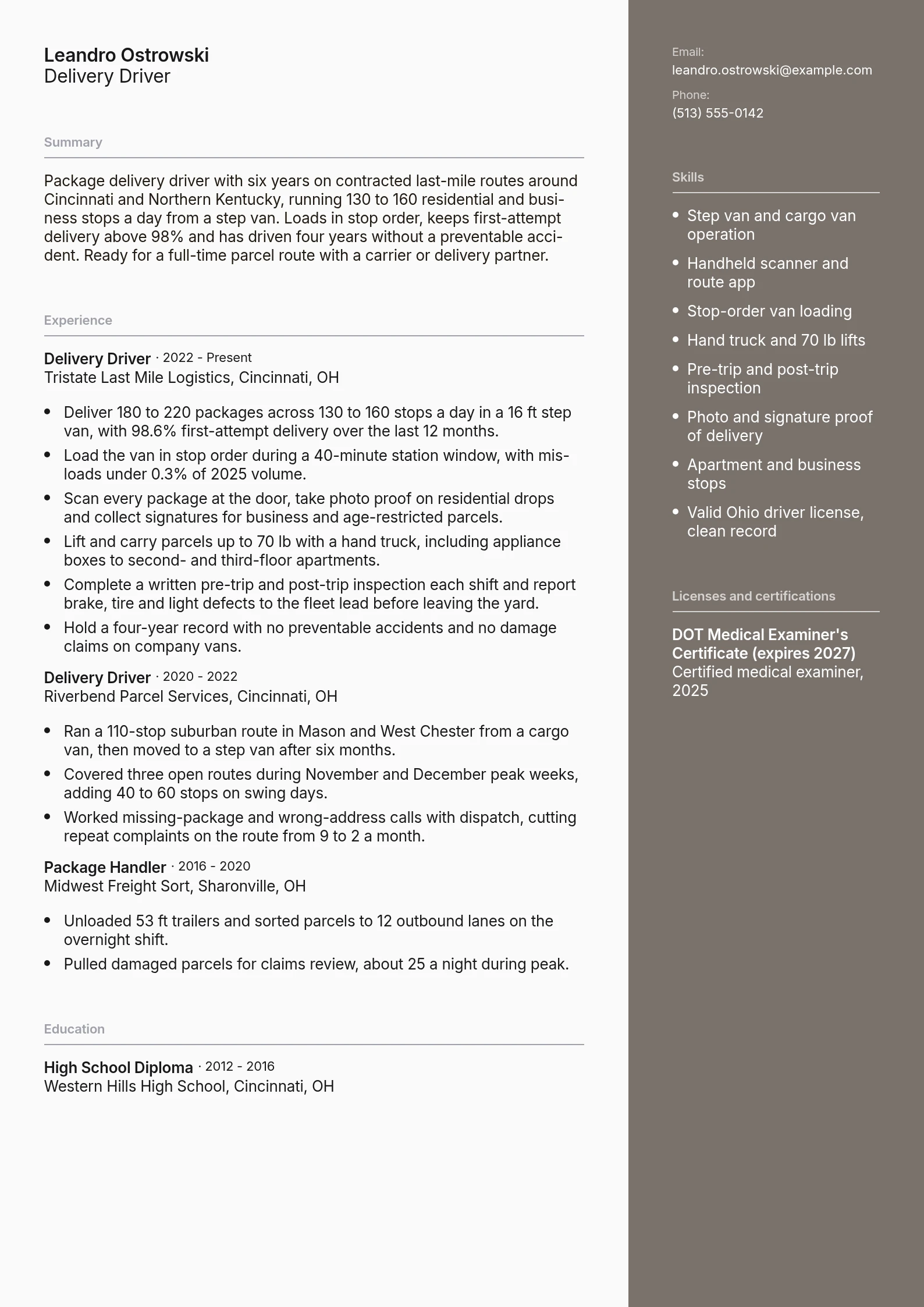
Rutendo Mavhunga's federal resume fits two pages but carries more per job than the others. Each role opens with hours per week and pay grade, and every date has a month and year. Her summary ends with citizenship, 5-point veterans' preference and a current Secret clearance. Bullets repeat announcement terms such as MILSTRIP and support equipment. Use it for GS-11 or GS-12 logistics, supply or property jobs.
Hours and pay grade for every job
Citizenship, preference and clearance closing the summary
Announcement terms such as MILSTRIP in the bullets
Swap the billet and code for a civilian job title
Use the civilian title for the work you did as your job title, and put the branch and base where an employer name would go. A recruiter outside the military can't place Sergeant First Class, 92A or a battalion name, and a search for operations manager won't find them.
Look up your code in the O*NET Military Crosswalk. It takes Army and Marine Corps MOS codes, Air Force AFSCs, Navy and Coast Guard ratings and Space Force specialty codes and returns related civilian occupations. A 92A automated logistical specialist, for example, maps to logisticians, logistics analysts and transportation, storage and distribution managers, among others.
Then set the level by your scope, not by the crosswalk's entry title. A 92A platoon sergeant running 38 people and a warehouse writes Supply Operations Manager. An Air Force cyber airman (1D7X1, formerly 3D0X2) running classified servers on shift writes Systems Administrator. An LS1 running a squadron's material control writes Material Control Supervisor.
Keep rank out of the title. If an application asks for it, as federal ones do, give the pay grade in the job's detail line, the way the Navy example does. Name a unit type only when it tells the new employer something, such as a strike fighter squadron on an aviation logistics application.
Civilian title with scope
Supply Operations Manager, U.S. Army, Fort Hood, TX. Led 38 supply specialists across three sections that receive, store and issue parts for a 640-soldier battalion.
Rank, code and unit as the job
SFC, 92A Platoon Sergeant, B Co, 4th Brigade Support Battalion. Responsible for Class II and IX supply operations and property book accountability IAW AR 710-2.
Count the people, dollars and hours you answered for
Give each role a number for people, money or volume in its first two bullets, because that's how a civilian manager sizes a job. One large operations employer that recruits veterans describes its first-level area managers as leading 50 to 75 associates, and a recruiter reads your resume for the nearest match.
Count what you were responsible for, not the size of the unit around you. If you supervised 14 people in a 640-soldier battalion, write 14 and name the battalion as the customer you supplied. For equipment, total the values on your hand receipts or property book and round them: $41M in vehicles, generators and communications equipment reads faster than a list of vehicle models.
Show pace with hours and shift patterns instead of calling it a high-tempo environment. 24-hour operations for a 30-day field rotation, or a rotating 12-hour shift schedule, tells an operations or IT manager you can cover nights. Check that every role on your resume uses at least two rows of this table.
Scope
What to count
Line from the examples
People
Direct reports, the leaders under you, shifts covered
Led 38 supply specialists across three sections
Equipment and money
Property book value, budget managed, excess stock cut
Accounted for $41M in vehicles, generators and communications equipment
Volume
Line items, requisitions, tickets, users, servers
Prepared and tracked about 4,800 MILSTRIP requisitions a year
Pace
Hours of operation, shift pattern, deployment length
Administer 40 servers and a 220-user classified network on a rotating 12-hour shift schedule
Result
Accuracy, wait times, recovery times, savings
Raised inventory accuracy from 91% to 99.2%
Put clearance level and status beside your name
For defense contractor jobs, put your clearance level and status in the header or the first line of your summary, and list it again under credentials. Contractor ads for logistics, systems and cyber roles name a required level, such as Secret or TS/SCI, and recruiters screen on it before they read experience.
Write the level exactly as granted (Secret, Top Secret or TS/SCI) and add the polygraph type only if you completed one. Then give the status: active while you're serving or working in a cleared job, and current with your last access month once you've left, as the Navy example does. Leave out investigation dates, case numbers and anything about the programs you supported.
You can't renew a clearance yourself. A cleared employer or agency has to sponsor its reactivation, which is generally possible without a new investigation within 24 months of your last access. If you've already separated, apply to cleared roles early and give your last access month so the recruiter can judge it.
List the certifications the ads ask for directly under the clearance. CompTIA Security+ appears in many systems administrator and cyber ads, sometimes with a window to earn it after hire, so give the year you passed. If an exam is booked, put the month in your summary instead of the credentials list.
Corporate operations resumes need much less. Most private-sector employers outside defense don't screen on clearance, so leave it out or keep it to one credentials line.
Write the federal version to the announcement, in two pages
A federal resume carries more detail per job than a private-sector one, but it now has to fit two pages. OPM's 2025 Merit Hiring Plan ended the longform federal resume and set a 2-page limit, so trim older roles to two or three bullets and keep the detail lines.
OPM's guidance for the two-page resume asks for each job's title and employer, start and end dates by month and year, and hours worked per week, plus series and grade for federal jobs. Put hours and your pay grade in one line at the top of each role, as the Navy example does, and include them for every military assignment. Supervisor and salary details are no longer on OPM's list, so cut them first if you need the space.
Match the specialized experience statement wherever it's true for you. A Navy GS-12 logistics management specialist announcement, for example, asks for a year of experience at the GS-11 level and names support equipment acquisition, MILSTRIP and integrated product teams. A matching bullet names the system and the volume: Prepared and tracked about 4,800 MILSTRIP requisitions a year in NALCOMIS.
Claim veterans' preference in the application and back it with paperwork. If your service began after August 2010, five-point preference depends on service in a campaign or expedition with an authorized campaign medal, which your DD-214 shows. Attach the Member 4 copy, which also shows an honorable or general discharge; 10-point claims also need an SF-15 and VA documentation. Some hiring paths, such as direct-hire announcements, don't apply preference, so check the announcement before you count on it. End your summary with lines like these.
Federal summary closing lines
U.S. citizen. 5-point veterans' preference, DD-214 Member 4 attached. Secret clearance, current, last access [Month Year].
Choose the template by route, then order sections to match
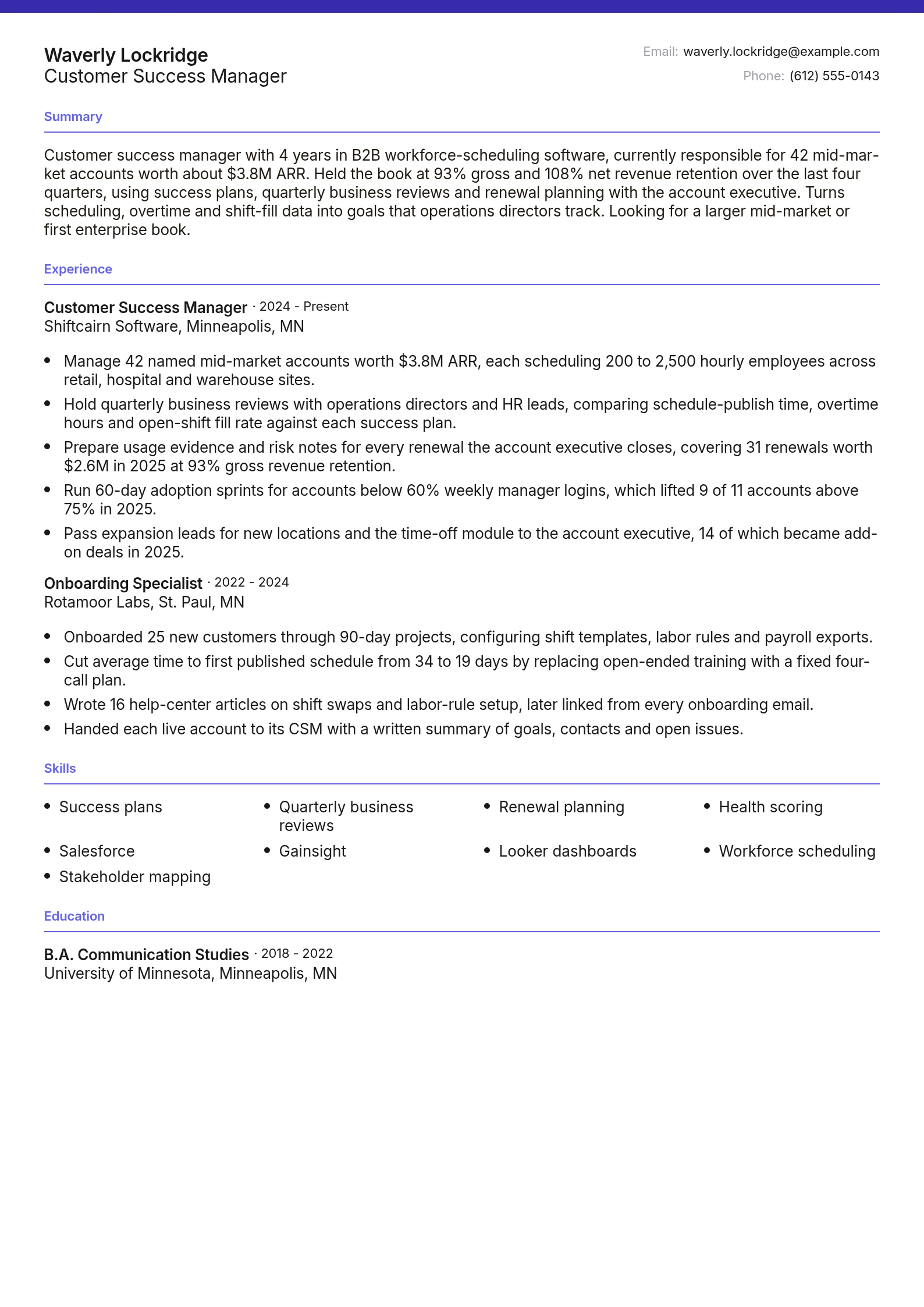
Pick a clean one- or two-column template with standard section names, then order the sections by where you're applying. Any of the three layouts on this page works for any route, as long as dates, titles and employers are plain text and not inside graphics or icons.
For corporate operations, lead with summary and experience. If the ad requires a degree, make sure education still lands on page one. For contractor jobs, the clearance goes in the header and the certifications sit with it under credentials. For federal jobs, put citizenship, preference and clearance at the end of the summary, then experience with a detail line for each role.
Route
Corporate operations
Cleared contractor
Federal (USAJOBS)
Length
One page under about 10 years, two for longer careers
One to two pages
Two pages at most
Top of page
Summary naming the target role and when you can start
Clearance level and status in the header
Citizenship, preference and clearance in the summary
Dates
Month and year
Month and year
Month and year, plus hours per week
Bullets must name
People, dollars and shifts
Systems, tools and certifications from the ad
Announcement terms and the work at the grade level